
Pho Hien trading port in the flow of history
Pho Hien (now Pho Hien ward, Hung Yen province) is an ancient Vietnamese city, a port located on the left bank of the Red River. In the history of Vietnamese urban areas in the pre-colonial period, Pho Hien was considered one of the most prosperous trading ports, an important international trade transshipment hub of foreign trade in the 17th-18th centuries. The saying "First Kinh Ky, second Pho Hien" vividly reflects the special position of this city in Dai Viet's economic and cultural life.
During its prosperous period, Pho Hien was a bustling international trading port, a gathering place for traders from many countries. Trading and goods exchange activities took place bustlingly, creating a unique urban appearance with diverse intersections of culture, beliefs and architecture. Pho Hien not only had ports, markets, and wards, but also appeared Western trading points, along with many handicrafts and strongly developed trading services.
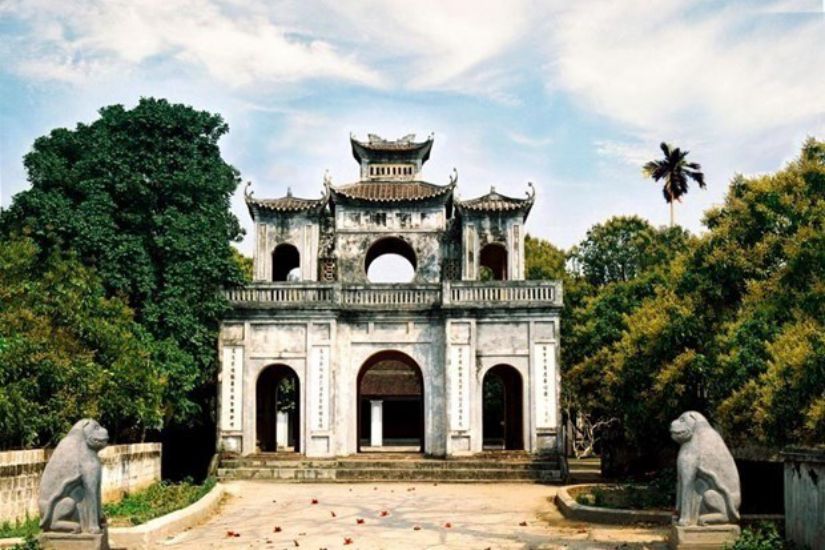
In particular, Pho Hien plays the role of "front port" of Thang Long capital, where the public authorities of the court are located, and is also an important belt protecting the capital. The combination of commercial, administrative and military functions has created Pho Hien's own position in the ancient urban system of Vietnam, at the same time as Hoi An in the Central region.
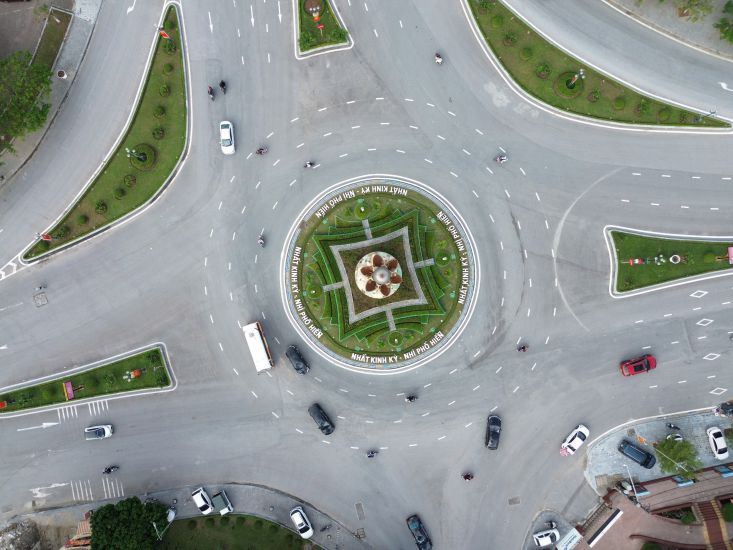
From the 18th century, along with historical upheavals and changes in natural and socio-economic conditions, the role of the trading port center of Pho Hien gradually declined.Although no longer maintaining its prosperous position as before, Pho Hien still retains valuable historical and cultural sediments, vividly reflecting a period of brilliant development of Dai Viet, and at the same time showing the process of trade and integration of the Vietnamese nation in the region and with the world.
According to Dr. Nguyen Khac Hao - Former Standing Deputy Secretary of the Provincial Party Committee, Chairman of the Hung Yen Provincial Union of Science and Technology Associations, Pho Hien is a special phenomenon in the ancient urban system of Vietnam.Formed around the end of the 16th century, Pho Hien developed brilliantly in the role of a river trading port, an important international trading center of the North, and then gradually weakened from the 18th century.Those ups and downs have left a heritage space with historical depth, both glory and contemplation.
Today, Pho Hien is no longer a bustling trading port, but urban memories still exist through the system of relics, landscapes along the Red River and international trade imprints still preserved. It is this layer of sediment that creates unique value, laying the foundation for identifying Pho Hien as a special heritage space of the Red River Delta region.
Pho Hien heritage and the problem of restoration and revival
Currently, Pho Hien is considered one of the typical heritage spaces of the Red River Delta region and the whole country. The heritage system here includes both tangible and intangible heritage, containing unique values of history, culture, architecture, beliefs and urban memories. The relics are connected together, creating a unique cultural space that creates the outstanding value of the Pho Hien complex.
The central axis of the heritage space includes typical relics such as Chuong Pagoda, Mau Temple, Tran Temple, Xich Dang Temple... clearly reflecting the cultural identity of the Northern Delta region. Besides, there is a system of relics honoring famous people and national heroes such as May Temple worshiping General Pham Bach Ho; Kim Dang Temple worshiping General Dinh Dien and his wife; Tran Temple worshiping Hung Dao Dai Vuong Tran Quoc Tuan.
The system of ancient pagodas such as Pho Pagoda (Bac Hoa Nhan Dan Temple), Hien communal house - pagoda, Ne Chau pagoda... preserves many architectural and artistic imprints through the periods, creating important highlights in the spiritual tourism route. Pho Hien heritage space also reflects the imprint of international trade through the tourist route along the Red River, with alluvial landscapes, waterfronts and places that were once trading places for Chinese, Japanese, and Dutch merchants.
According to Deputy Director of the Department of Culture, Sports and Tourism of Hung Yen province Bui Thi Luong, along with valuable tourist destinations such as Keo Pagoda, Da Hoa - Da Trach Temple, Phu Ung Temple, Pho Hien is making an important contribution to building the local tourism brand.
In recent years, Pho Hien heritage has been concerned about preservation and restoration, but restoration is still fragmented and lacks comprehensiveness; it has not clearly recreated the ancient cultural space and has not been closely linked with tourism, services, and creative economy.Therefore, restoring and reviving Pho Hien is not only a preservation requirement but also a strategic development task.
From the perspective of planning, Associate Professor, Dr. Nguyen Vu Phuong - Deputy Director of the Academy of Strategy and Training of Construction Cadre (Ministry of Construction) said that Pho Hien is a unique "heritage - landscape" integral, which needs to be preserved in a comprehensive direction, shifting from static preservation thinking to overall management of heritage urban areas based on values and development motivation.
According to Dr., Architect Nguyen Van Tuyen (Faculty of Architecture and Planning, Hanoi University of Civil Engineering), with the current scientific and technological conditions, recreating old Pho Hien with 3D models, sound, lighting or enhanced virtual reality technology is completely feasible. This may be an important direction to revive the memory of the trading port, creating a new attraction for Pho Hien cultural tourism in the current period.
Pho Hien is no longer as bustling as before, but urban memories still linger in each layer of heritage. The restoration and revival of this place is a way for those values to continue to be told in today's life.


