
Actors' salaries drop sharply
According to Suho, recently, information about the salary of Chinese actors is causing controversy. The current salary of actors is no longer as good as in the peak period of 2015 - 2018, the period of "hundred million yuan salary" has ended.
According to the source, the remuneration of artists is clearly differentiated. In the group of Chinese actresses born after 95, top stars such as Zhao Lusi, Yu Shu Xin, and Bai Lu received a maximum of about 20 million yuan (about 74.6 billion VND) for a film.
Rising actors such as Truong Tinh Nghi, Ly Lan Dich, Chau Da are often at 8-12 million yuan; mid-level or rookie actors are only at a few million yuan, far from the previous golden age.
This situation is compared to the time when "heavenly cooperatives" were once rampant in the Chinese entertainment industry. At that time, both movies and TV shows often have sand rates exceeding the standard, much higher than the industry's ceiling.
CEO iQiYi Cung Vu once revealed that around 2018, the highest remuneration of an actor for a film exceeded 150 million yuan (about 560 billion VND), commonly at 80-120 million yuan. The sky-high salary has become a difficult problem in the industry.
Typically, actress Trinh Sang was involved in a scandal of using a "mental contract" when filming "Thien nu u hon", receiving a total of 116 million NDT (about 433 billion VND) for 77 days of filming, an average of 2.08 million NDT/day.
Chau Tan and Huashan Jianhua are said to have received 50 million NDT each when participating in "Nhu Y Truyen". Ton Le is said to have received 60.48 million NDT for the film "That Year the Flowers Blossom the Moon".
It is reported that Chau Dong Vu and La Tan received 109 million NDT and 77.14 million NDT respectively for the film "Mac hau Chi Vuong".
Vuong Thien Nguyen received a compensation agreement of 61.8 million yuan for his role in the film "7 days"; Duong Thuoc was revealed with a salary of 87.5 million yuan for the film "The Stranger". After that, the two actors had a dispute with the production company due to the regulation limiting "ceiling remuneration".
In the entertainment show category, Zhao Wei and Yu Qi were asked to return 40 million yuan for receiving illegal remuneration when participating in the program "Chinese Restaurant".
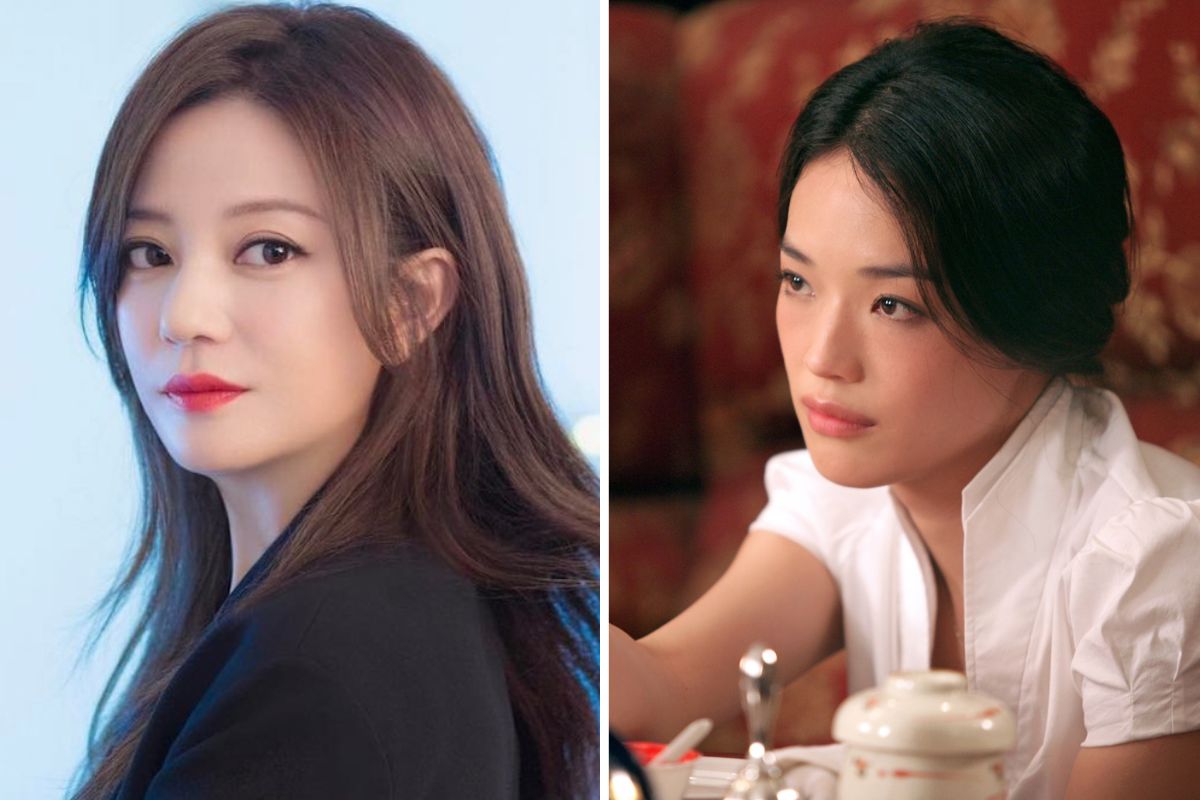
Changes in the Chinese entertainment industry
According to producer Hoa Boi, the remuneration of Chinese TV actors has decreased significantly, and the salary is clearly differentiated according to the artist level and film genre.
Hoa Boi said that 95 generation actors are the main force in the historical drama genre - a genre with a large investment - so their salaries are among the highest in the industry.
But overall, it does not exceed the top by about 20 million yuan, the actor is about 8-20 million yuan. If the film becomes a phenomenon, the remuneration can increase to 30 million yuan, but that is only a special case.
Notably, some 85 generation actresses are no longer suitable for acting in idol films, and their salaries are even lower than those of the 95 year old, often not exceeding 20 million yuan. Many people have proactively reduced their remuneration to switch to drama films, expanding their acting path.
The method of paying remuneration in the industry has also changed. The model of "fissed salary + project profit sharing" has shifted to "comprehensive payment", due to increasingly strict tax regulations.
Talking about the reason for the sharp decrease in the salary of Chinese actors, Hoa Boi analyzed that the first reason is because the cash flow in the industry is being tightened. Production companies and platforms are under pressure to make a profit, so total film investment has decreased sharply, and actors' salaries are controlled to the maximum extent, accounting for only 1/4 of expenses.
Secondly, the trend of platforms has changed, no longer focusing too much on choosing actors with many fans or actors with big names, but focusing more on the script and quality of the film. With drama films having high production costs, many actors have asked for a reduced remuneration to participate.
The third is the change in the management system, tax policies and regulations in the industry being tightened, completely eliminating the problem of " followed-up contracts" and "heavenly safes".
Hoa Boi commented that the current remuneration will likely be stable in the long term. The current period is the most reasonable period for the Chinese entertainment industry in the past 10-20 years.
Flow Ball has disappeared, the entertainment industry is moving towards standardization and focusing on content quality, creating a foundation for actors to focus on their expertise and form a healthy development circle of the industry.


