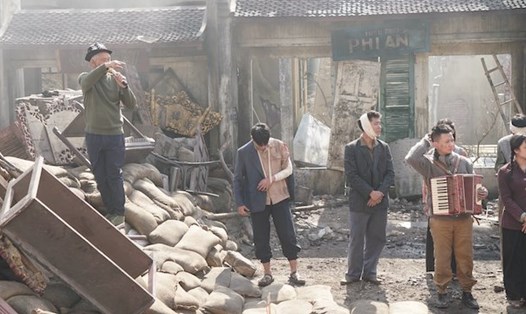
Before the Conference to thoroughly grasp the Resolution of the 14th Party Congress, many directors expect Vietnamese cinema to take advantage of the opportunity to make a strong breakthrough.
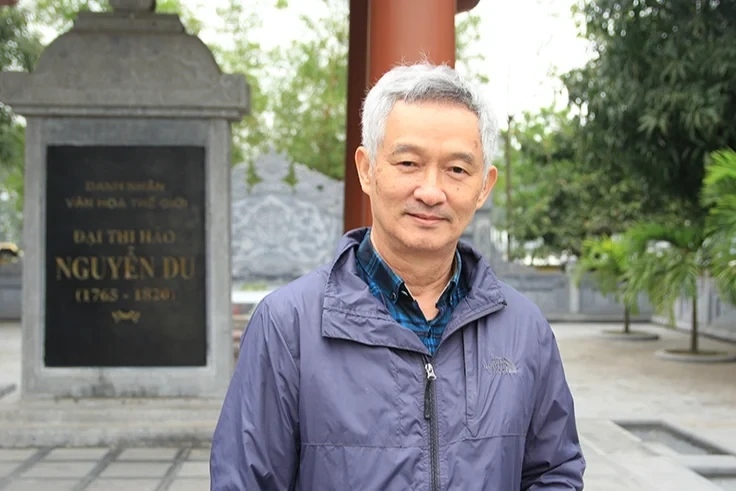
Lao Dong reporter had a conversation with director Phi Tien Son - director of the movie "Peach, Pho and Piano".
From a director's perspective, what is the biggest opportunity for Vietnamese cinema in the current period?
- I think the biggest opportunity for Vietnamese cinema at this time is the return of trust from the audience.
After a long time being overwhelmed by foreign films, Vietnamese audiences are gradually returning to theaters to watch Vietnamese films, and that is an extremely important foundation.
When there is trust, domestic cinema can completely "reclaim" the box office if there are quality works.
In addition, policies to develop the cultural industry are also gradually receiving more attention, opening up favorable conditions in terms of mechanisms.
However, no matter how great the opportunity is, it still requires people with enough capacity to seize it, otherwise it is very easy to pass.
- In your opinion, what is the most important thing to have movies that are both good in content and attractive to audiences?
In my opinion, the two most important factors are still talent and opportunity. Filmmakers need to have real ability, from creative thinking to professional skills.
But talent alone is not enough, they need opportunities to work, to experiment, even to make mistakes and learn from experience.
Conversely, if there is an opportunity but no talent, it is also difficult to create valuable films.
Cinema is a field that requires a combination of personality and environment, so these two factors must go hand in hand.
If stories about culture and history are renewed, in which direction should they be approached to be closer to young audiences, according to you?
I think we should approach them from topics that are "over time". For example, the desire for freedom, national pride or the journey to affirm the personal ego.
These are values that are never old and can touch many generations, especially young audiences.
However, the important thing is not only the content but also the way of telling the story.
If we still tell stories in the old way, lacking creativity, it is very difficult to attract viewers. The storytelling method must be new, attractive, and have a rhythm suitable for modern life.
What are your expectations for building large-scale film projects with a clear Vietnamese imprint?
In fact, at the present time, doing large projects of national stature is still quite difficult.
One of the reasons is that Vietnamese cinema is lacking a "torch" from literature - that is, works large enough and deep enough to lay the foundation for adaptation.
When there are no strong materials from literature, building large-scale films that are both unique and in-depth will face many limitations.
This is something that I think Vietnamese cinema needs to seriously consider.
So, from your perspective, what more does Vietnamese cinema need to create breakthroughs in the next few years?
I think the most important thing is to have "breakthrough dreams".
It sounds abstract, but in fact it is very specific. If people in the profession do not dare to think big, do not dare to set high goals, it is very difficult to create change.
In addition, we still need to improve mechanisms, human training and market expansion.
But above all, the spirit of daring to break through is the decisive factor.
You have made films imbued with national culture such as "Dao, Pho and Piano", according to you, is traditional material still "easy to touch" the audience?
I think traditional materials still have their own appeal, but the issue is to innovate.
If we maintain the old way of expression, it will be very difficult to reach modern audiences.
When telling stories about history and ethnicity, what factors do you usually put first: authenticity, emotion or something else?
For me, the most important thing is the spirit of honoring ancestors and predecessors. This is the foundation when making films about history or nation.
Once we have that foundation, we can build more elements such as emotions or entertainment appropriately.
What do you think about bringing very Vietnamese images such as indigenous culture, cuisine, music, lifestyle... into the film to create a unique mark?
I think that not just putting culture and history on film will create an impression, create an effect. The important thing is "how to put it in". If it is only illustrative or forced, it will be counterproductive.
Conversely, if those cultural elements need to be naturally integrated into the story, associated with the emotions and journey of the character, then the cultural element will become a very effective highlight.
According to you, making films about national culture and national history - currently the most difficult stage is in which?
Actually, I don't think any stage is easy. From scripts, funding to approaching young audiences are all big challenges.
However, the key point is still the story. If there is a script that is good enough, strong enough to touch viewers, then other factors can gradually be resolved. Conversely, if the story is not strong enough, it is very difficult to convince the audience.
If you have the opportunity to do a big project about Vietnam in the near future, what story do you want to tell?
I want to tell stories about kindness and noble spirit. These are universal values, not only of Vietnam but of all humanity.
If told sincerely and deeply, such stories can completely touch international audiences, while still retaining the very unique identity of Vietnamese people.