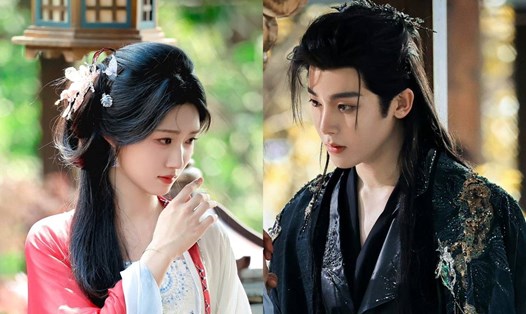
While the movie "Sở Kiều truyện" part 1 performed by Lý Thấm once took away many viewers' tears, the new version in "Băng hồ trọng sinh" (i.e. part 2) was criticized for being inferior in terms of emotion and acting style of the actors.
In "Sở Kiều truyện" part 1, Nguyên Thuần played by Lý Thấm is a typical role model of a character with psychological depth. In the first half of her life, she was a noble princess, growing up in luxury, innocently believing in love and human hearts. But successive upheavals pushed the character into tragedy: broken love, trampled honor, family and nation collapse. From a "flower in a glass cage", Nguyên Thuần became a person full of hatred, but still maintained pride and will.
This complex psychological transformation journey has helped Ly Tham leave a deep impression. Her acting is highly appreciated for fully expressing the fragility, breakup but not collapse of the character. Many scenes such as big weddings, blocking horses or begging for love have become "classic", making the audience moved. Thanks to that, Nguyen Thuan has become one of the most memorable roles of Chinese cinema.
Conversely, part 2 played by Xia Meng disappointed. Many opinions believe that the character Zhao Chun'er (ie Yuan Chun) lacks depth, especially in the climax scenes. Important scenes such as weddings or kneeling prayers do not clearly show inner turmoil, making emotions fade.
Not only that, the script construction also caused controversy. Some tragic details are exploited in a direction considered "Americanizing pain", especially scenes related to violence against women. The staging leaning towards beautiful images, lacking empathy, has caused the audience to react negatively, believing that this approach is subtle and uncomfortable to watch.
According to Chinese media, when part 2 aired, the audience's interest unintentionally led to a wave of searching for part 1. In just a short time, the discussion about Ly Tham's role as Yuan Chun increased sharply, showing the persistent vitality of this character in the hearts of the public.
Comparing between the two parts is inevitable. However, Nguyen Thuan's case clearly shows the decisive role of acting in conveying the depth of the character. A good script can create a symbol if it is fully expressed, but it can also become bland if there is a lack of acting internal strength.