
When the Hop Luc - Ruc Ro alliance received the theme "Thach Sanh", Hoang Dung immediately thought of the image of the sound of the zither in the familiar story: "The zither calls Tich Tinh Tang - Who brings the princess back from the cave?" From this inspiration, he proposed to include Then singing and Tinh zither - typical materials in Tay culture - in the group's song "Tich Tich Tinh Tang".
Hoang Dung revealed that he is Tay ethnic, so choosing these materials also has its own meaning for the male singer.
He shared: "It seems like the universe is arranged for me. If I don't say this now or I don't volunteer to do X-song this time, I feel very unwell.
I told everyone that I am Tay, and at that time I received a lot of support and trust from my brothers.
Along with members Hoang Rob, Tho (Da LAB), Tung Mint and Will, Hoang Dung found ways to bring traditional music into a modern stage, while recreating the festival atmosphere of the highlands instead of just using folk elements as decoration.
Then singing and Tinh lute became an important part of the performance structure. Besides music, the group also brought images of lion and cat dances into the performance. This is an art form associated with the cultural life of the Tay and Nung people, often appearing during festivals and carrying the meaning of praying for good luck and blessings.
One of the props that attracted attention was the cat head pair used on stage. Hoang Rob said that this is a sacred prop and was crafted by an artisan in Lang Son.
The group had to persuade the artisan for two or three days before being allowed to bring props to Ho Chi Minh City. According to Hoang Rob, a cat head can take about 6 months to complete.
The preparation process also has professional advice from the Department of Culture, Sports and Tourism of Lang Son province. Members want cultural elements to appear on stage in a suitable and accurate way, instead of just exploiting them as a visual effect.
The most special highlight of "Tich Tich Tinh Tang" is the appearance of Hoang Dung's mother and the Then Song Group Suoi Ngan, to support their son.
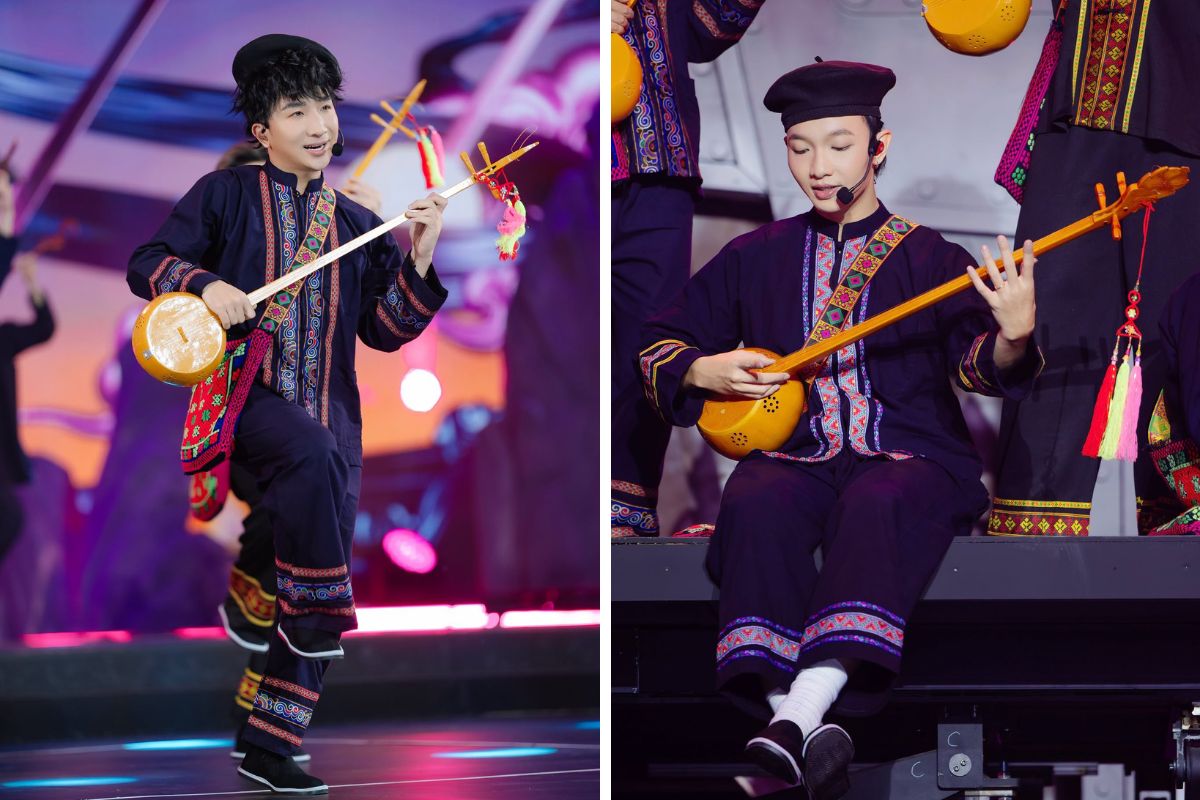
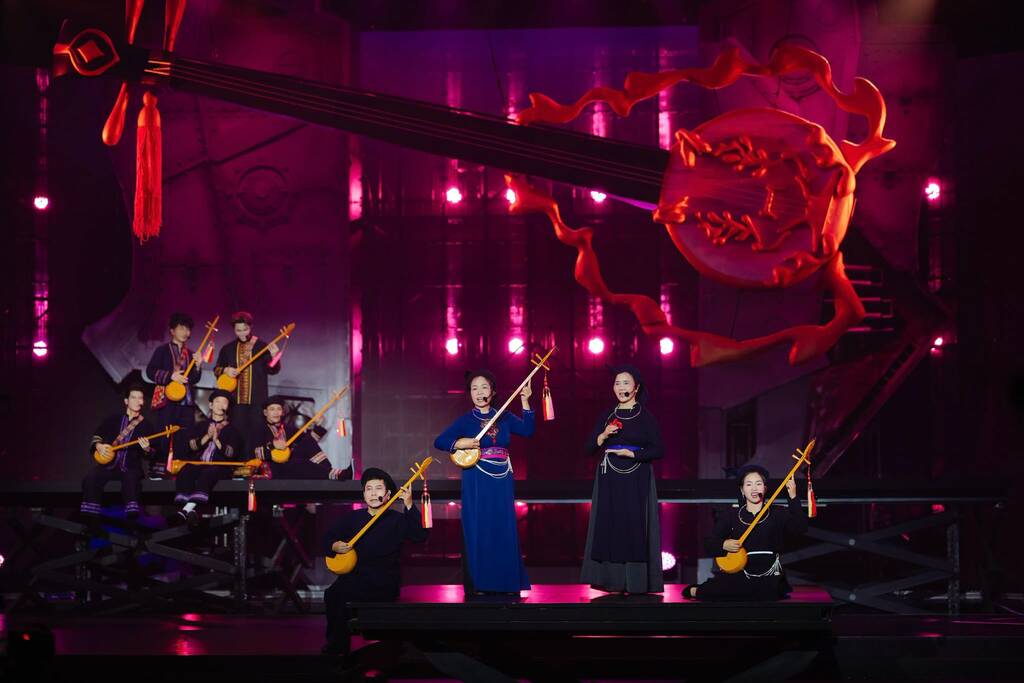
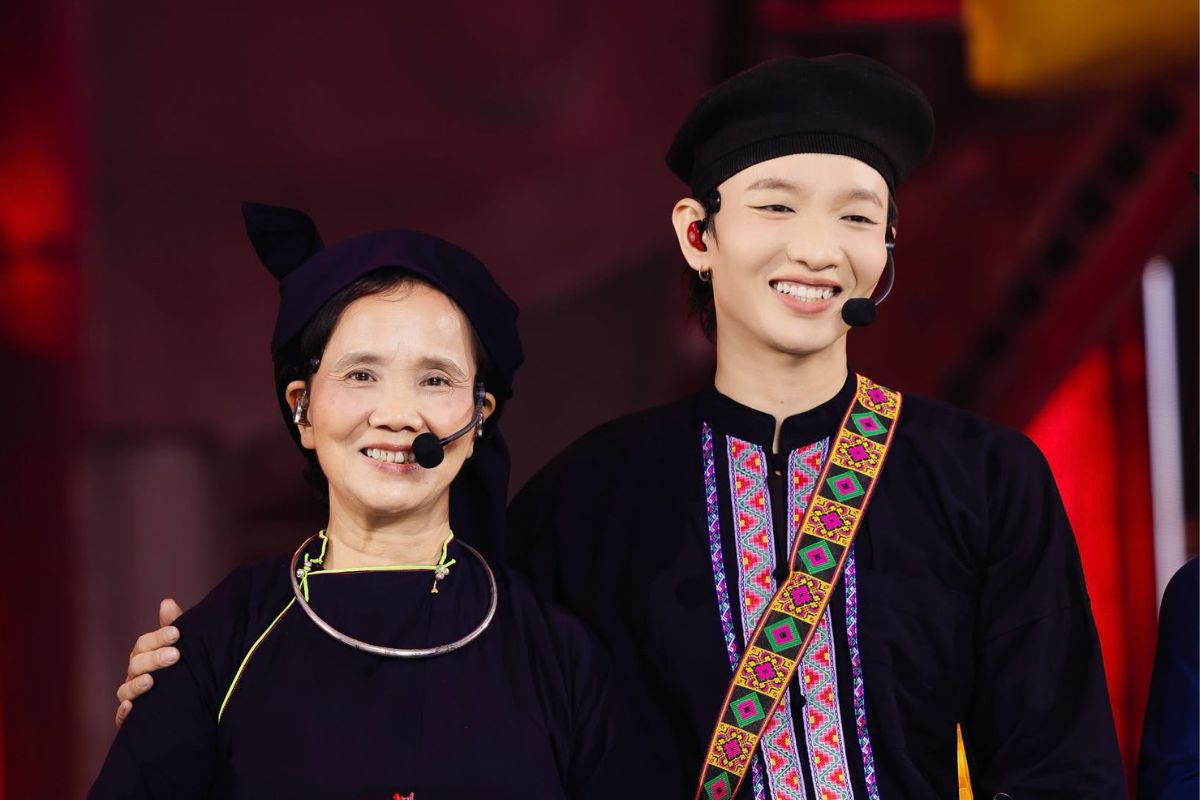
After the program aired, the identity of the male singer's mother quickly attracted attention from the online community. It is known that Hoang Dung's mother is Assoc. Prof. Dr. Hoang Thi Chien. She used to be a lecturer at the Faculty of Chemistry of Thai Nguyen University of Education, and only started singing Then songs after retiring.
The first time Hoang Dung and his mother stood on a large stage to perform Then singing and Tinh zither was not only a special performance, but also evoked the connection between family affection, love for art and the continuation of cultural values through generations.
Sharing her feelings when standing on the same stage with her son, she said she was very "touched, nervous and a little proud".
The moment the two mothers and daughters shared the stage also moved many viewers. On social networks, some alumni of Assoc. Prof. Dr. Hoang Thi Chien recognized the old teacher and left emotional comments when witnessing her appear on television with her son.
Then singing of the Tay, Nung, Thai people in Vietnam was recognized by UNESCO as a representative intangible cultural heritage of humanity in 2019. With "Tich tich tinh tang", Hoang Dung and his teammates bring this art form closer to the audience through a modern expression.
For Hoang Dung personally, the performance still preserves a memorable milestone when he stood on stage with his mother. From the sound of the guitar in the story "Thach Sanh", the male singer connected with folk music and finally created a stage where family love, art and pride in origin are present together.


