
Recently, musician Chau Dang Khoa was reacted to by the audience for the line "Rice ripens tall but never bows".
Many viewers believe that the original line "deep river is quiet, ripe rice bows" originally promotes humility, so changing it to "ripe rice is tall but never bows" has distorted the meaning, even causing a feeling of arrogance.
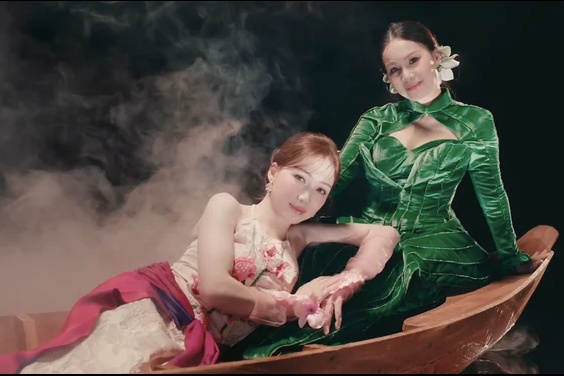
Before the reaction from public opinion, musician Chau Dang Khoa received the opinions and revised the lyrics of the song "Vietnamese people love each other".
Deep rivers are quiet, ripe rice bows" is a philosophically profound saying, often used to compare people who are more talented and have broad understandings to be more calm, humble and not ostentatious.
Regarding the origin, many documents suggest that this sentence is similar to a Japanese proverb: "Minoru hodo kōbe o tareru inaho kana", meaning "the riper the rice, the more you bow", which emphasizes humility.
When imported and widely used in Vietnam, the saying was Vietnamized, associated with the image of "deep rivers" to increase its figurativeness and suit local cultural thinking.
Although not a purely Vietnamese folk proverb, this saying is still widely used in life, sometimes seen as a traditional idiom.
With a long-standing wet rice culture, Vietnamese people easily empathize and accept the image of "ripe rice bowing its head" as a beautiful symbol of humility, maturity and bravery in life.
Before Chau Dang Khoa, many Vietnamese musicians skillfully incorporated folk songs and proverbs into their songs and received positive reception from the public, because the application was both creative but still kept the original meaning intact, without distorting the spirit of the original sentence.
Homeland" is one of the most famous and touching songs about the theme of homeland by musician Tran Tien, evoking childhood memories, the remote Da River countryside - Xu Doai.
The song has the line: "Oh flowers fly up to the sky, what tree stays, oh flowers of mustard greens go up to the sky, Vietnamese coriander stays, enduring bitter words", containing literary images in Vietnamese folk songs: "Wind brings mustard greens back to the sky/ Vietnamese coriander stays, enduring bitter words".

Chili Dragonfly" is a famous song in contemporary folk music composed by musician Le Minh Son.
The song is associated with the name and unique falsetto voice of singer Ngoc Khue, helping her shine at Sao Mai Rendezvous 2004 and becoming her signature nickname.
In the song, the author wrote: "The dragonfly flies low in the rain, the dragonfly flies high in the sun, the dragonfly flies just right, the dragonfly flies just right waiting for you".
Here, a folk proverb about the weather is skillfully incorporated into the lyrics, creating a way to express feelings that is both close and humorous for a country girl.
The famous song "Con Co" composed by musician Luu Ha An, imbued with contemporary folk sounds. The work caused a great stir when it won three awards at Bai hat Viet 2007, including Song of the Year, Effective Arrangist (Son Thach) and Effective Performance Singer (Tung Duong).
In the song, there is a line: "Con cò mày đi ăn đêm, mày đi ăn đêm, sao đi một mình, một mình lầm lũi", evoking the familiar folk song: "Con cò mày đi ăn đêm/Đậu phải cành mềm lộn cổ xuống ao...".
The author borrowed the image of the stork as a metaphor for Vietnamese women - although life is hard and arduous, they are still persistent, aiming for good and noble values.
Many Vietnamese musicians have exploited idioms and proverbs in a subtle way, true to the folk spirit and left a deep impression in the hearts of audiences.


