
The event gathered a large number of researchers, socio-cultural experts, representatives of management agencies, the media and the public interested in contemporary human issues.
The book is written by the author group of Bao Tin An Lac Joint Stock Company. The publication not only introduces a new form of research, but also raises many notable issues related to commemorative culture, filial piety and how modern people face impermanence.
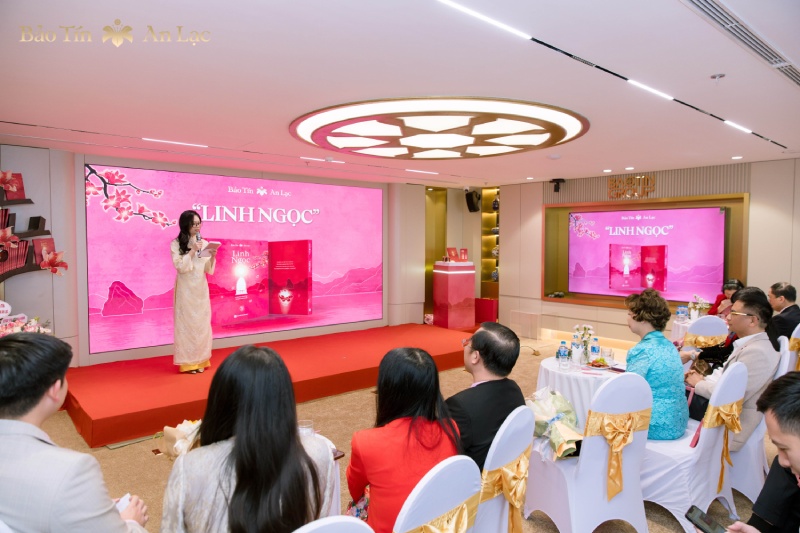
According to the author group's sharing, "Linh Ngoc" is the result of an interdisciplinary research process, combining cultural - religious materials, material science and civilized burial trends in the world.
The book approaches the image of fortune in Buddhism - a symbol of existence and enlightenment - to thereby expand the concept of "pearlizing" ashes as a new form of contemplation that is personal, sustainable and environmentally friendly.
Journalist Dinh Ngoc Duong, Editor-in-Chief of the book, said: "The biggest motivation when implementing this project is the question: how to prevent people from being forgotten after leaving the realm of life? Linh Ngoc is seen as a symbol of existence, helping to connect the deceased with the survivors in a solemn and humane way.
According to the author group, Linh Ngoc is not intended to replace traditional burial forms, but is seen as a civilized and complementary choice, suitable for the context of urbanization, limited land funds and changes in social awareness.
At the thematic seminar within the framework of the launch ceremony, the speakers analyzed Linh Ngoc from many different perspectives.
Assoc. Prof. Dr. Vu Van Phuc - Former Editor-in-Chief of the Communist Review, former Deputy Head of the Central Propaganda Department, said that: in the context of modern society, when family values and generational connections are at risk of being broken, symbolic forms of remembrance such as Linh Ngoc can contribute to preserving filial piety and the tradition of "drinking water, remembering the source". According to him, preserving an existing form of the deceased is not only of spiritual significance, but also has educational value for future generations.
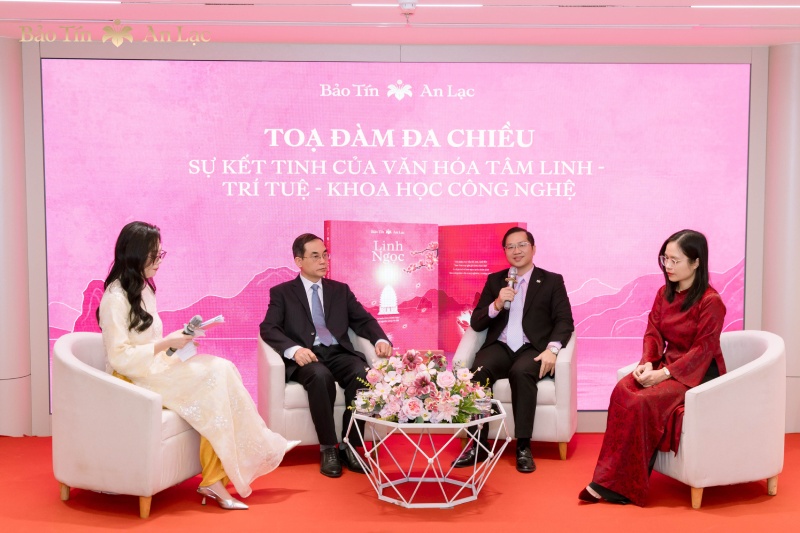
From a scientific and policy perspective, experts believe that the process of "polishing" ashes is based on technologies that have been applied in many countries such as Switzerland, the United States, Canada or Australia. Research, standardization and transparency of scientific procedures are key factors for society to access this form objectively, avoiding subjectivity or misunderstanding.
According to data shared at the event, currently in major cities in Vietnam, the cremation rate has exceeded 80%, showing a clear shift in burial customs. From cremation to new forms of remembrance such as Linh Ngoc is a next step in development, reflecting the need to personalize and humanize the ultimate rituals of humans.
Linh Ngoc's book is therefore not only intended to introduce a product or service, but also raises the issue on a broader scale: how to ensure that modern society still maintains cultural depth and solemnity before departure, while still adapting to new living conditions.
At the end of the program, the organizers said that more than 400 books had been registered for ownership right at the ceremony, along with many opinions exchanged and discussed from experts and readers.
In addition, all profits from selling the Linh Ngoc special book publication set, which is 100 million VND, are used by Bao Tin An Lac for charity activities, thereby contributing to emphasizing the spirit of corporate social responsibility associated with the content of the book.
With an inter-sectoral approach and serious research process, Linh Ngoc is considered a remarkable effort in opening up a new concept of burial and commemoration in Vietnam, while suggesting new approaches to human life issues in the 21st century.
It's a bit of a bit of a bit of a bit of a bit of a bit.


