
Completing the identity piece
Amidst the remote villages in the mountainous region of Quang Tri, where the Chut ethnic people have been attached to mountains, forests, rivers and streams for generations, there is a cultural gap that has quietly existed for many years. That is the absence of a community activity uniform, a visual and vivid symbol of national identity. To date, that gap is gradually being filled with elaborately researched uniforms, entrusted with responsibility and cherished with pride.
Not just shirts and dresses, it is a long story of memories, of cultural identity and of a journey for a small ethnic group to confidently stand in the multicolored picture of the community of Vietnamese ethnic groups.
The Chut ethnic group includes the Sach, Ruc, Arem, May, Ma Lieng groups, mainly residing in remote mountainous communes bordering the border. Due to their specific history of residence, complex migration processes and prolonged socio-economic difficulties, for a long time, the Chut people have not formed community life costumes that are defining and unified.
That reality has left many concerns. During festivals, great unity festivals, art performances or major cultural and educational events, the Chut people have difficulty expressing their own identity. Many times, people have to "wear whatever they have", even borrow costumes from other ethnic groups to perform and participate in common activities.
Ms. Ho Thi Toan (in Y Leng village, Dan Hoa commune) shared her very sincere feelings: "Without our ethnic costumes, every time we go to festivals or big holidays, women are very sad. Wishing for a unique costume of the Chut people has been a long-held desire.
From that practical need, the scientific research topic on community costumes of the Chut ethnic group, chaired by the Institute of Ethnology, Vietnam Academy of Social Sciences, was born. This is a project that is carried out methodically and seriously, with the participation of leading scientists and especially the Chut community itself, cultural entities.
Mr. Mai Xuan Thanh - Deputy Director of the Department of Culture, Sports and Tourism of Quang Tri province said that the research of costumes is not only limited to form, but is a process of identifying and filtering core values.
Clothes when built on a scientific basis will become a cultural symbol, helping the community confidently express themselves in the common space," Mr. Thanh said.
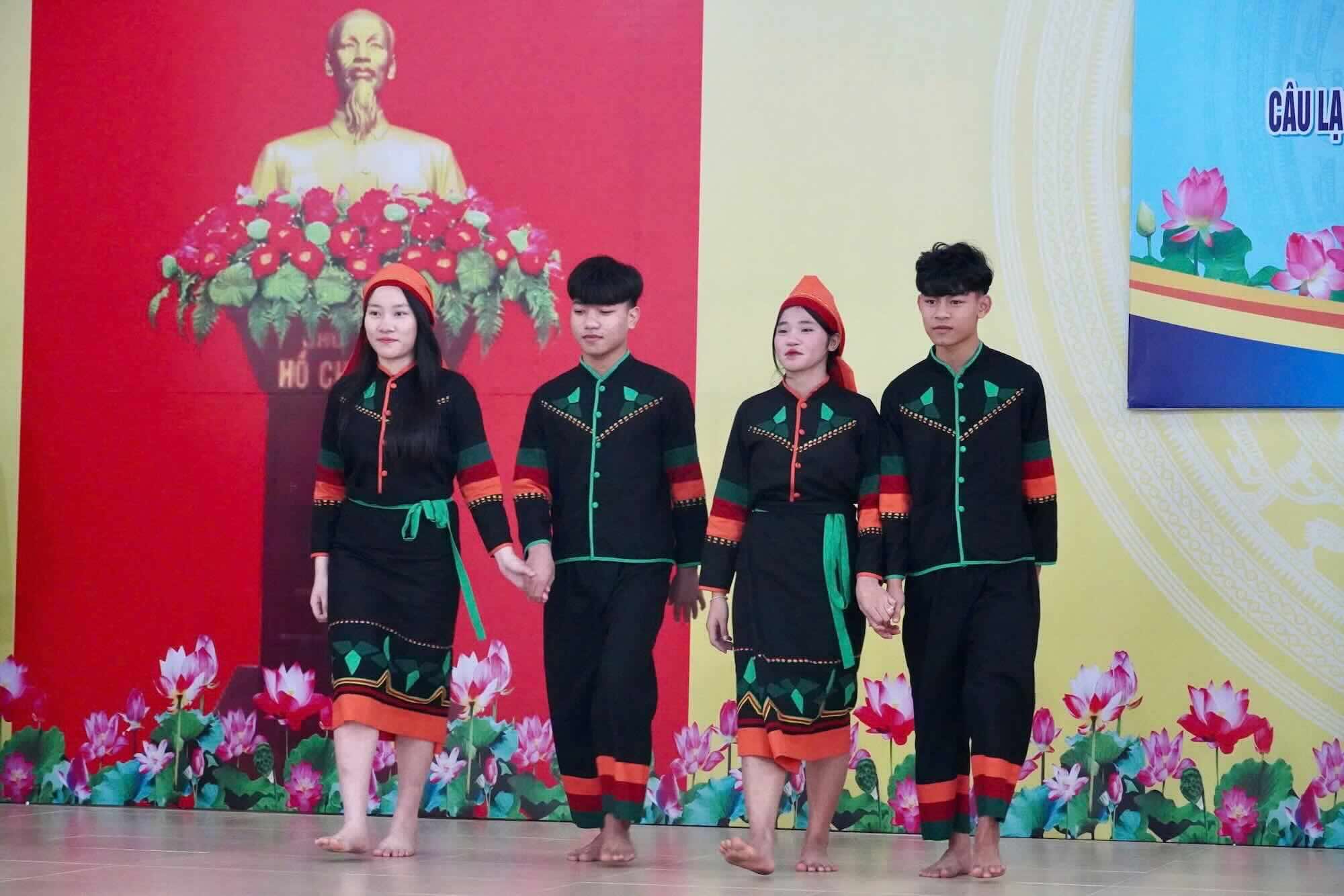
From the research results, the community costumes of the Chut people are designed to suit current life, ensuring both preserving traditional identity and convenience for use in daily life, festivals, education and cultural exchange.
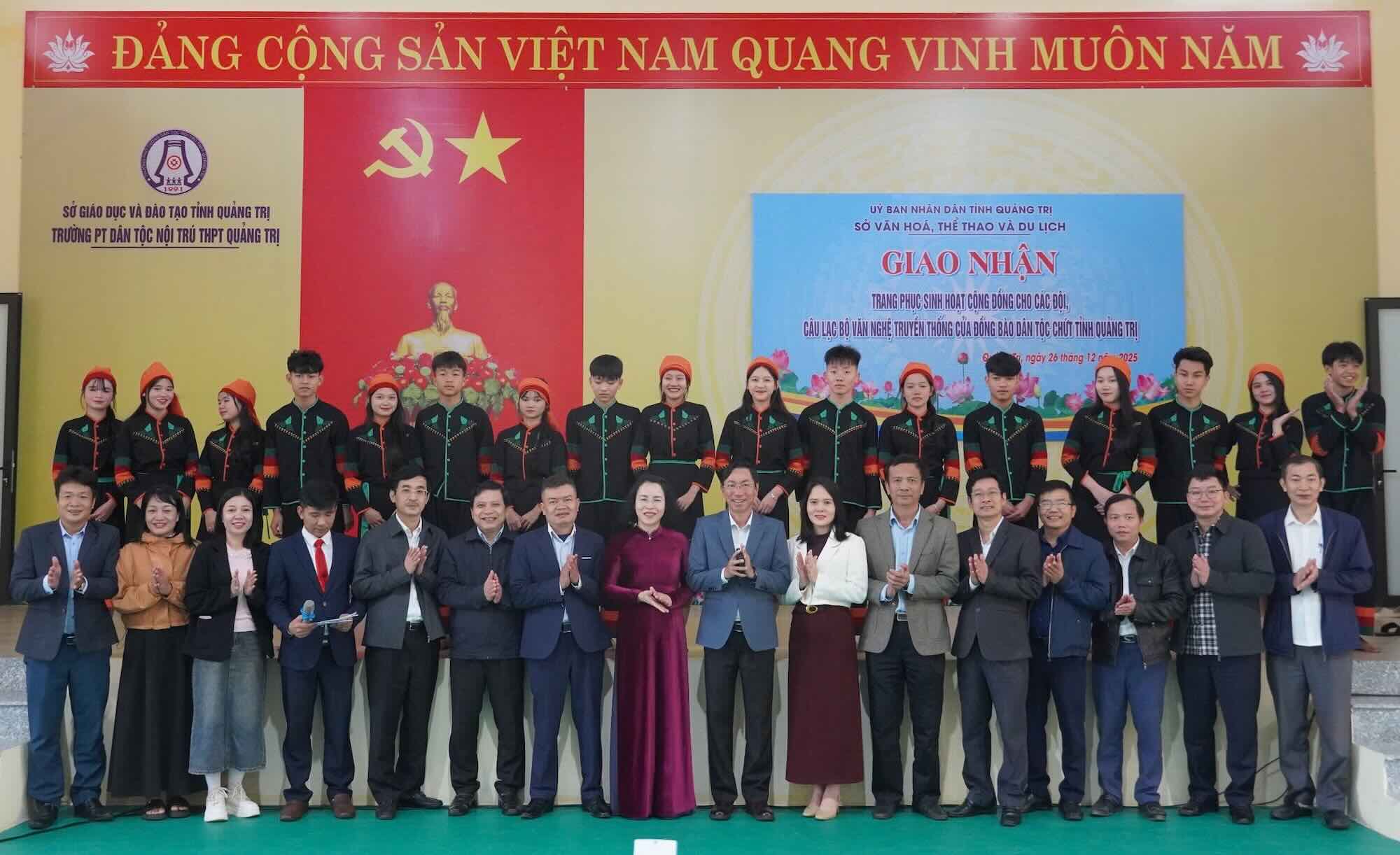
Recently, the Department of Culture, Sports and Tourism of Quang Tri province organized a ceremony to hand over community life costumes to traditional art teams and clubs of the Chut people in many communes such as Thuong Trach, Dan Hoa, Kim Phu, Kim Dien, Tuyen Lam. The costumes awarded for the first time are not only artifacts, but also meaningful cultural symbols.
Identity spreads life
For the Chut people, spiritual life is closely associated with mountains and forests and nature. Folk songs such as "Kà tơm tà lênh", folk stories about the origin of the ethnic group, rituals of worshiping forest gods, stream gods, Giang Son worshiping ceremony... all deeply reflect the concept of harmonious living between humans and nature.
In that space, community costumes play the role of a "verbal language", contributing to making cultural values more fully expressed. Colors, patterns, and ways of dressing become a means of telling stories about history, beliefs, and community life.
Mr. Dang Quang Huy - Head of the Culture Department of Kim Phu commune, said that before, every festival or Lunar New Year, the commune's art troupes had to borrow costumes of other ethnic groups. "Now that there are community costumes of our ethnic group, people are very excited. This is an important premise to preserve and promote the Chut ethnic identity," Mr. Huy said.
Bringing costumes into schools, especially in ethnic minority boarding schools, is considered a long-term solution in traditional education. Costumes not only appear on stage or festivals, but become an intuitive tool to help the younger generation understand their roots and nurture national pride.
Cao Thi Dung - a 11D grade student at Quang Tri Ethnic Minority Boarding High School, shared: "Being able to wear the costumes of my ethnic group makes me feel more confident and proud. I understand that I have a responsibility to preserve and introduce Chut culture to my friends.
Talking to us, Mr. Pham Hong Viet - Principal of the school, said that Chut ethnic students account for about 42% of the total number of students. The handover of traditional costumes is a great motivation for them to express their identity, contributing to comprehensive education.
Not only stopping at festivals and education, community costumes also open up opportunities to link cultural preservation with community tourism development. When the Chut people appear in traditional costumes in exchange and tourism spaces, the image of a small but rich in identity ethnic group is introduced truthfully and vividly.
In the days leading up to Tet, when villages are bustling preparing to welcome spring, new costumes become even more meaningful. Tet for the Chut people is not only a family meal, but also an opportunity for culture to be more clearly present in community life.
Although economic conditions are still difficult, the Chut people still preserve a treasure of precious culture formed through the process of survival and attachment to mountains and forests. The research, completion and introduction of community costumes into use is proof of a sustainable approach to cultural preservation: taking the community as the center, science as the foundation and practice as a measure.
When identity is recognized and appreciated, culture is not only preserved, but also becomes a spiritual motivation, contributing to consolidating the great national unity bloc, enriching the multi-colored cultural map of Quang Tri and the whole country.


