
Just a few hours after screening, many films have appeared rampant on copyright infringement websites, even being livestreamed directly on social networks, seriously affecting the revenue and investment environment of the film industry.
Not only stopping at spreading illegal content, many pirated movie websites also exist thanks to advertising money from gambling, betting and brands that lack control over brand locations.
Faced with this situation, Lao Dong Newspaper had a conversation with Director of the Cinema Department Dang Tran Cuong about solutions to prevent pirated films, handle violating websites and protect the sustainable development environment for Vietnamese cinema.
Mr. Director, what damage does the situation of pirated films, secret filming, and illegal distribution of films cause to Vietnamese film producers and the film market?
A feature film usually requires a very large investment in finance, human resources and time, but if it is secretly filmed or illegally distributed right in the early stages of popularization, revenue may be significantly affected.
Not only economic damage, this issue also directly affects the psychology and trust of investors. If copyright infringement is prolonged, production units will be hesitant to invest in large projects, especially films with high budgets or long-term investments. This will in the long term affect the quality, scale and competitiveness of Vietnamese cinema.
From a market perspective, pirated films also create an unhealthy competitive environment, reducing the revenue of legitimate film distribution and dissemination platforms and units, thereby affecting the entire value chain of the film industry. Therefore, copyright protection is not only protecting a specific film but also protecting the creative environment, investment environment and sustainable development of Vietnam's film industry.

Many Vietnamese film producers are "crying for help" because movies just released in theaters have been illegally livestreamed on TikTok and Facebook. What solutions will the Department of Cinema have to reassure producers to invest in large projects?
I strongly share the concerns of current film producers, especially in the context of the act of secret filming, livestreaming and illegal distribution of films on social networks taking place more and more quickly and complicatedly. This is not only a story of revenue damage for a film but also directly affects the investment environment and the long-term development of the Vietnamese film industry.
To limit this situation, in addition to the role of state management agencies and digital platforms, the coordination of distribution units and cinema systems is also very important. Cinemas need to strengthen control over the use of recording equipment in the cinema, proactively detect acts of secret filming, coordinate with functional agencies to handle promptly and raise audience awareness about copyright respect.
We understand that to have a quality film, producers must invest a lot in finance, human resources and time. Therefore, the Department of Cinema will continue to coordinate with functional agencies, digital platforms, film distribution and dissemination units to improve the effectiveness of detecting, preventing and handling copyright infringement in the online environment, contributing to creating a safer, healthier and more sustainable film investment environment for filmmakers.
I believe that when there is synchronous coordination between management agencies, producers, cinemas, digital platforms and the audience themselves, the awareness of copyright respect will gradually be raised, thereby creating conditions for Vietnamese cinema to develop more professionally and sustainably.
The revenue of pirated websites comes from gambling, betting and unconscious brands. What solutions does the Department of Cinema have to create a more effective "blacklist" (Blacklist), forcing advertising units to cut off the money supply to these types of pirated movie websites, sir?
We believe that to effectively handle pirated movies, it is necessary to gradually cut off revenue from violating websites, especially revenue from advertising. In fact, many pirated movie websites exist thanks to advertising revenue, including gambling, betting or advertising from brands that do not fully control the location of their brands.
In the coming time, the Department of Cinema will continue to coordinate with functional agencies and related units to review and update the list of common copyright infringement websites; and at the same time strengthen information sharing with advertising businesses, intermediary platforms and digital advertising service providers to limit placing advertisements on these websites.
Our point of view is to shift from only handling violating content to handling the entire "ecosystem" supporting violations, including advertising cash flow. When pirated movie websites no longer have revenue to maintain operations, the effectiveness of prevention will be more substantive and sustainable.
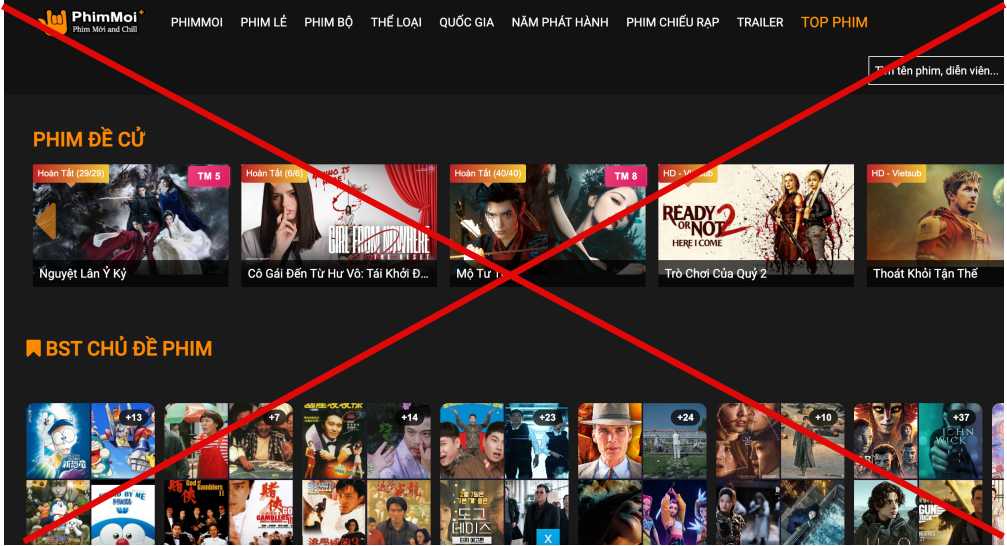
Currently, the use of AI to automate data collection and dissemination of pirated films is very common. Has the Department of Cinema made any technological preparations to confront new generation copyright infringement "bots"?
The use of AI and automated technology by subjects to copy, paste, and distribute copyright infringed content is a new trend and creates many challenges for management. However, this is also a trend that forces management agencies to innovate methods of monitoring and enforcement in the digital environment.
For the field of cinema, the Department of Cinema will closely coordinate with the specialized agency managing state copyright and related rights of the Ministry of Culture, Sports and Tourism, the Copyright Office, and functional agencies, technology units and related platforms to strengthen the application of technology in reviewing and detecting content violating film copyright in cyberspace.
We believe that in the fight against copyright infringement in the digital environment, technology is both a challenge but also an important tool to improve management efficiency. Therefore, in addition to perfecting legal frameworks and strengthening inter-sectoral coordination, the application of technology and improving digital capacity will be a very necessary direction in the coming time.
Thank you for sharing.


