
On the morning of August 22, Hanoi National University of Education organized the national scientific conference "Innovation in art education in Vietnam: Developing creative capacity, promoting traditional values and adapting to digital transformation".
The conference is also an opportunity for the Faculty of Arts, Hanoi National University of Education and delegates and guests to exchange views on issues being raised in art training and education today.
Innovation in art education in the AI era
The conference raised the issue of art education facing the requirement of innovation. Digital transformation, artificial intelligence (AI) and international integration create new creative spaces, while also posing the problem of preserving national cultural identity. New policies also open up more opportunities for artisans, artists, and experts to participate in educational activities, towards a model of connection between schools and the cultural practice community.
However, in reality, bringing artistic heritage into schools is still fragmented, mainly stopping at disjointed experiential activities. Meanwhile, traditional values face competition from foreign cultural waves in the digital environment. The gap in integration mechanisms, heritage pedagogy processes and adaptability to digital transformation is posing requirements for comprehensive innovation in art education.
From this reality, the issues raised are not only to add more artistic content to the program, but also to change the way learners approach art. How to transform traditional heritage into appropriate educational content; how to make artisans and artists truly participate in the teaching process; and how to apply AI and digital technology to support creativity without losing identity are questions that need to be answered.
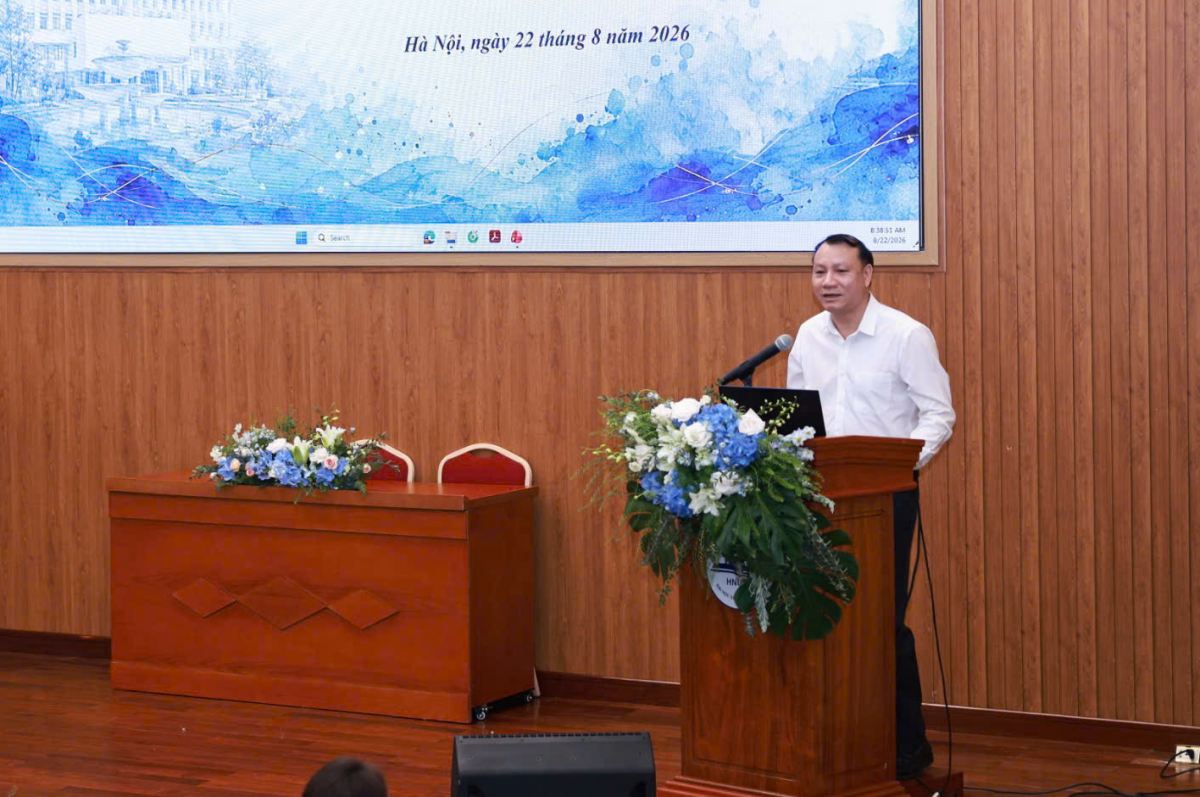
Speaking at the conference, Assoc. Prof. Dr. Nguyen Duc Son - Rector of Hanoi National University of Education emphasized the fundamental role of art education in shaping people. He believes that art education must first of all help students feel beauty and higher, live with beauty.
Educating students to be able to feel beauty and more importantly, to live with beauty. In education, we call it aesthetic education. Among the goals of education, aesthetic education, beauty education is one goal and it is closely linked to other goals of education," Mr. Son said.
According to Mr. Son, when young people know how to love and cherish beauty, that value can become a driving force to promote their own development. From there, art education is seen not simply as the transmission of fine arts, music or performance skills, but also contributes to shaping the aesthetic capacity and values of learners.
This is also the foundation to solve the problem of renovating art education in the context of rapid technological development.
Technology opens up more art approaches
At the workshop, delegates exchanged views on many directions of artistic education innovation, from bringing traditional heritage into schools, strengthening the role of artisans and artists to applying digital technology and artificial intelligence (AI) in teaching.
Technology is opening up many new approaches to art. AI is being researched to support work analysis, harmony, folk song staging, and personalized learning materials; while virtual reality and augmented reality are proposed to create more experience space for learners. Some studies also mention digitizing heritage data and building digital learning materials to help students access traditional art more conveniently.
Besides these benefits, delegates also exchanged views on the limitations of technology in art education. The question is how AI and digital technology support the creative process, but without losing emotions, direct experiences and national cultural identity.
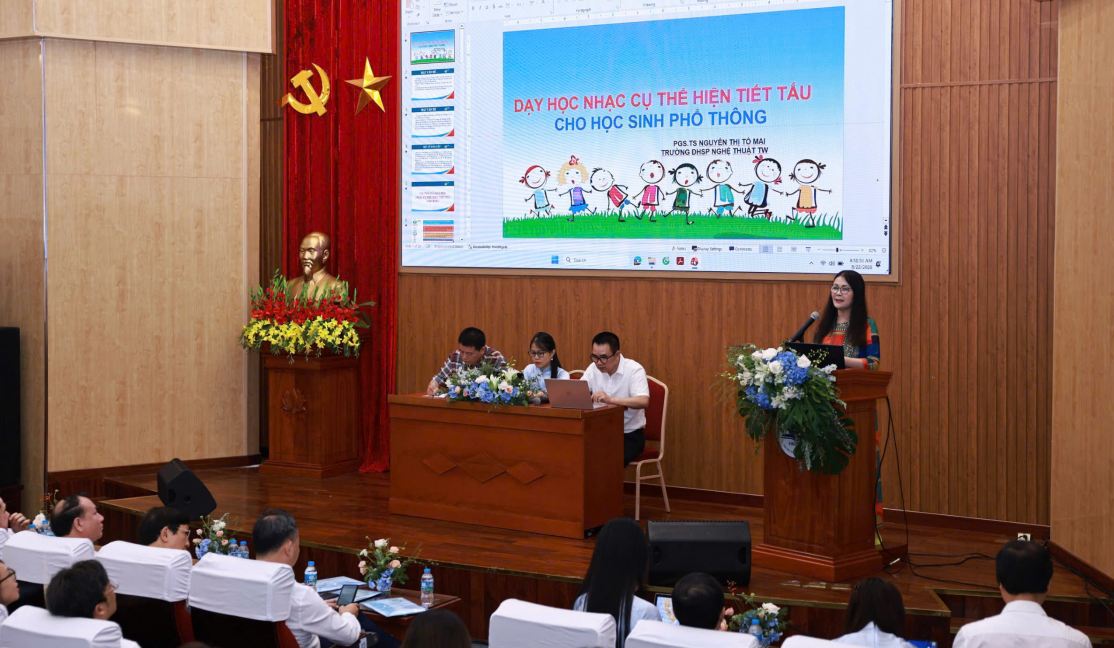
According to Assoc. Prof. Dr. Nguyen Duc Son, in the context of science and technology development, it is important to create a cultural and valuable foundation for the innovation process. He emphasized the combination of value education, cultural education with science and technology, so that technology does not develop separately from tradition.
Assoc. Prof. Dr. Nguyen Duc Son said that this approach has direct significance for Vietnamese education, because technology only truly promotes value when serving people and is placed on a cultural foundation. This is also an issue that many presentations at the conference approached, when jointly aiming to develop digital capacity and creative capacity but still retain the identity of Vietnamese art.
Besides technology, delegates also exchanged views on bringing artisans and artists into schools, building an open educational ecosystem connecting schools, teachers, artisans, artists, art clubs and the community. This is considered a direction to overcome the fragmented situation of heritage education, and at the same time bring practical experience back to an important position in art education.


