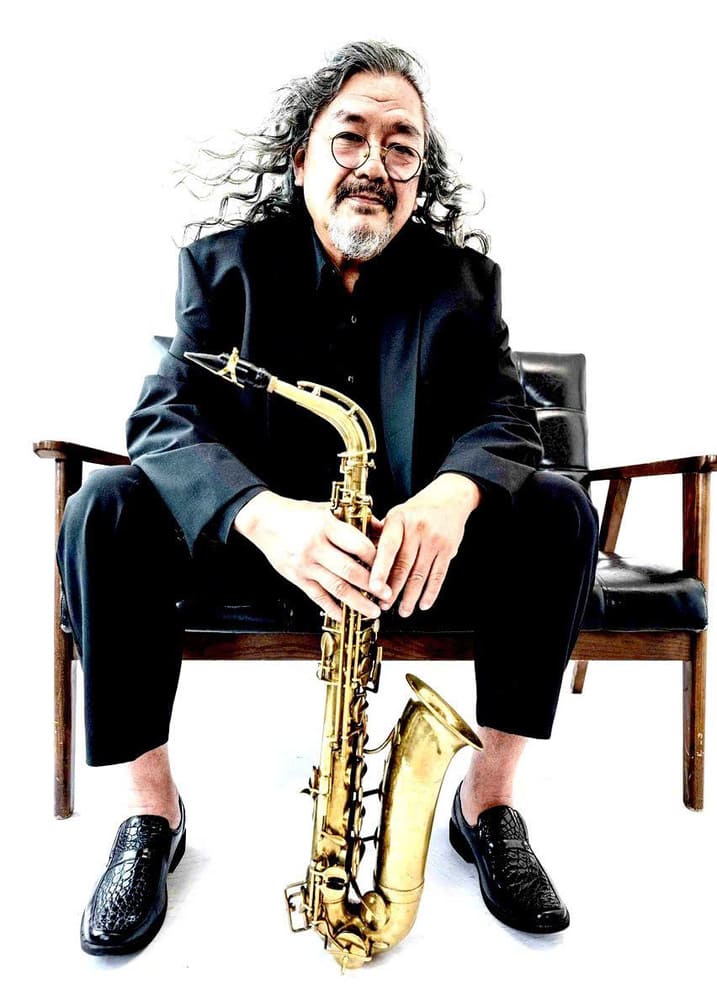
As one of the pioneering artists who laid the foundation for Vietnamese Jazz, artist Quyen Van Minh for more than half a century has been a particularly attached face to Hanoi Jazz life.
From 1989, he taught saxophone at the Hanoi Conservatory of Music (now the Vietnam National Academy of Music). In 1997, he opened his own Jazz Club - the predecessor of Binh Minh Jazz Club, one of the oldest and most famous jazz addresses in Hanoi.
Before Hanoi Jazz Festival, the conversation with artist Quyen Van Minh is not just a story about a Festival, but a story about what a city needs to make music a part of its life.
How was the name "Binh Minh Jazz Club" born, sir?
- First in Giang Vo was Hanoi Jazz Club, then Minh Jazz Club. In Tran Vu, it was too cramped, there was a friend named Binh, after a wedding asked me to perform, he came to listen and said: "You work in such a cramped place, it's too hard, let me go find a place to work with you". Working together, take the same name - Binh and Minh become Binh Minh, which also means a new day, a new light.
In my heart, I always want Jazz to be placed in a worthy position, both for performers and audiences. To be here today is a very long journey.
In those nearly 3 decades, have you ever felt that jazz audiences in Hanoi are really starting to change?
- About 10 years ago, I see young audiences paying more attention to Jazz in a clear way. In the past, the audience were mainly foreigners. Later, many young people returned from studying abroad, more performance programs, and then Jazz gradually became a musical activity.
The number of Vietnamese people interested has also increased. That is important because to have a music genre develop, first of all, there must be people who listen to it regularly.
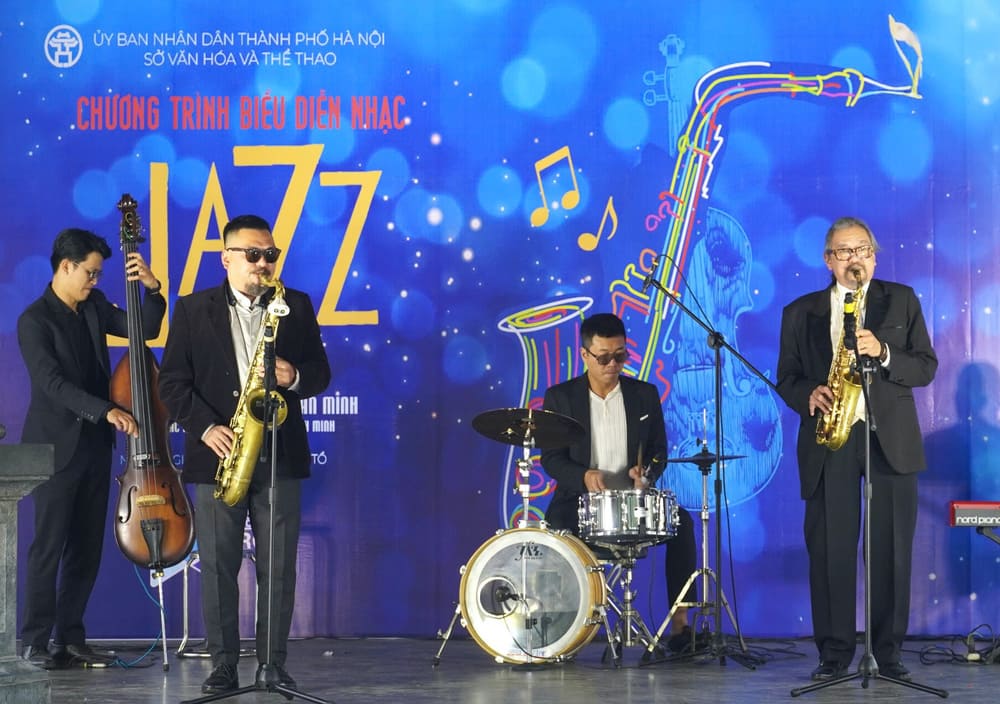
He has seen Jazz played in parks and streets in many countries. When Jazz is taken out of the club space, what will change?
- In Japan, Taiwan (China), Macau (China) or many other places, people have brought Jazz music to flower gardens, parks and public spaces for a long time. There, playing music outside the community has become a natural activity. Vietnam has different conditions. Wanting to organize performances in a public space also involves location, organization, management. Now with pedestrian streets, everything is more open.
Hanoi Jazz Festival is a good opportunity because in 3 days, Jazz has the opportunity to appear in many spaces of the city. I think later, for example on weekends, it is entirely possible to continue such activities! But to become regular, time is needed.
I'm curious to know what you will bring to the Hanoi Jazz Festival stage in the coming days?
- Our program is mainly my compositions, including Vietnamese folk sounds and materials put in to write and perform in Jazz language. It can be called a dialogue, or "Vietnamese Jazz". When those works are placed in the atmosphere of a Festival, with different attitudes and performance conditions, the artist's emotions are also different. I hope listeners can feel that.
Can Hanoi Jazz Festival create a "push" for Hanoi Jazz, sir?
- It certainly creates an impression of Jazz and makes more people interested. But if you say that just one Festival is enough to create a boost for the entire community, I don't think so.
There must be many more times, but the important thing is how the story continues after the festival? How does the culture sector see Jazz, how does it create development conditions, can it maintain regular activities or not?! That is a long story behind it.
Thank you for the conversation!