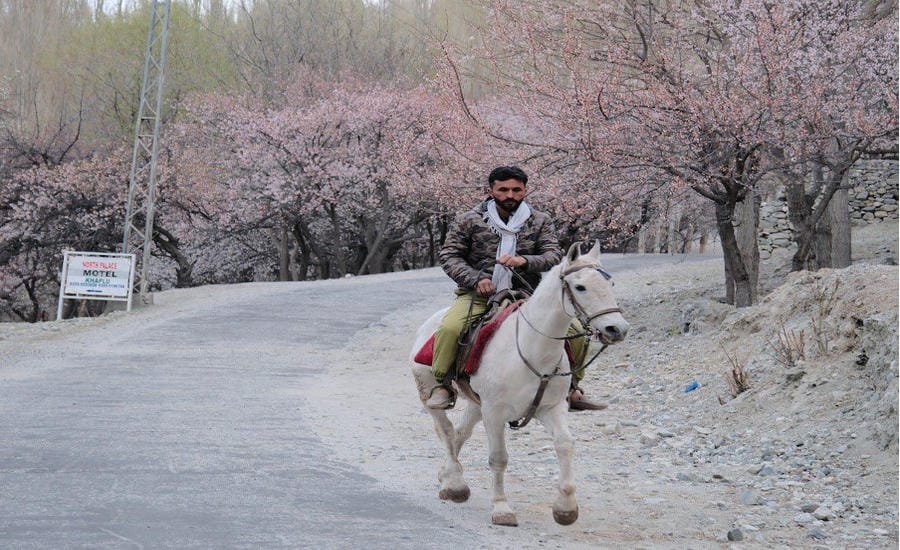
Amidst the brilliant spring days, when cherry blossoms bloom, many familiar destinations are gradually becoming crowded, Ms. Nguyen Huyen Linh (tourist from Ho Chi Minh City) chose a different journey to explore the world. Nearly 2 weeks in the remote South Asian land, she will never forget the different beauty of a beautiful and peaceful Pakistan.
Flower season in Hunza valley
After two long days of travel, the Vietnamese female tourist set foot in Hunza Valley - the first stop and also a place that left unforgettable impressions. Located in northern Pakistan, bordering China's Xinjiang region and the Wakhan corridor, Afghanistan, Hunza is surrounded by the towering Karakoram range with snow-covered peaks all year round.
Spring in Pakistan usually starts in March, but in high mountainous areas people may have to wait until May to see the gentle warm sunshine after winter days. In spring, the entire Hunza valley seems to wake up under the pink color of peach blossoms mixed with the white color of apricot blossoms, plum blossoms, and pear blossoms. All together create a vivid natural picture. Flower layers stretching from the foot of the mountain to the hillsides add soft touches to the harsh rocky mountains.
Ms. Linh expressed: "Every tree blooms profusely, stacked in layers, making me almost unable to take my eyes off that fairytale-like scene. Here, it is not difficult to encounter apricot trees and ancient peach trees hundreds of years old. Nature is both majestic and brings a truly indescribable feeling of peace.
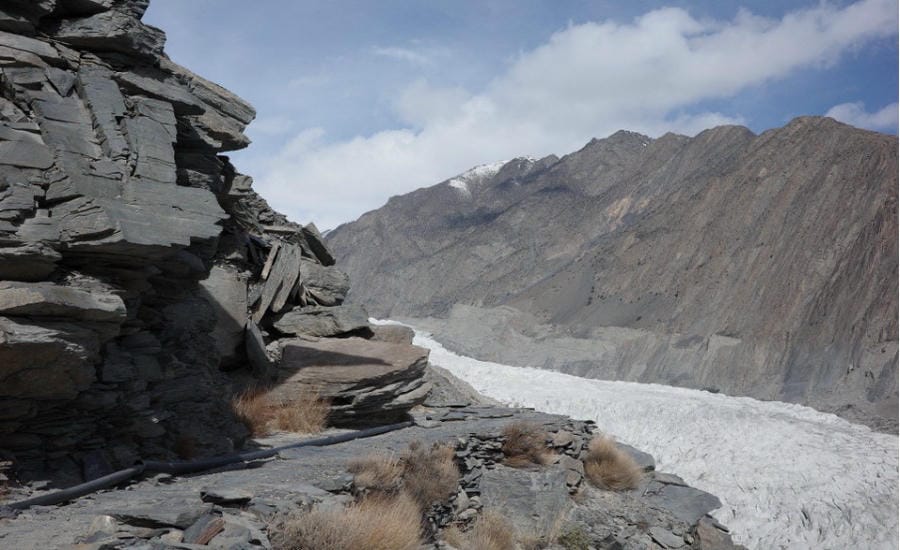
One of the places that surprises female tourists when stopping in Hunza valley is when climbing to explore the Passu glacier. Nestled under sharp mountain peaks, the white glacier stands out with its pristine landscape. This is an important source of fresh water for agriculture and local settlements.
Here, it feels like everything is slow to the point of silence, Passu has been standing there for hundreds of years. Perhaps, later, what reminds me of Passu is not the beautiful scenery, but the feeling that today standing in a truly majestic natural place and suddenly realizing all my worries suddenly lightened a lot," Ms. Linh said.
Not only prominent for its scenery, Hunza also bears a strong historical and cultural imprint. This famous tourist destination was once an independent kingdom before being incorporated into Pakistan and still preserves many unique traditional features. Tourists visiting Hunza often visit ancient fortresses such as Baltit or Altit to explore more about the past of this land.
Besides nature and famous tourist destinations, for Ms. Linh, Hunza valley also leaves memories of the people here. They are gentle, honest and friendly to tourists. In particular, children in Hunza, although living conditions are still poor, are very obedient, polite and open.
Cross-mountain journey
Leaving Hunza, Ms. Linh's journey continued to Skardu - one of the important gateways leading to the high mountains of Pakistan. The higher up, the temperature drops significantly, the air becomes colder and drier. Along the way, she encountered many small villages scattered, simple houses, limited facilities, and life mainly self-sufficient. Skardu is located at an altitude of over 2,200m above sea level, famous for its pristine scenery. Tourists when coming to Skardu often love trekking to the K2 peak to admire the majestic scenery of the Karakoram range. One of the most beautiful stops on the journey is Shangrila Lake, also known as "Paradise Lake", with jade-blue water. Unlike Hunza, which is brilliantly dyed with flowers, Skardu has a more contemplative and somewhat harsh beauty. This contrast makes the trip more diverse and experienced.
Stopping in Lahore - the second largest city of Pakistan and the cultural and historical center of this country, it is easy to see that this place is completely different from the peacefulness of the northern mountains. Lahore brings a vibrant, crowded life with architectural works imbued with Islamic and Mughal period imprints. This city is famous for places such as Lahore Fortress, Badshahi Mosque or Walled City ancient town.
The female tourist recounted: "Letting Skardu, returning to Lahore, we had a very memorable experience when participating in the flag-raising ceremony at the Attari-Wagah border gate, located between Amritsar city (India) and Lahore (Pakistan) at sunset. This is an activity imbued with cultural colors, vibrant and full of emotions. If you have the opportunity to come here, I think tourists should not miss this activity.
The ceremony is not only a military ritual but also a unique cultural performance. In a vibrant atmosphere, thousands of spectators on both sides of the border cheered and shouted as soldiers carried out a parade with decisive and strong movements in traditional costumes, accompanied by lively music.
The flag-laying ceremony began in 1959, after India and Pakistan gained independence from Britain. Over time, from a simple ritual, the flag-laying ceremony at sunset has developed into a performance that deeply expresses the national pride of the two nations.
Pakistan left many emotions for Vietnamese female tourists. The journey through Hunza, Skardu and Lahore brought Ms. Linh new perspectives from the majestic natural beauty, rustic life to cultural diversity. "This trip still has many places I haven't had time to visit. And if I have the opportunity, I will return to continue to explore Pakistan's lands more fully," the female tourist confided.