
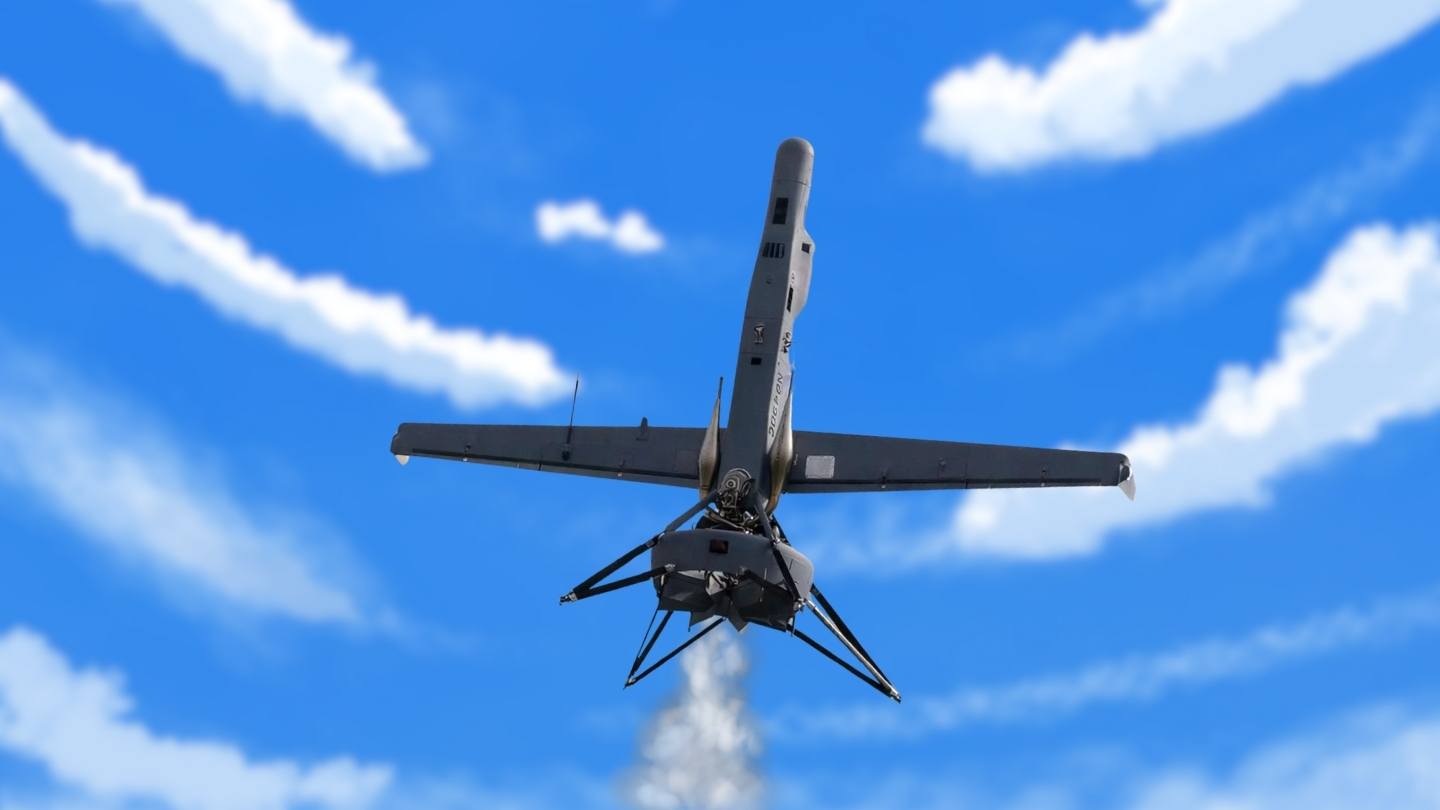
According to the manufacturer's announcement, V-BAT is a group 3 vertical take-off and landing (VTOL) unmanned aerial vehicle, which can be deployed from narrow spaces such as rooftops or small decks, without runways. This design helps UAVs adapt to complex terrain areas, especially mountainous and remote border areas. When carrying optoelectronic and infrared reconnaissance loads, V-BAT can operate continuously for more than 12 hours, thereby significantly improving the ability to extend surveillance for ground forces.
A noteworthy point in this deal is the Hivemind autonomous software accompanied by the V-BAT system. This software is designed to enhance reconnaissance, surveillance and information gathering capabilities in environments with high levels of dispute.
Instead of just operating according to closed source code, India is granted the right to use the development kit to self-build and control autonomous algorithms suitable for domestic task requirements. This approach helps reduce dependence on foreign technology in key military systems, especially in complex electronic warfare conditions.
V-BAT is oriented to be used for many tasks such as border surveillance, route reconnaissance, firepower adjustment and combat damage assessment. Thanks to its ability to operate independently of runway infrastructure, this system is expected to add space between tactical UAVs that need airfields and small UAVs with limited flight time that India is operating.
According to the plan, V-BAT will be produced in India through a technology transfer agreement, expected to start from the end of 2026. This move is not only aimed at meeting immediate needs but also towards building long-term autonomy in the field of military drones.


