
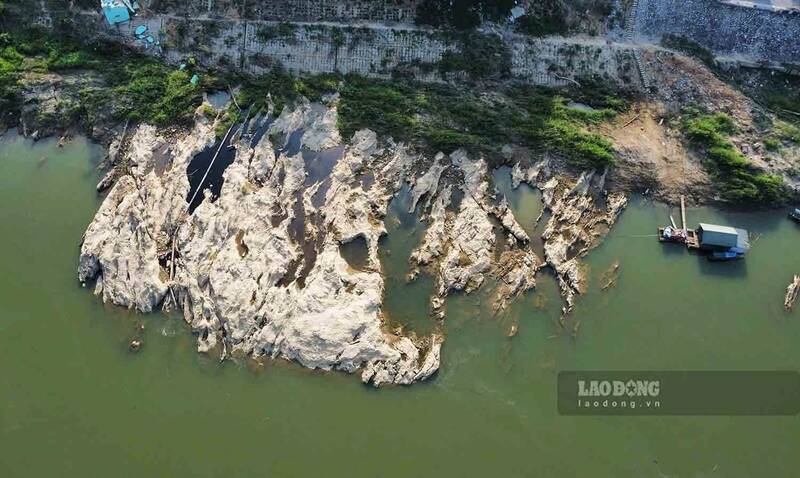
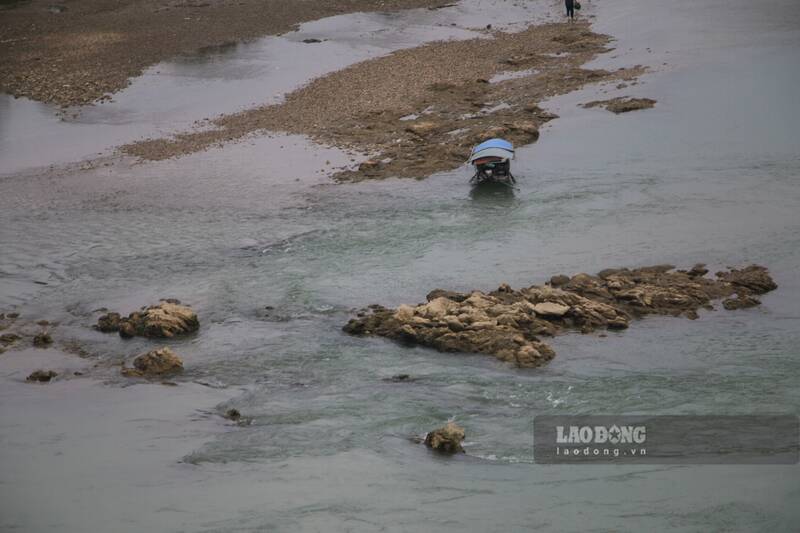
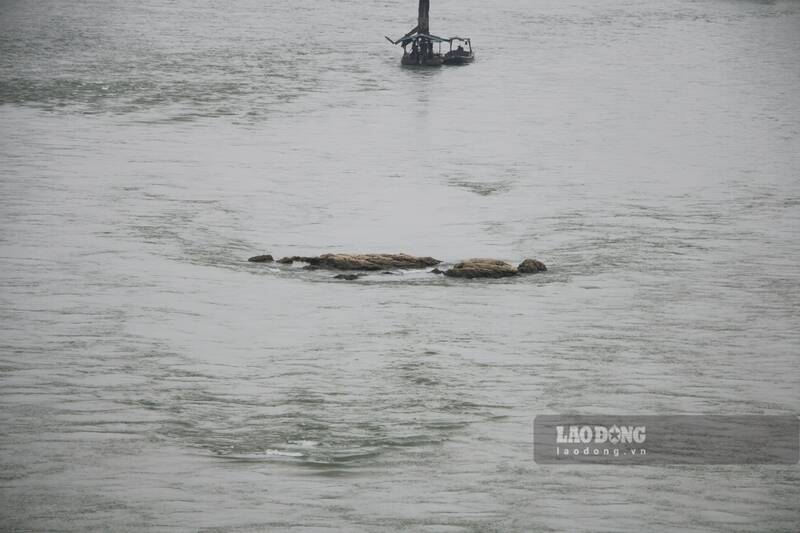
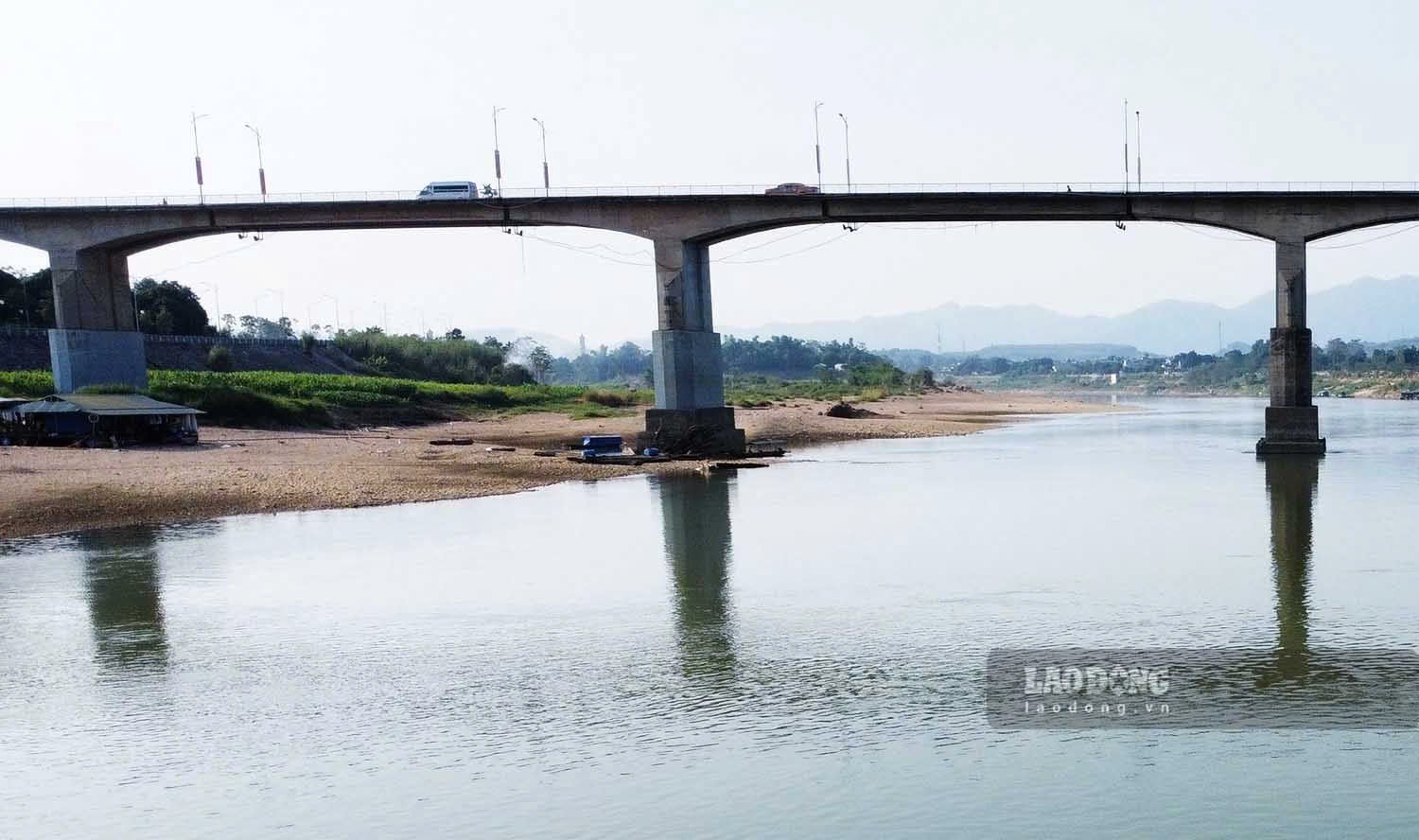
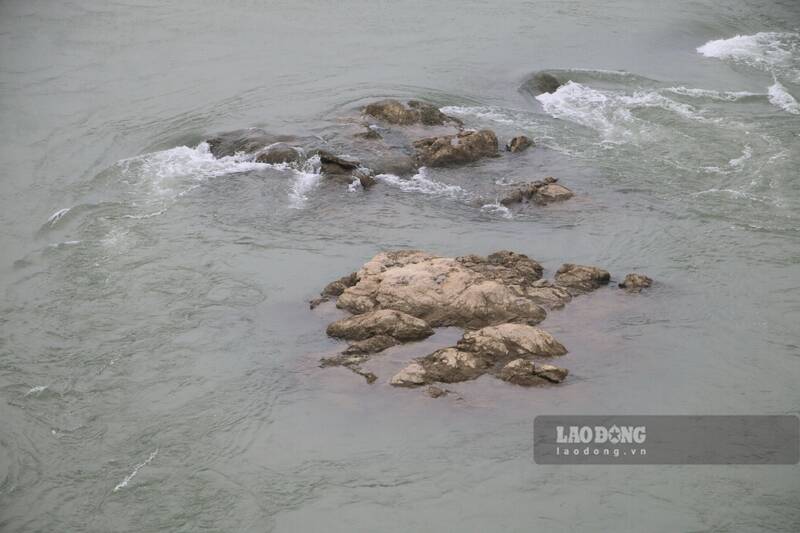
Recorded at the beginning of December 2025, although not yet the peak of the dry season, the water level of the Lo River section passing through Tuyen Quang province has dropped. Many locations are bare, revealing rocks in the middle of the river.
In the past 3 years, due to the impact of climate change, the water level of the Lo River has fluctuated. After flooding in September and October every year is the time when the river water level drops, maintaining a state of drying up from December of the previous year to April of the following year.
The water level of the Lo River has decreased sharply, affecting the ecological environment, production activities, and people's lives, especially aquaculture. Some river transport activities also face many difficulties.
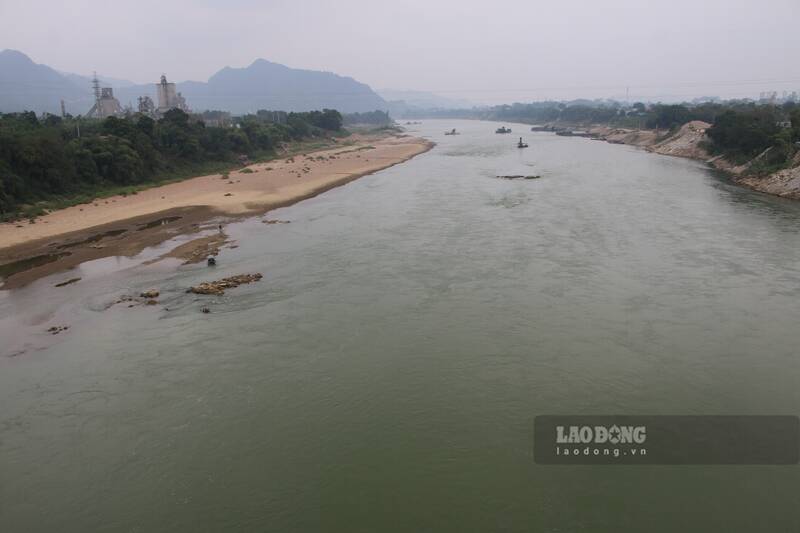
Having fishing on the Lo River for many years, Mr. Nguyen Van Thanh (An Tuong Ward, Tuyen Quang Province) said that in recent days, the water level has begun to drop.
"It's only the beginning of the dry season like this, we don't know how the water will dry up in the next few months. People's fishing on the river is also more difficult. The underground rocks and sand dunes make it difficult for ships and boats to move," said Mr. Thanh.
According to Mr. Pham Thanh Tuan (Minh Xuan ward), when the dry season comes, the most difficult is for fishermen in fishing villages and fish cage farming households. In recent years, the dry season has often lasted for a long time, the Lo River water level drops to the lowest level usually at the end of the season.
"When the water fluctuates erratically, the most difficult thing is for households raising cages. If the river water drops and the fish do not move into cages in time, they will die.
Low water levels greatly affect the ecosystems of aquatic species. In recent days, when the water level has decreased, fishing is not as good as before," Mr. Tuan shared.
According to the Tuyen Quang Provincial Hydrometeorological and Hydrological Station, the water level on the Lo River section passing through the center of the province will usually drop to the peak in April and May every year.
In the past 2 years, the water level of the Lo River has continuously recorded a record low in the dry season, in May 2023 the water level was recorded below 18m, and at the same time in May 2024 it only reached 11.25m.
The authorities predict that the peak drought on the Lo River will occur in the first months of 2026, people need to proactively take response measures to ensure agricultural production and daily life. Especially aquaculture activities on rivers, avoiding economic losses.
Some recorded images:
The Lo River originates from Yunnan province (China), flowing into Vietnam in Thanh Thuy commune, Tuyen Quang province. The end point is at the intersection of Viet Tri River, Phu Tho Province and joins the Red River.
The Lo River section flowing in Vietnam is 274 km long, with a basin area of 22,600 km2. This is one of the 5 longest rivers in Northern Vietnam (Red River, Da River, Lo River, Cau River, Day River).


