
On February 11, Da Nang City Department of Construction issued a document requesting relevant agencies and units to strengthen coordination in state management of passenger transport activities, especially during the peak of the Lunar New Year and the Binh Ngo Spring Festival 2026.
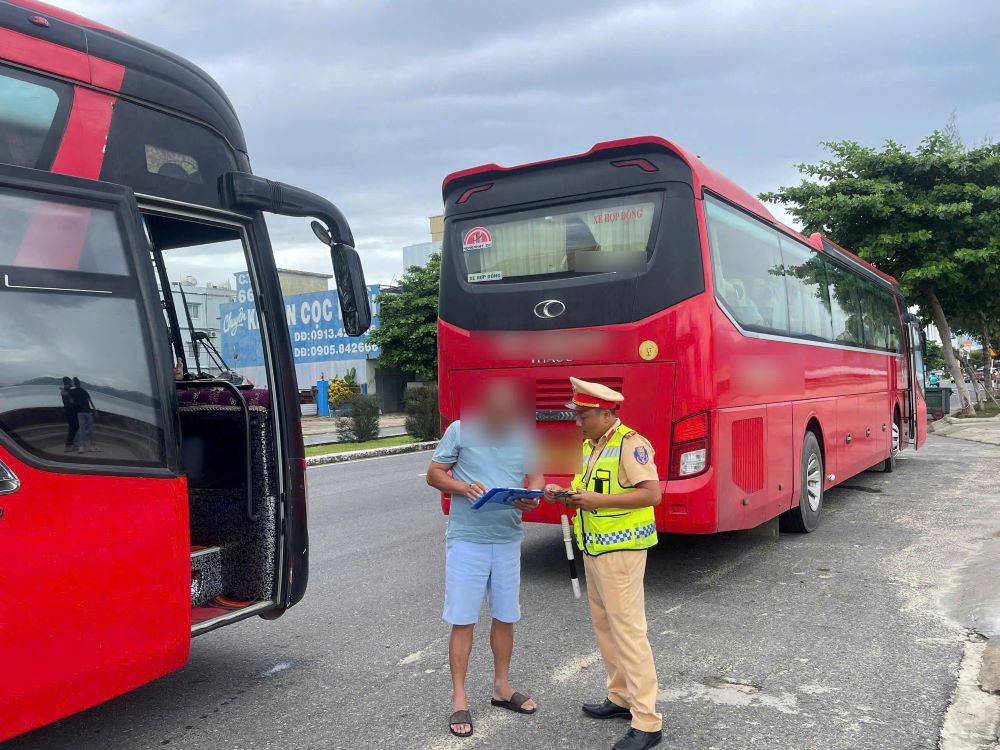
According to the request, Da Nang City Police continue to direct the Traffic Police force to strengthen patrols, inspections, and strictly handle violating transport business vehicles. The focus is on passenger cars operating under contract form but not in accordance with the content of the contract; stopping, parking, picking up and dropping off passengers in violation of regulations; carrying passengers not named in the transport contract.
Violations of driving time, speed, alcohol concentration, number of people allowed to be transported, transport route; the use of drugs and stimulants by vehicle operators will be strictly controlled and strictly handled according to regulations.
The Department of Construction also requested the People's Committees of communes and wards to strengthen inspection, review and handle cars engaged in business transportation in the form of contracts operating in violation of regulations in their managed areas, contributing to restoring order in passenger transport activities.
For transport business units, the Department of Construction requires strict implementation of business conditions according to legal regulations. Vehicles must ensure technical safety before being put into operation; do not carry more than the prescribed number of people; do not arbitrarily increase fares or collect incorrectly the registered and declared level. Goods on the vehicle must be tied and reasonably distributed; passengers must be fully guided on safety and escape skills when incidents occur.
Transport units must strengthen internal self-inspection and supervision; thoroughly instruct drivers to strictly comply with regulations on traffic safety and traffic culture; absolutely do not use alcohol, beer, or stimulants when driving vehicles. Data from journey monitoring devices and cameras recording drivers needs to be effectively exploited to promptly remind, rectify, and handle violations of speed, continuous driving time, and transportation journey.
Vehicle maintenance and repair work must be carried out regularly; thoroughly check engines, steering systems, brakes, tires, lights and fire prevention and fighting equipment. Vehicles that do not meet technical and safety conditions will be resolutely not allowed to participate in traffic.
For two-story sleeper buses, they are only allowed to operate on routes that ensure safety infrastructure; do not operate on routes with high risk of unsafety, especially level V and level VI roads in mountainous areas. Drivers operating this type of vehicle must have at least two years of experience driving passenger cars with more than 29 seats.
Bus station management and operation units are required to strictly check the safety conditions of vehicles and drivers before departure; resolutely not allow departure for cases that do not meet the conditions, and at the same time coordinate with functional agencies to strengthen supervision at the station.


