
On April 30, news from the Ha Tinh Fisheries Sub-Department said that the Northern Center for Environmental Research and Fisheries Diseases had just reported the results of analyzing dead clam samples in Mai Phu commune.
Accordingly, clam sample analysis gave negative results for the pathogenic bacterial agent. The results of water sample analysis at 3 locations (beginning, middle and end of the clam farming yard) showed that the water quality indicator showed signs of organic pollution but did not reach the threshold of causing acute death for farmed clams.
Based on the results of field analysis and inspection, the Northern Center for Environmental Research and Aquatic Diseases determined that the initial cause of clam deaths in Mai Phu commune was mainly due to erratic seasonal weather, from intense heat to heavy rain, causing sudden temperature changes, strongly affecting the living environment of clams.
In addition, due to farming for a long time, continuously releasing seeds through many crops but without interruption time to renovate and clean the farming ground according to the correct procedure.
The common farming density is from 800 - 1,000 heads/m2, 3 - 7 times higher than the recommendations of specialized sectors, which increases the risk of disease outbreaks and causes clam weakness and mass death.
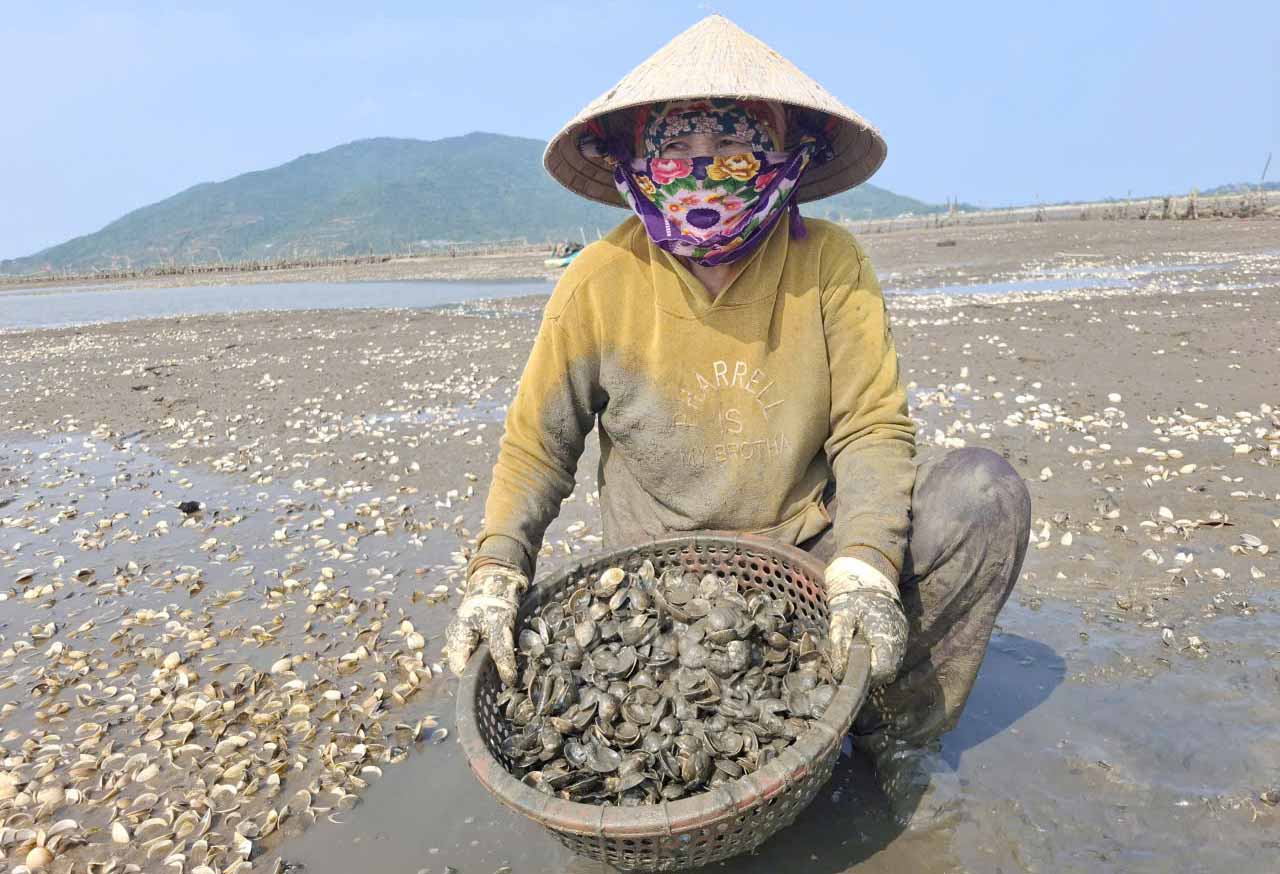
Specialized agencies recommend that people collect and dispose of dead clams in accordance with regulations. After environmental treatment, release clams at a density of 180 - 200 clams/m2 (for clams with sizes of 400 - 600 clams/kg).
Previously, Lao Dong Newspaper reported on the mass clam deaths in Mai Lam village, Mai Phu commune, causing great damage to farmers.
The report of Mai Phu Commune People's Committee stated that dead clams appeared from April 19-25 on an area of 47 hectares of 24 households in Mai Lam village, causing damage of about 250 tons.
Immediately after the discovery, Mai Phu Commune People's Committee requested the Sub-Department of Fisheries to conduct inspection and take samples for analysis to determine the cause of clam death to have appropriate handling directions.


