
Hardship of chiseling concrete, raising graves in the scorching weather
National Martyrs' Cemetery of Road 9 (Quang Tri province) these days is scorching hot. The temperature in the cemetery area is always maintained at a very high level because there is no shade from a tree. However, regularly from 6:30 am to 5 pm every day, dozens of officers, soldiers and doctors are still on duty by the graves of unidentified martyrs in the hexagonal area 1. Their task is to deploy sampling and digitizing information to serve DNA testing according to the "Operation 500 days and nights to promote the search, repatriation and identification of martyrs' remains".
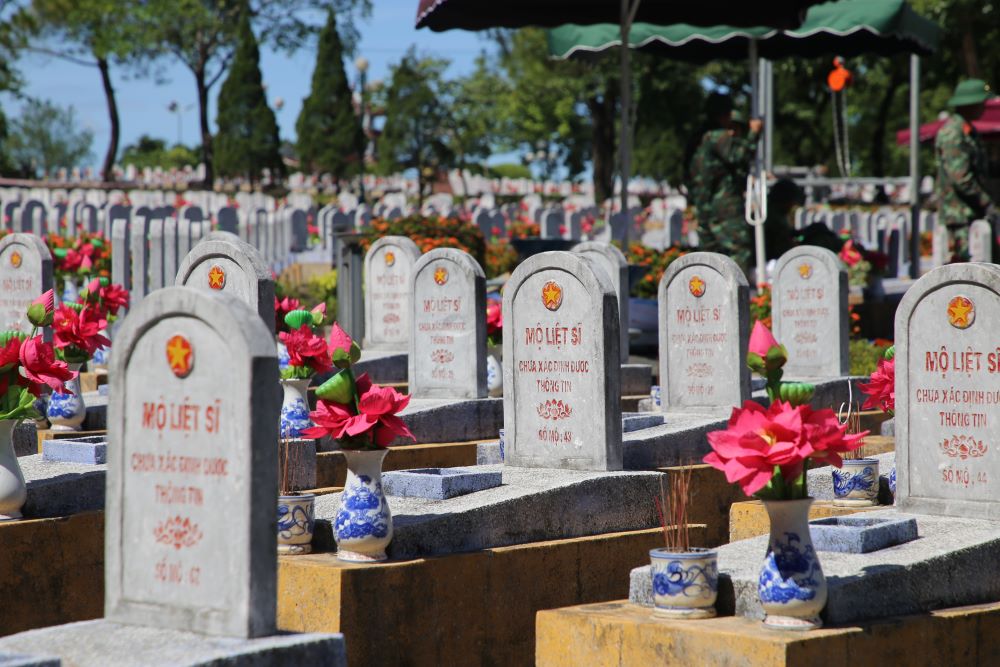
According to the plan, functional forces must take samples for 5,929 martyrs' graves that are still missing information here. To collect a standard bone or tooth biological sample, the process must be strictly implemented in 8 steps and take up to 16 photos from exhumation to completion to digitize, enter data and transmit directly to the National Steering Committee.
The work of taking samples for testing is extremely heavy, requiring patience and absolute accuracy. Because the graves are built solidly through many periods, soldiers have to use specialized hammer and chisel to remove dense concrete blocks, and then raise the graves.
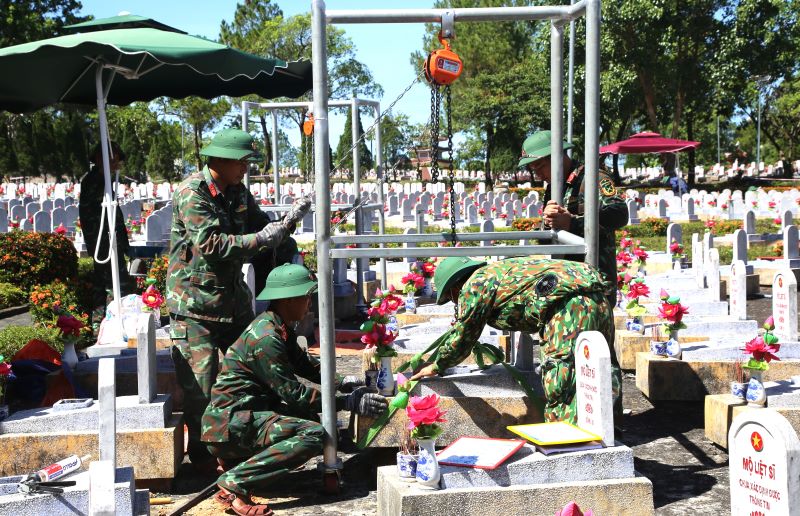
The workload weighs heavily on the shoulders of the soldiers when they have to use both muscle strength and skillfully operate to avoid damaging the remains inside. To reduce labor and speed up the progress of raising and lowering the tomb base, the soldiers have self-made field pole systems to put into use right at the scene.
Soon return the names to the martyrs
In this series of silent tasks, the smooth coordination between forces is the decisive factor. The Army forces are responsible for digitizing, heavily loading and restoring the original state of the tomb shell; and the selection and collection of bone and tooth biological samples is the professional task of the medical force.
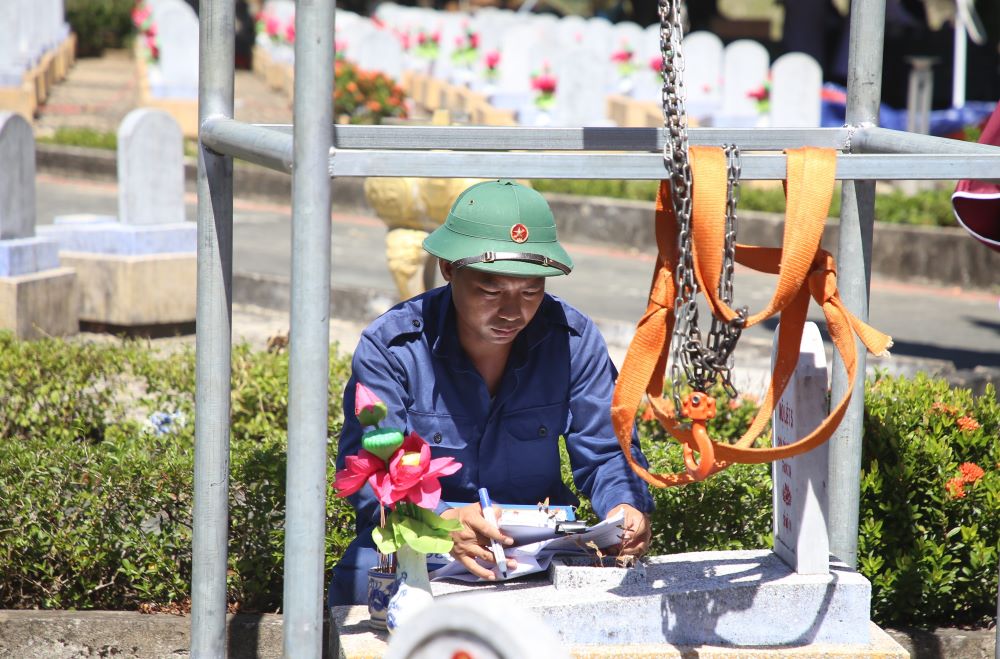
Currently, in the hexagonal area 1, 3 working groups are maintained, each group of 9 people divided into exhumation teams, biological sample collection teams and tomb completion teams. With enormous work pressure under harsh weather conditions, inter-sectoral teams strive to excavate and collect samples, averaging about 40 graves every day.
Lieutenant Colonel Ngo Thanh Liem - Team Leader of Team 584 (Political Department, Quang Tri Provincial Military Command) - shared that the biggest difficulty is that the entire construction area is outdoors in the scorching sun, and the work of chiseling concrete is very strenuous. However, determining that this is a special task, the unit's command always encourages officers, soldiers and doctors to promote the highest sense of responsibility, strive to overcome the weather, and work overtime to ensure the set progress.
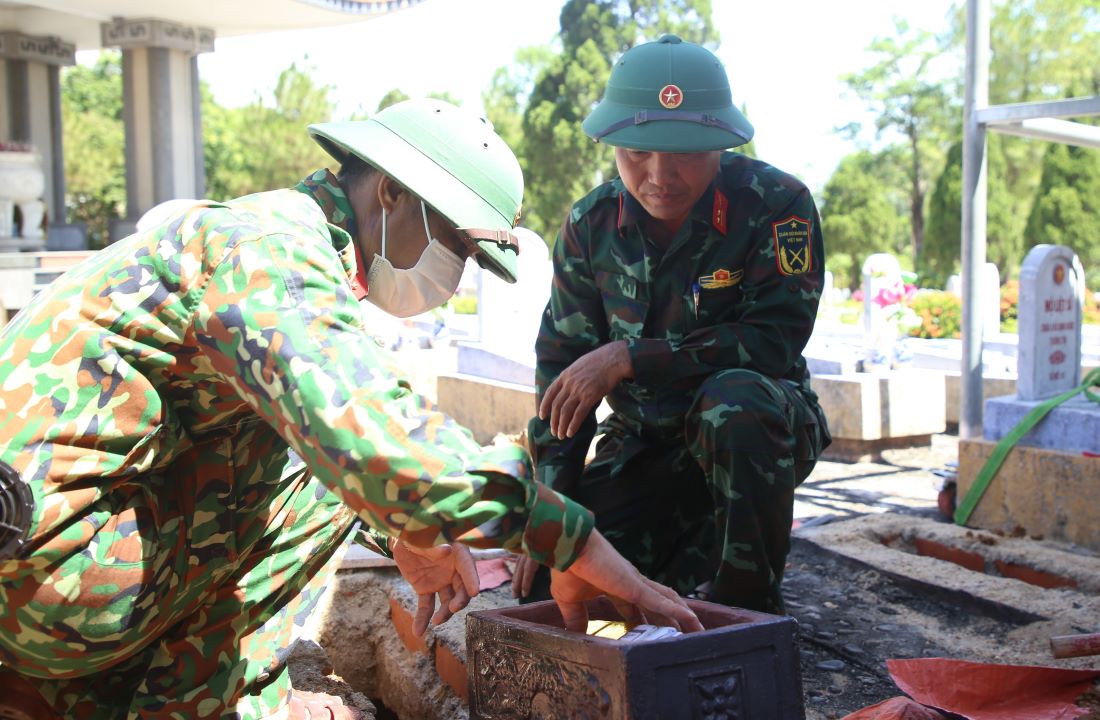
The sample after being collected and strictly sealed will be immediately transferred to the Institute of Forensic Medicine, Ministry of Health to serve testing and DNA comparison.
Before being assigned the above task, Team 584 had a long tradition from its establishment on May 10, 1984 to now. On the journey to find comrades, this unit has collected nearly 4,000 sets of martyrs' remains in the country and more than 5,500 sets of martyrs' remains in Laos.
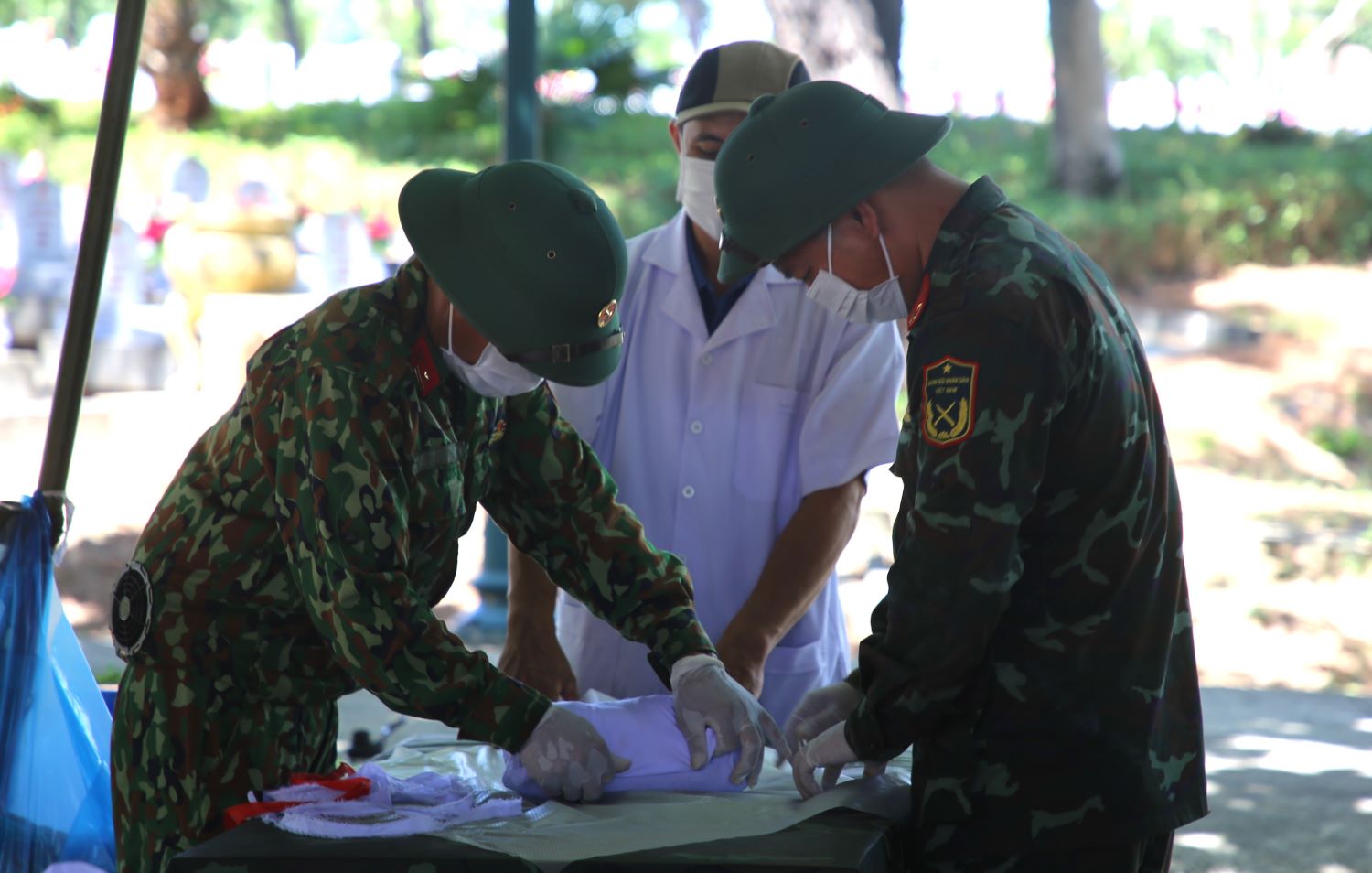
Now, in this large-scale sampling campaign, soldiers of Team 584 continue to stand side by side with the health sector, entrusting their feelings and deep gratitude into each hoe strike, each biological sample.
The drops of sweat soaking the backs of the forces in the sunny cemetery promise to light up hope, soon return the names to them, and soothe the pain and longing of martyrs' relatives across the country.


