
Implementing the 500-day and night campaign to search, repatriate and identify remains of martyrs with missing information, Gia Lai province is urgently taking remains samples for DNA testing at martyrs' cemeteries.
The work is deployed synchronously, ensuring the correct procedures to serve the work of identifying the names of unidentified martyrs.
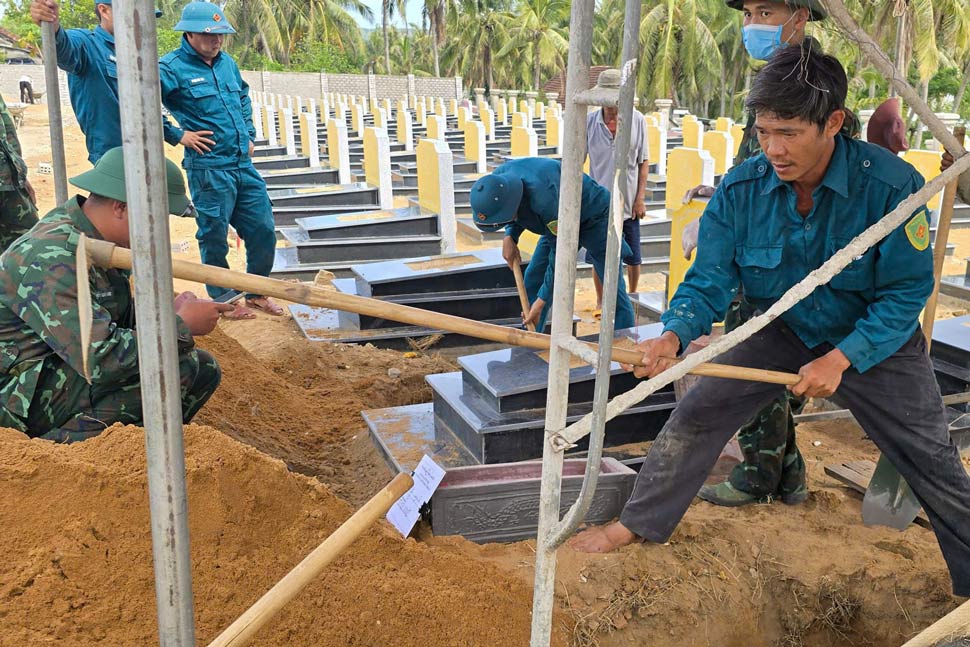
For nearly a week, at My Thang Martyrs' Cemetery (Phu My Dong commune), dozens of officers, soldiers, militia and professional forces have been working continuously from early morning to serve the work of taking martyrs' remains samples.
My Thang Martyrs' Cemetery currently has 445 martyrs' graves, of which 118 graves have not been identified.
Specific forces are assigned, from site protection, excavation, medical to logistics, ensuring that sample taking takes place in accordance with procedures and on schedule.
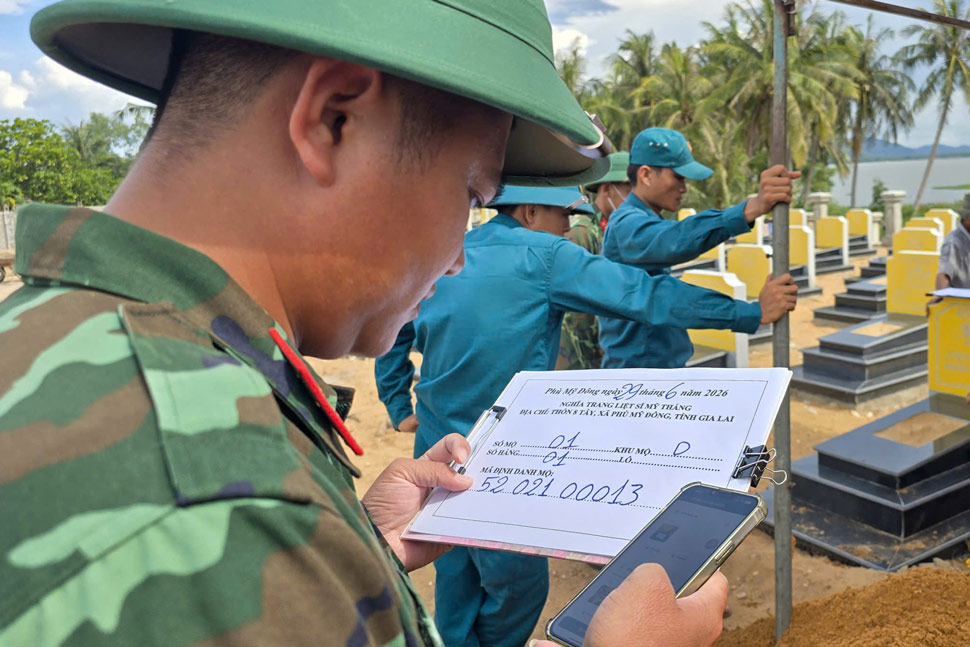
Lieutenant Colonel Pham Huu Loc - Deputy Political Commissar of Phu My Dong Commune Military Command - said that after excavation, the remains were sampled by Team K52, transferred to the medical team for inspection and preservation before being handed over to the Commune Military Command.
The unit deploys the 500-day and night Campaign from June 25. The forces are assigned according to specific tasks, organized and implemented daily to ensure the set progress," Lieutenant Colonel Pham Huu Loc said.
To reduce the impact of weather, functional forces set up tents right in the excavation area. With many years of experience in performing the task of collecting martyrs' remains, officers and soldiers of Team K52 proceeded with each stage according to technical procedures.
Major Tran Hoang Nam - member of Team K52, Gia Lai Provincial Military Command - said that the geological conditions in each cemetery are different, so the excavation process also raises many difficulties.
As at My Thang Martyrs' Cemetery, the ground is soft, prone to subsidence, and many locations have groundwater, affecting the search and repatriation of remains.
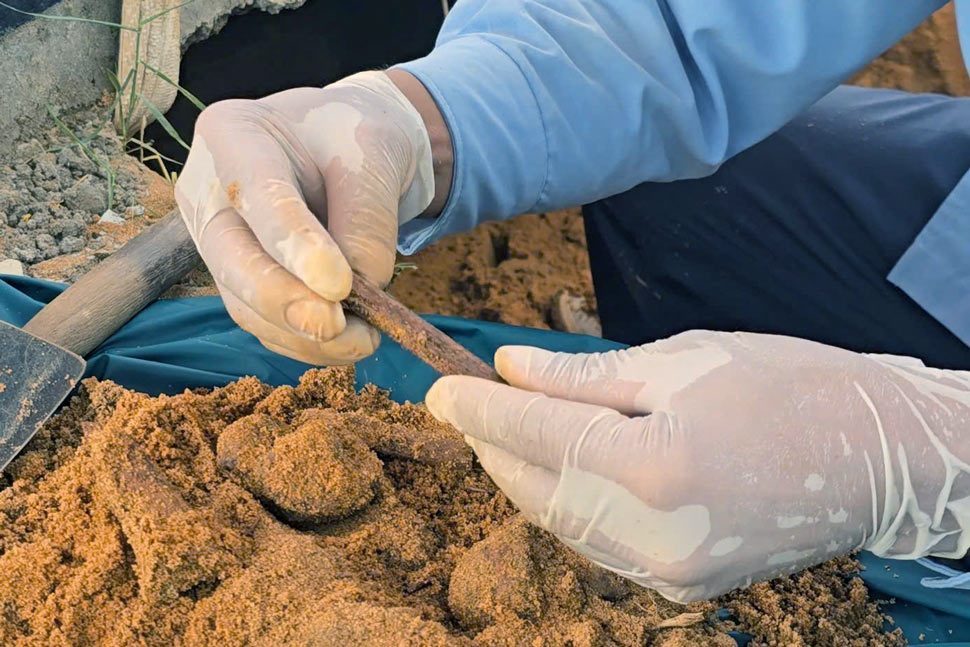
In many cases, the remains have decomposed over time. At that time, we had to expand the excavation scope, carefully identifying each location to avoid missing the remains," Major Tran Hoang Nam said.
After being exhumed, the remains are transferred to the DNA sampling area arranged a few dozen meters from the scene. Here, technicians complete the steps of recording information, taking photos, typing codes, sealing and preserving samples according to procedures before transferring them for testing.
The 500 days and nights campaign is being implemented with 3 key task groups including: reviewing and standardizing data; promoting the search and repatriation of martyrs' remains at home and abroad; and strengthening DNA testing, connecting relative gene banks with martyrs' remains data.
The goal of the campaign is to search for and repatriate about 7,000 sets of martyrs' remains; complete DNA sampling for unidentified graves at martyrs' cemeteries nationwide; and examine about 18,000 sets of martyrs' remains.
According to records, the whole province has 54,455 martyrs, of which 31,078 remains have been collected, and 23,377 martyrs have not been collected. The whole province currently has 119 cemeteries with 41,981 martyrs' graves.
Through review, there are 11,976 graves at 113 cemeteries in 65 communes and wards that do not have information and need to be sampled for DNA testing.
DNA sampling is an important basis for expertise, information comparison and step-by-step identification of missing martyrs, contributing to the implementation of gratitude and meeting the aspirations of relatives of martyrs' families.


