
Hanoi City sets a basic goal to eliminate prolonged traffic congestion before 2030, focusing on solving 12 "hot spots" after handling 39/51 frequent traffic congestion points.
Once one of the frequently congested intersections, the Co Linh - Thach Ban area has significantly reduced pressure after Hanoi City Police and the Department of Construction adjusted traffic organization and cut sidewalks to widen the road surface. Records in the afternoon of June 30 show that the traffic volume on the direction from Co Linh road to Hanoi - Hai Phong expressway only has localized congestion during peak hours, and prolonged congestion no longer occurs.
According to the Hanoi Department of Construction, from the beginning of 2026 to now, the city's inter-sectoral team has handled 39/51 frequent congestion points. Many hot spots have been improved such as Nguyen Trai - Cau Moi route, Pham Hung - Ton That Thuyet - Nguyen Hoang intersection, Cau Buou - Phuc La - Pham Tu axis, Giai Phong - Kim Dong intersection, Mai Linh bridge, Ba La intersection and the southern end of Chuong Duong bridge...
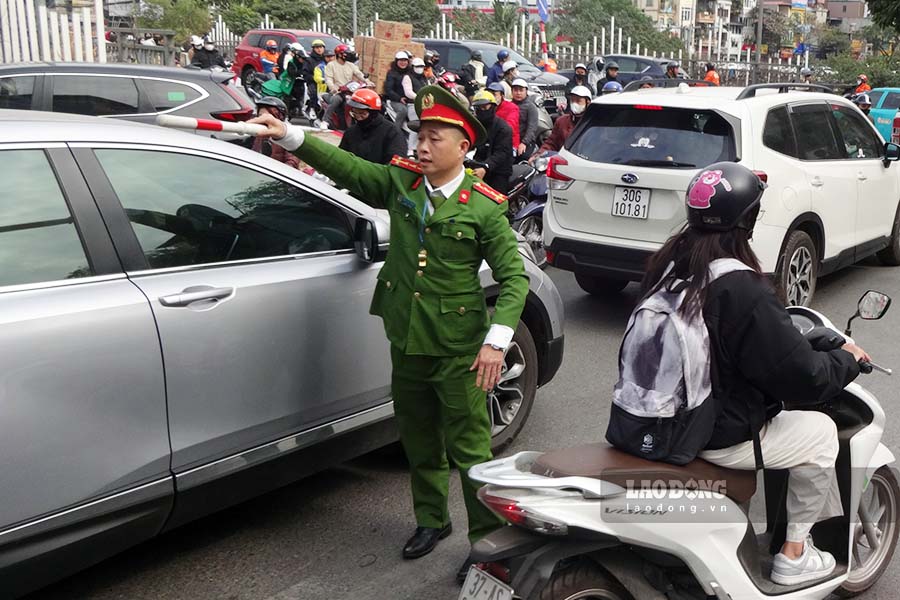
To achieve this result, Hanoi City has synchronously implemented many solutions such as publicizing the location of construction barriers on the iHanoi map, dismantling 16 barrier points after speeding up the project progress, recovering parking spots encroaching on the road surface, expanding the road surface at some locations, adjusting traffic organization and limiting trucks over 10 tons to circulate through Ho Tung Mau - Pham Hung intersection during peak hours. At Dien Bien Phu - Cua Nam intersection, train schedules have also been adjusted to reduce traffic conflicts.
In parallel with infrastructure solutions, Hanoi City Police continues to expand the smart traffic system. After phase 1 with more than 1,800 AI cameras, phase 2 has completed the installation of 2,460 more cameras, raising the total number of surveillance cameras in the area to nearly 5,000.
The new system integrates many features such as traffic signal control according to the "green wave", artificial intelligence (AI) congestion forecasting, adaptive signal control, real-time traffic warning and expanding monitoring to urban order and environmental sanitation.
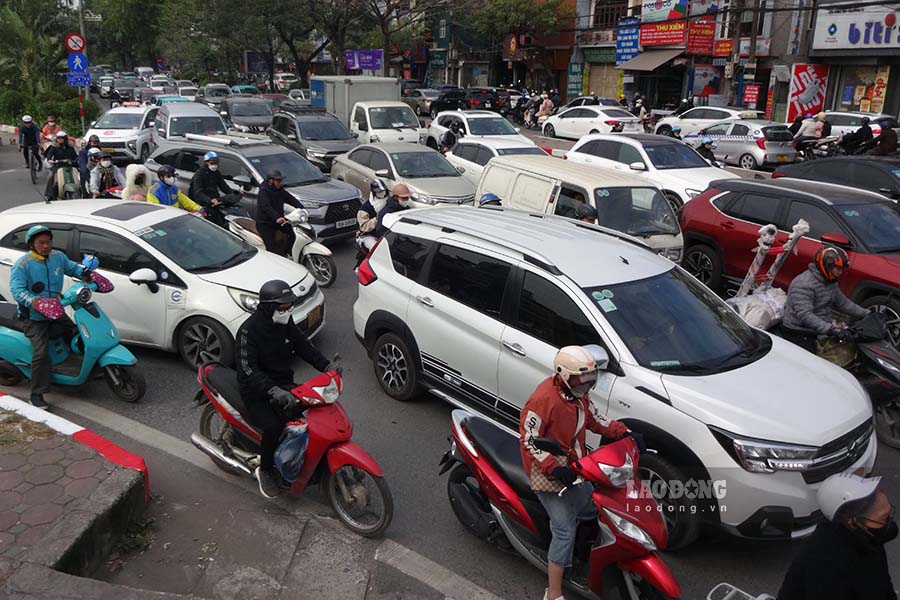
According to Deputy Director of Hanoi Department of Construction - Mr. Tran Huu Bao, Hanoi City currently has 12 frequent congestion points, of which 5 points are due to construction barriers and 7 points are overloaded with infrastructure.
For points due to barriers, the Department of Construction is urging investors to accelerate progress to soon restore the site. For infrastructure overload points, the Department coordinates with Hanoi City Police to continue to reorganize traffic and accelerate renovation projects. In which, the Nguyen Tuan - Nguyen Huy Tuong intersection is expected to complete road, sidewalk, paint and green tree items before July 5. On the Cau Buou - Phuc La - Pham Tu axis, site clearance has been completed, and units are accelerating construction in the Pham Tu - Road 70 intersection area.
With the basic goal of eliminating prolonged traffic congestion before 2030. Hanoi City will continue to invest synchronously in infrastructure, increasing the land allocation for transportation to 14-16%, developing public passenger transport to meet 30-35% of travel demand, completing about 100 km of urban railway, opening 20-24 more green bus routes, closing ring roads and completing 9 bridges over the Red River and Duong River to reduce traffic pressure in the inner city area.


