
Reducing traffic congestion is always an urgent requirement for Hanoi Capital - the place with the largest population and number of vehicles in the country. Along with that, many key infrastructure projects are being implemented simultaneously, and traffic pressure is increasing.
However, from the beginning of 2026 to now, the city has handled 17 out of a total of 51 frequent congestion points, showing positive changes in traffic organization.
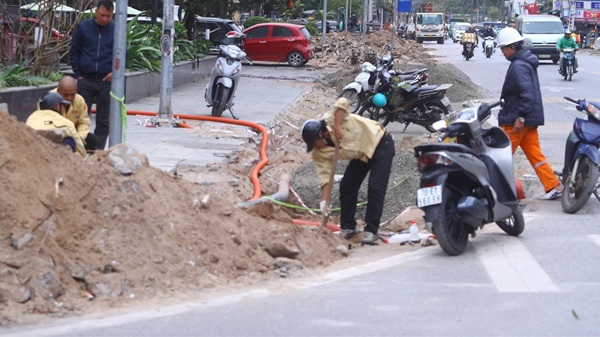
According to a review by the Hanoi Department of Construction, 51 congestion points are currently mainly concentrated in the inner city area. Among them, 16 points are related to barriers serving the construction of works and projects; the remaining 35 points stem from the fact that vehicle traffic exceeds the capacity of the existing infrastructure system.
To solve the problem, instead of only handling when congestion occurs, Hanoi City switches to a more proactive approach, reviewing the causes in each area to come up with appropriate solutions.
In places where traffic organization is not reasonable, functional sectors adjust the traffic light cycle, divide lanes, add signs, and reorganize traffic directions.
At locations affected by construction sites, units are required to speed up progress, reduce barriers and restore the road surface as soon as conditions are met.
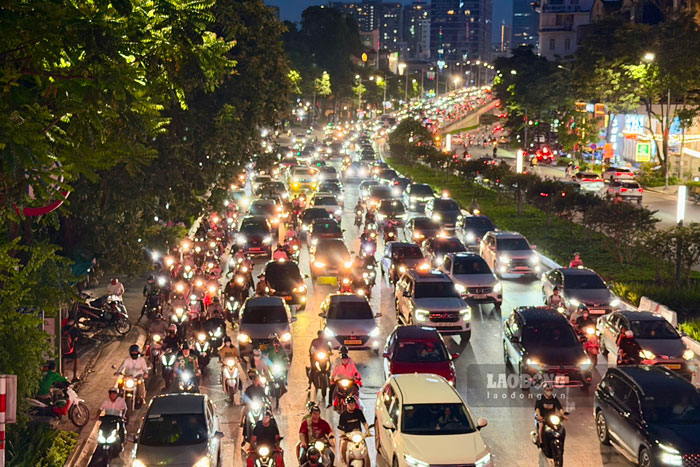
At the same time, strengthen the handling of acts that reduce travel capacity such as improper parking, encroachment on roads and sidewalks for business, picking up and dropping off passengers in the wrong places or illegal parking.
In terms of traffic organization alone, the Hanoi Department of Construction has adjusted at 89 locations, issued 36 traffic adjustment notices on key routes and intersections. Two emergency infrastructure projects in the Phap Van - Nuoc Ngam Bus Station - Ngoc Hoi alley 15 area and National Highway 2 intersection - Noi Bai - Lao Cai expressway access road also contribute to removing bottlenecks that have existed for many years at the city's gateways.
The handling of 17/51 congestion points, equivalent to about 33% of the identified hotspots, is considered a positive result in the context that Hanoi is implementing dozens of traffic projects with more than 70 barrier positions in the area.
At the conference to assess the traffic congestion situation, Lieutenant General Nguyen Thanh Tung - Director of Hanoi City Police - requested to shift from handling each point to organizing traffic according to axes, routes and areas; strengthen remote traffic diversion to limit chain congestion.
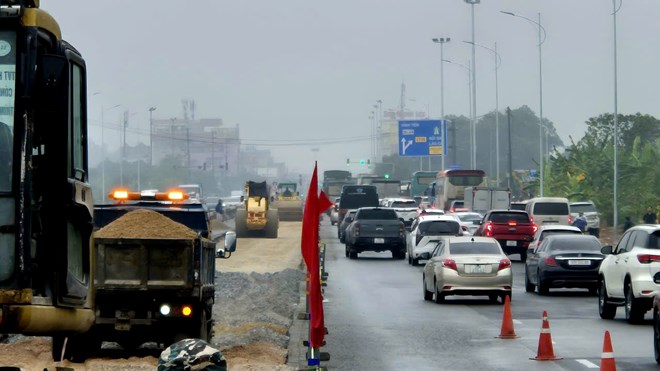
According to Mr. Pham Huy Khang - Deputy Head of the Traffic Infrastructure Management Department (Hanoi Department of Construction), the speed of traffic infrastructure development of the Capital currently only reaches about 0.35% per year, much lower than the rate of increase in vehicles and travel demand. This is a root cause that makes traffic congestion always a challenge for the city.
Representatives of the Department of Construction said that Hanoi is implementing dozens of infrastructure projects with more than 70 barrier positions serving construction. In the short term, this may affect people's travel but is a necessary condition to create room for infrastructure development in the future. Functional forces have developed a plan to divert traffic, supplement the sign system, and require construction units to arrange traffic control forces during peak hours.
In parallel with infrastructure investment, the city is also promoting the application of technology in traffic management. A system of nearly 1,900 AI cameras has been put into operation, supporting vehicle traffic monitoring, incident detection, violation handling and building traffic organization plans suitable to reality.
Hanoi City aims to basically completely handle prolonged congestion points by 2030, not allowing serious congestion for more than 30 minutes. The city is expected to complete about 100km of urban railway, open 20-24 new green bus routes, and increase the ownership ratio of public passenger transport to 30-35% of travel demand.
When the ring roads are closed, the bridges over the Red River such as Tu Lien, Tran Hung Dao, Ngoc Hoi are completed and the urban railway network continues to expand, the connectivity between the areas of the Capital will be significantly improved, contributing to reducing traffic pressure for the inner city area and expanding urban development space.


