
Basic water sources ensure production
Faced with the risk of drought and salinity in the dry season in Vinh Long, which potentially poses risks to agricultural production and people's lives, the Vinh Long agricultural sector is strengthening monitoring water sources, operating flexibly the system of canals, culverts, and pumping stations according to hydrological developments to proactively regulate water to serve production and people's lives.
Mr. Le Quang Rang - Deputy Director of the Provincial Department of Agriculture & Environment - said that the salinity intrusion situation on the main river branches is currently lower than in the same period last year. However, functional sectors are still closely monitoring to promptly respond when salinity tends to increase.
According to Mr. Rang, on the Co Chien and Hau river branches, salinity fluctuates from low to medium. Some points recorded salinity from 0.1‰ to more than 5‰, but still lower than the same period in 2025.
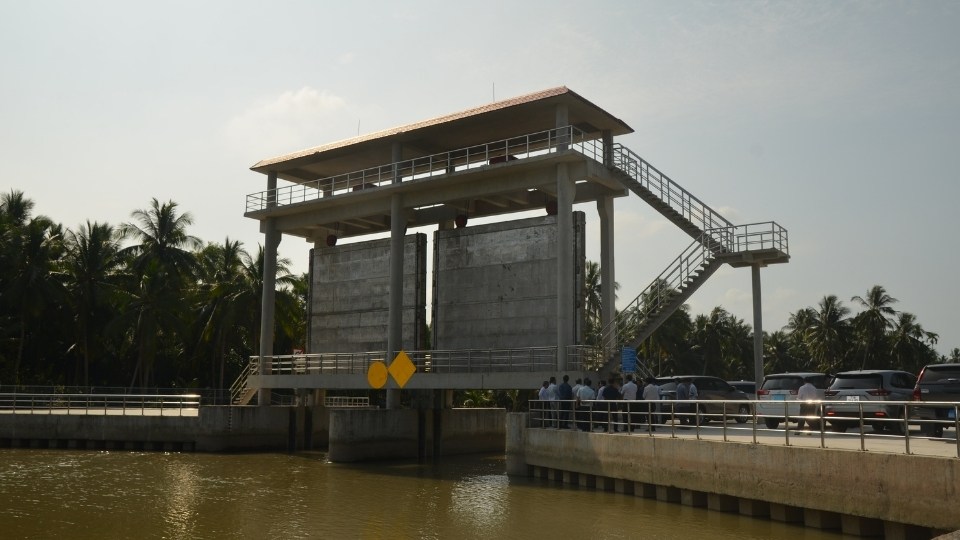
Mr. Le Quang Rang said that the head culverts on the irrigation system are operated flexibly according to tidal developments and salinity to take fresh water into the fields. On the Co Chien River, there are Lang The and Cai Hop culverts; on the Hau River, there are Rach Rum and Bong Bot culverts, so saltwater intrusion has not significantly affected production.
Mr. Rang commented: "Thanks to the rational operation of the irrigation system, the internal water level basically meets production needs. However, the agricultural sector continues to closely monitor water source developments to proactively regulate when necessary.
According to him, in the context of unpredictable climate change, the effective operation of irrigation works plays an important role. This is a solution to help ensure fresh water sources and limit risks for agricultural production.
Proactively responding to the risk of drought and salinity
Talking to Lao Dong Newspaper, Mr. Chau Van Hoa - Vice Chairman of Vinh Long Provincial People's Committee - said that the province has directed the agricultural sector and localities to regularly monitor water source developments on major rivers such as Co Chien and Hau rivers to proactively regulate.
According to Mr. Chau Van Hoa, the effective operation of culverts, canals and pumping stations plays an important role in controlling water resources, especially when climate change causes drought and saltwater intrusion to become complicated; therefore, localities need to coordinate with specialized sectors to monitor salinity, water levels and tides to adjust the operation of irrigation works in a timely manner.
During the actual inspection, the provincial working group surveyed a number of irrigation works and projects serving saltwater intrusion prevention and control in the border area of Ben Tre province. According to the Provincial Agricultural Project Management Board, the project to complete the Bac - Nam Ben Tre irrigation system is building 15 open culverts, 3–20m wide.
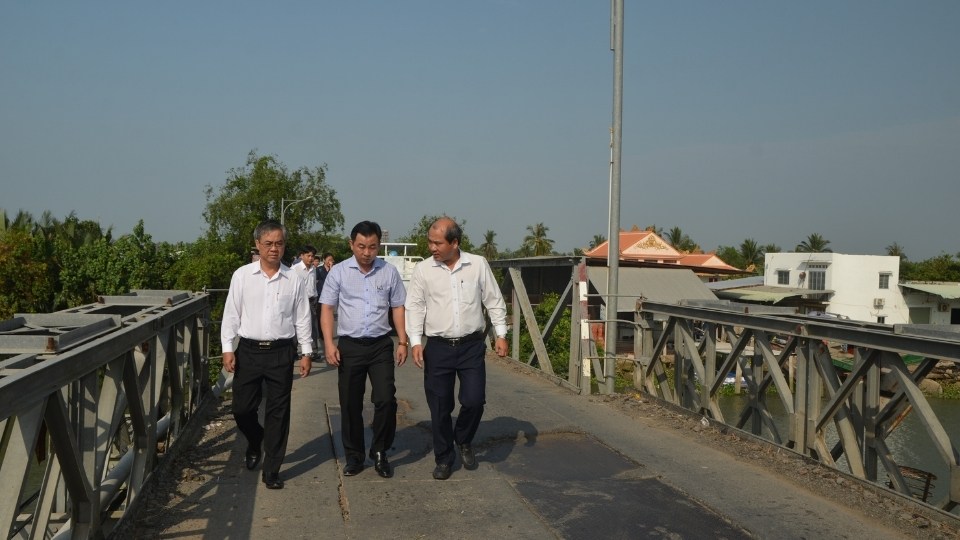
To date, 14 culverts have been completed and are preparing to be handed over for operation, contributing to increasing water resource control and proactively storing fresh water to serve agricultural production in the area.
In addition, the working delegation also inspected the progress of the Vam Mon culvert and connecting infrastructure construction investment project in Vinh Thanh commune, with a culvert scale of about 60m combined with traffic bridges and access roads.
Mr. Chau Van Hoa assessed that the works belonging to the irrigation system in this area play an important role in regulating water sources, contributing to limiting the impact of saltwater intrusion on agricultural production.
Units need to continue to closely monitor the developments of water sources, and at the same time prepare effective operation plans for projects when completed to proactively respond to drought and saltwater intrusion," Mr. Hoa emphasized.


