
This is one of the solutions proposed by the Ho Chi Minh City Department of Construction in the context that the city is considering exempting bus tickets from May 2026 to attract passengers.
The Department of Construction said it will build assembly parking lots (cars, motorbikes) at key stations such as Mien Dong Bus Station, Van Thanh Bus Station, Saigon Bus Station, Cho Lon Bus Station, metro station area... and city gateways.
At the same time, the city is also studying the development of smart parking lots (underground and aboveground) in parks and public land funds for people to park their personal vehicles, and then continue their journey by bus.
This solution aims to solve one of the major barriers currently being the lack of convenient parking spots when converting from personal vehicles to public transport.
When parking lots are available, Ho Chi Minh City will implement a policy of exemption and reduction of personal parking fees for public transport users.
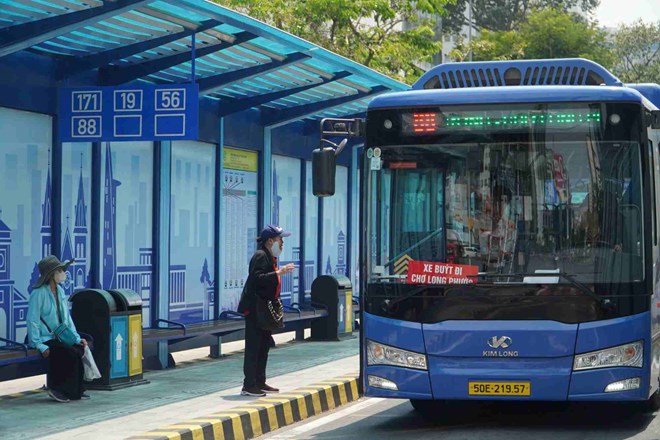
The Ho Chi Minh City Department of Construction believes that toll exemption is only a "necessary condition", not a "sufficient condition" for people to change their travel habits. Therefore, the city will synchronously implement many groups of solutions.
In addition to building parking lots, Ho Chi Minh City will review, adjust and restructure the bus network throughout the expanded area. The orientation is to open more green bus routes, small buses going deep into residential areas, ensuring that people can access stops within a radius of 300 - 500m.
The city will also open new routes, prioritizing connecting with the Binh Duong, Ba Ria - Vung Tau areas before and Long Thanh airport; deploy some night bus routes; and pilot a demand-driven transport (DRT) model to collect passengers in residential areas.
Public passenger transport modes such as metro, buses, river buses, public bicycles, technology vehicles... will be synchronously and effectively connected.
Bus operations will be operated more flexibly, allowing adjustments to routes, stops, vehicles and operating hours to suit actual needs. At the same time, the schedule between buses, metro and other modes of transport will be synchronized to create convenience for people.
Ho Chi Minh City is also studying to organize priority lanes for buses at intersections and traffic axes that meet the conditions such as Nguyen Huu Canh, Nguyen Tat Thanh streets...; at the same time, allowing buses to circulate in mixed lanes near sidewalks.
The Department of Construction said that the city will deploy low-emission zones (LEZs) in the central area, Can Gio area and Con Dao special zone, limiting vehicles using fossil fuels that do not meet emission standards from entering the core area.
Along with that, the city will study measures to manage and regulate the use of personal motor vehicles, limiting the circulation of some types of vehicles on some roads within a certain time frame, suitable to infrastructure capacity and public transport system.
Ho Chi Minh City will supplement and complete utilities for pedestrians such as renovating sidewalks, building bridges - pedestrian tunnels, planting trees, installing canopies connecting from bus stations, metro to buildings, shopping centers... to create favorable conditions for people to access public transport.
The city will also expand public bicycle stations and public electric motorbikes at metro stations, bus stops, bus stations, office areas, schools and centers; at the same time, build dedicated lanes for bicycles along routes such as Nhieu Loc - Thi Nghe canal, Tau Hu - Ben Nghe canal, Tran Hung Dao, Le Loi, Vo Nguyen Giap streets...
In addition, pedestrian streets in the central area such as Dong Khoi, Le Loi, Bach Dang wharf... will also be implemented to limit motor vehicles.


