
A lifetime working as a hired laborer, still struggling to make ends meet
In My Xuyen ward (Can Tho City), Ms. Thai Thi My Nhung (73 years old) also starts her working day from early morning, like for more than 40 years. Without land, without stable income, her life is associated with hired jobs: growing chives, scallions, weeding, picking vegetables... whoever hires them, they do whatever they want.
My family has no land, I have only worked as a hired laborer for people before," Ms. Nhung said.
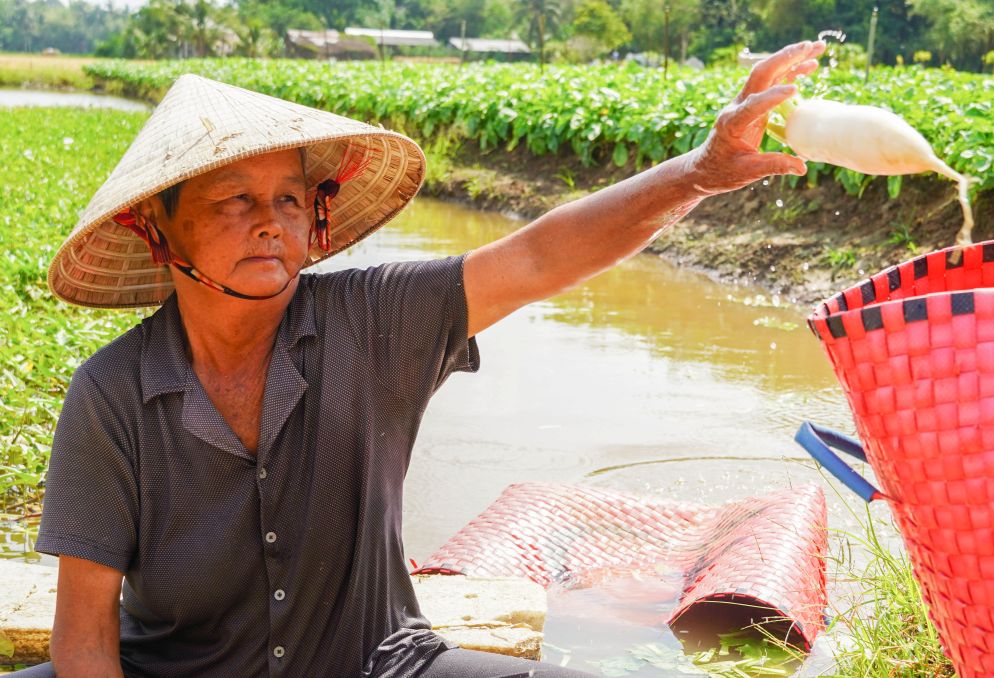
Every day, she works from 6 am to about 2 pm. The wage ranges from 180,000 to 19,000 VND, depending on the place she knows. Although the income is not high, it is enough for her to cover her daily life.
However, for hired workers like her, income not only depends on labor but is also closely linked to the production situation of the field owner. When the crop is favorable, the work is regular; but when agricultural products fall in price, the owner suffers losses, and the worker is also affected.
If the field owner wins, I am happy, but if I lose, I am also sad too. Many times they lose too much, I also have to sympathize," Ms. Nhung shared.
According to Ms. Nhung, in recent years, vegetable growing has become increasingly precarious. Agricultural product prices are constantly fluctuating, production costs are increasing, causing many farming households to face difficulties, at times not enough to cover costs.
Some people have to borrow money to do it, and when harvesting, it is not enough to pay off debts. Seeing that, it's also heartbreaking," she said.
For Ms. Nhung, the employer's difficulty is also synonymous with her worries. "If they don't have money to hire, I also don't have a job. Seeing them working hard, I'm also worried," she confided.
However, when asked if she felt miserable, Ms. Nhung shook her head: "I don't feel miserable. I work in the morning, I have money in the afternoon, that's enough. The misery is that those who work in the fields, sometimes they plant and then have to uproot them, it's very painful.
Ms. Nhung said that in her old age, farming is no longer easy. The days of soaking water to wash radishes from morning to afternoon, or bowing her back to pick up each bush of vegetables make her body ache. "Many times when I'm too tired, I can't eat rice, I have to buy medicine to drink to be able to do it," she said.
However, resting is something she doesn't want to think about. "When children have families, they still take care of their children. If I can do it, I will do it," she shared.
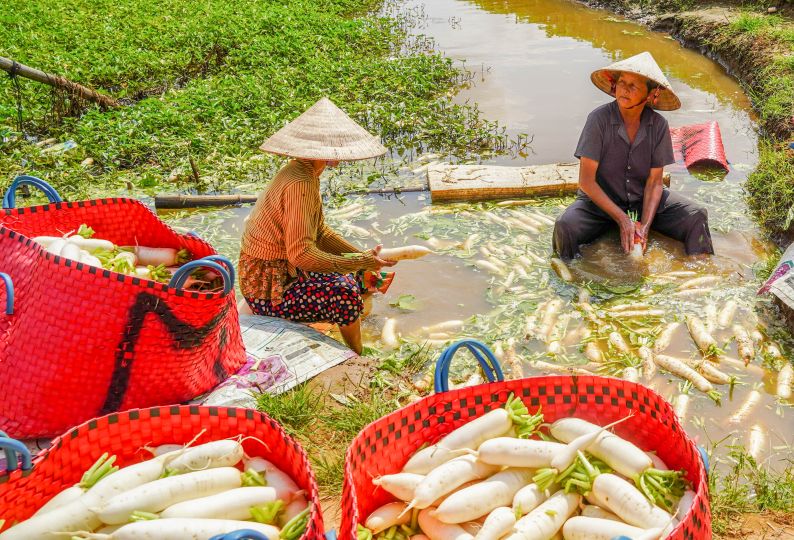
Picking radishes with Ms. Nhung, Ms. Luc (65 years old) has also been a hired worker for more than 40 years. Since she was a teenager, she has followed her mother to pick onions, chives, and weeds. Up to now, life has not changed much.
No land, working as a laborer for decades," she said.
Her work is seasonally precarious. On days of harvest, she can work continuously for a few days, but then takes long breaks because she has no work. Her daily income is only about 100,000 VND. Days without work also mean no money.
To earn extra income, she takes on picking chives at home. The job seems easy but requires patience and meticulousness. Each kg of chives is paid about 3,000 VND. A hard working day only earns a few tens of thousands of VND.
As long as I have health, I will continue to work, to reduce the burden for my children and grandchildren," Ms. Luc affirmed.
92 years old still going to the fields every day
In Ngoc To commune (Can Tho City), Ms. Thi Xenh still maintains the habit of going to the vegetable field every day even though she is now 92 years old.
Staying at home forever makes me sick. Going out here with wind and sunshine, like exercising, I'm used to it," she said.
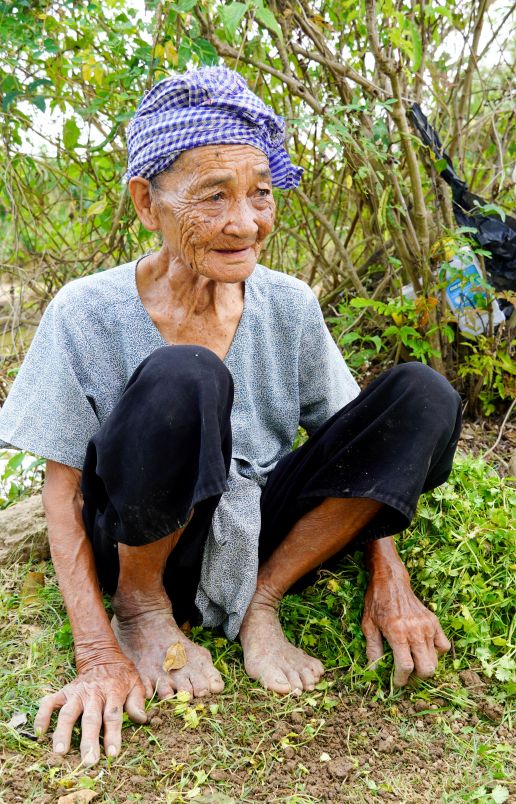
Ms. Xenh said that every day from about 7 am, she is present in the fields, helping her youngest son weed, pick vegetables, and pick coriander. The work lasts until late afternoon, almost a whole day in the sun and wind.
Small figure, hunched back over the years, but every movement of hers is still quick and skillful as a habit.
Ms. Xenh shared that she started sticking with the vegetable growing profession when she was over 30 years old. More than half a century has passed, that job has not changed. Children have grown up, each person has their own life. She lives with her youngest child but still walks to the fields every day.
Unlike Mrs. Nhung and Mrs. Luc, Mrs. Xenh has a plot of land for growing vegetables, so life is not too difficult. However, going to the fields for her is not only to earn extra income and help her children and grandchildren, but also a habit, a rhythm of life that helps her feel that she is still useful.
Reality shows that the lives of the elderly workers here just drift according to the season. Season after season, they continue with familiar jobs in the fields. Sometimes they have to walk far to work, and if lucky, acquaintances give them a ride.
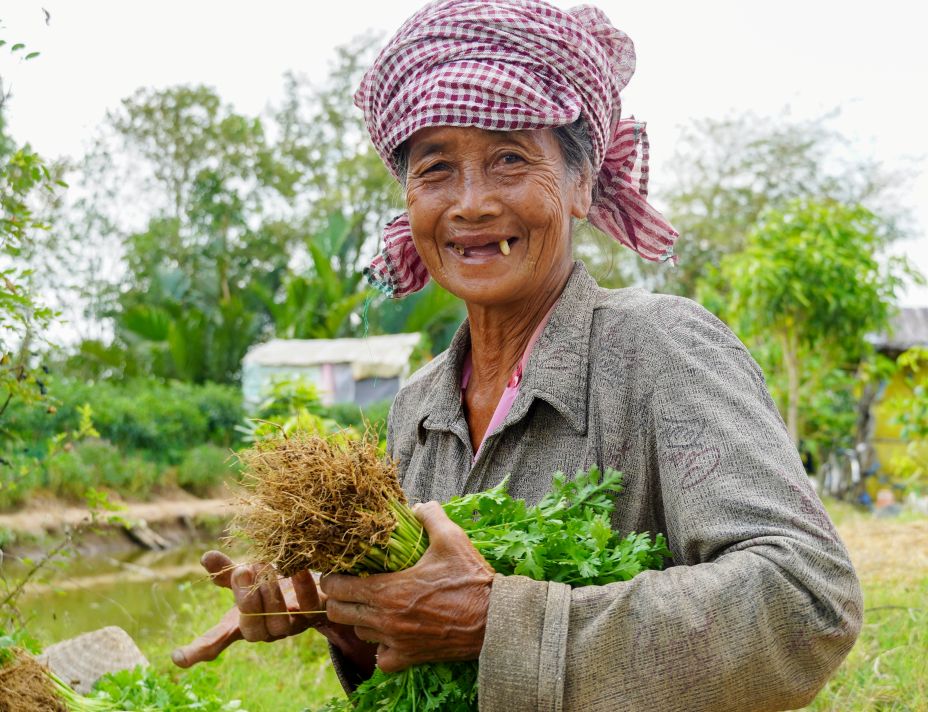
According to Ms. Nhung, currently, young workers are increasingly leaving the fields to find jobs in factories and enterprises. Heavy work in the fields is therefore gradually only left for the elderly.
The vegetable fields are still green, but the people working there are getting older and older. They go to the fields from early morning. Work until late afternoon. Stick to the crop season, to each sowing period. Exchange sweat for each meager penny.


