
The profession is not just learned by hand
In the days leading up to Tet, we had the opportunity to meet Mr. Pham Chi Binh (from Quoi Son commune, Chau Thanh district, former Ben Tre province; now Giao Long commune, Vinh Long province) - who has nearly 40 years of experience in clashing horseshoes and nearly 30 years of attachment to the horse-drawn carriage driving profession - currently driving a horse-drawn carriage carrying tourists on the routes in Thoi Son islet.
After the passenger trip, Mr. Binh drove back to the gathering point in an empty lot next to a coffee shop, about 1km towards the end of Rach Mieu 1 bridge.
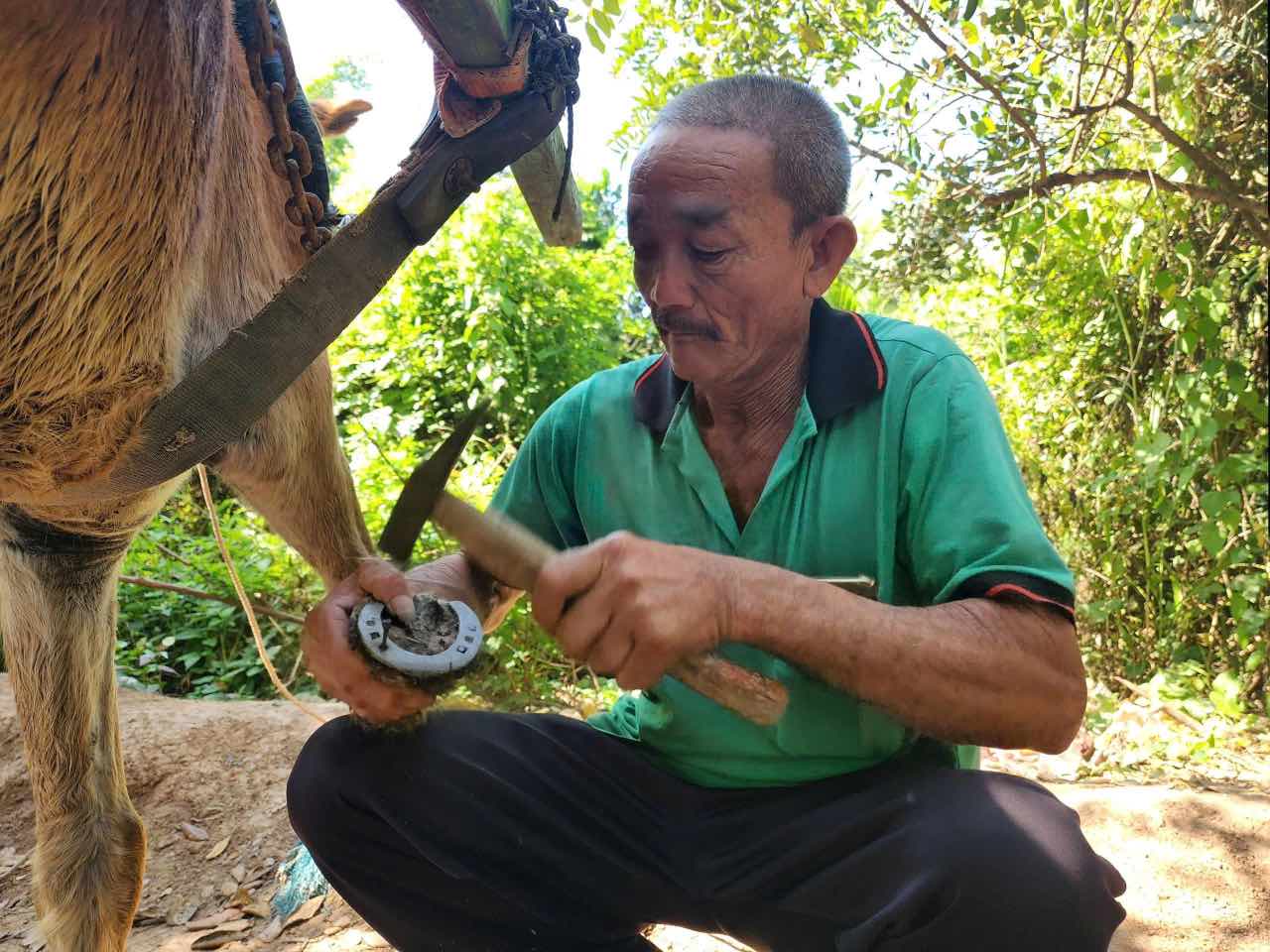
According to Mr. Binh, each iron hoof must be made separately for each horse, with different weights, depending on the purpose of use. Just one incorrect detail, the horse will not walk smoothly, and may even have leg pain.
Not only hammering and threatening, the craftsman must always maintain a good feeling for the horse. Each horse has its own personality, some are gentle, some are irritable. When acting, it must be gentle so that it is not startled. This profession has many things to learn from the heart, not just by hand," Mr. Binh shared.
According to him, the iron foundation making profession is a family tradition left by his wife's family. Up to now, his family has 3 generations of successors.
The iron hoof casting process sounds simple, but is actually very elaborate and meticulous to every detail. First, the craftsman must lift the horse's legs, use a knife to trim the damaged hoof to make it really flat. Then, they skillfully test the cast iron hoof, adjusting it to fit the size of each horse's leg.
The most difficult step is to make four specialized nails to fix the iron nail to the horse's leg. The protruding nails are neatly cut with pliers to ensure safety. However, danger is always lurking in every operation.
Mr. Binh said: "If you meet a gentle horse, the work will go smoothly, but with aggressive horses, you need someone to help keep them tightly. Just a little carelessness, encroaching on the flesh causing bleeding, not only will the animal be in pain, leaving injuries, but the worker himself may also have an accident.
Doing tourism from horses
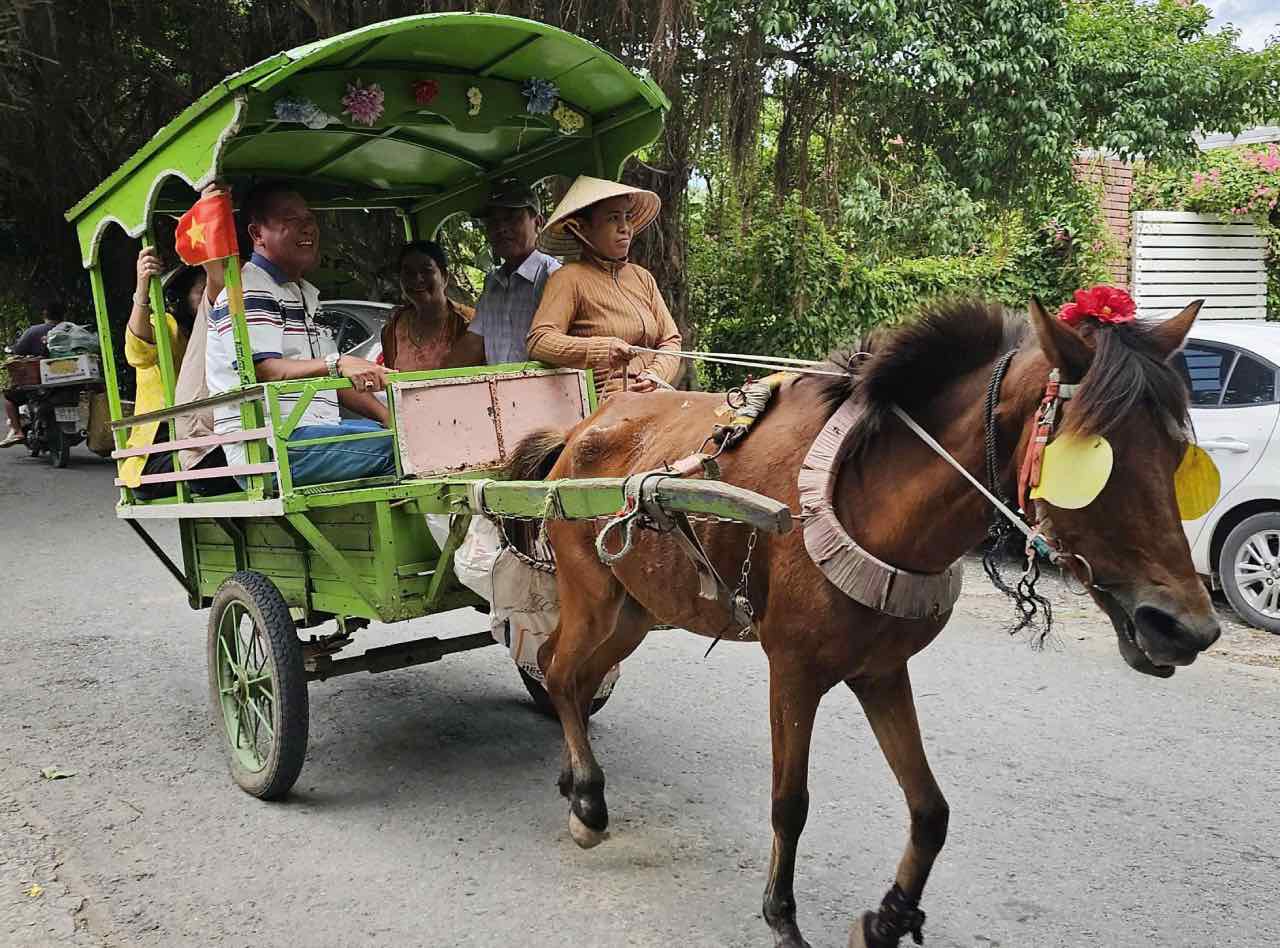
Mr. Pham Chi Binh said that about 30 years ago, realizing the attraction of the pristine and rustic beauty of the islet, travel businesses came to him to rent cars to serve tourists. Initially, he still played "two roles": when there were tourists, he drove a car to the islet to serve tourism, when there were few tourists, he returned to Ben Tre to transport hired goods. However, when the number of tourists gradually stabilized, he and his brothers in the group decided to completely quit carrying heavy loads, focusing on sticking with the tourism profession until today.
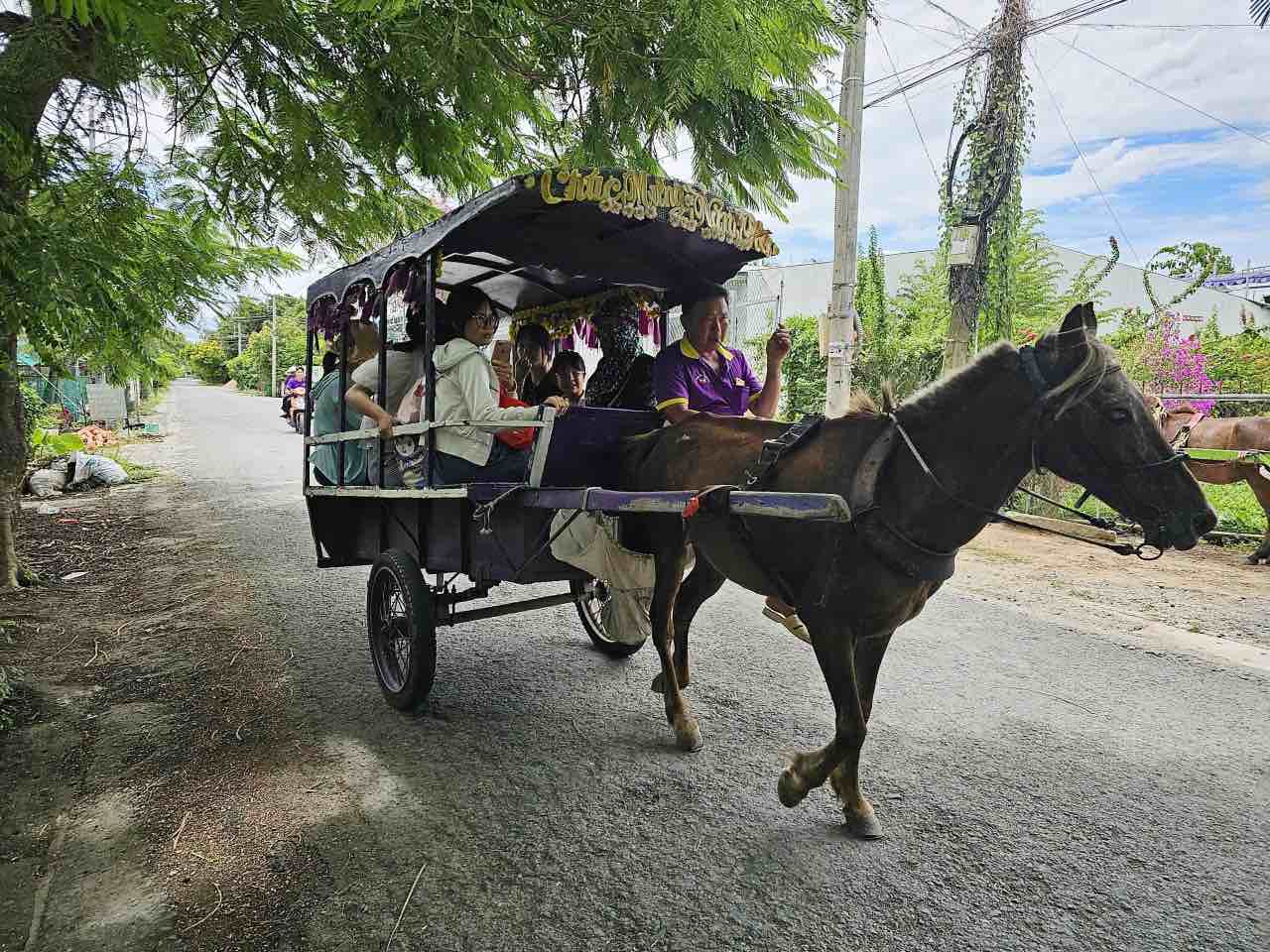
Sharing about the experience, Mr. Pham Van Ban - a tourist from Ho Chi Minh City - said that the "lốc cốc" sound of horse hooves still brings a very special feeling every time I set foot on Thoi Son islet. "This is a very good experiential activity. Sitting on a horse-drawn carriage, listening to stories about horses pulling goods and carts in the old days, I feel it's precious. The sound of hammering hooves is like the heartbeat of an old story, making me feel more clearly the simple life of the people of the Mekong Delta," Mr. Ban said.
As a horse-drawn carriage driver carrying tourists at Thoi Son islet, Mr. Lu Van Doi (from Vinh Long province) said that this profession also has its own difficulties, especially in the stage of taming horses. "Newly bought horses must be gradually trained, put into the carriage, and walked to get used to them before carrying tourists. Not only Vietnamese tourists like horse-drawn carriages, but foreign tourists also like them more. I do this job because of passion, both having joy in life and serving tourism. Each horse-drawn carriage trip costs about 40,000 VND/trip, taking tourists to visit a long distance of 2-3km," Mr. Doi said.
In the midst of the bustling modern pace of life, the profession of making iron hooves for horses, which was once a familiar image of the Mekong Delta, is facing the risk of fading away. However, it is tourism activities and people who love the value of cultural memories that have contributed to preserving this traditional craft.


