The current situation at the landfill shows that it is not only "local pollution", but also the accumulation of an unsustainable waste treatment process.
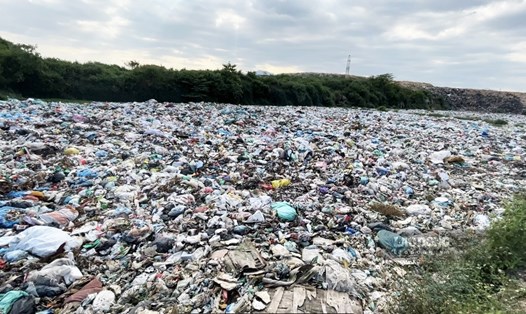
Hundreds of thousands of tons of domestic waste are collected and buried openly on an area of more than 5 hectares but there is no synchronous treatment system.
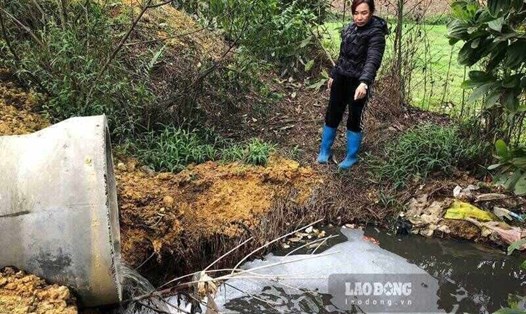
When it's sunny, the stench rises intensely, when it rains, black leachate overflows into the fields, creeping into the soil and domestic water sources.
This is a dangerous vicious circle, garbage is not thoroughly treated, the environment is poisoned, and people bear the consequences.
Not only affecting air and water sources, this situation also directly affects agricultural production, livestock, and even potentially poses a long-term risk of disease.
These damages are not easy to measure immediately, but the accumulated consequences will be very large.
What is more worrying is that the current handling method is still "firefighting".
Planting trees or digging drainage ditches is only temporary and cannot solve the root of the problem.
With the volume of garbage that is already too large and has existed for many years, surface measures are almost ineffective. In fact, after each heavy rain, the pollution situation recurs, even more serious.
The fundamental solution has been recognized by the management unit itself, which must excavate, classify, and re-treat the entire waste block and leachate.
This is a costly and complex option, but it is almost the only way to end the prolonged pollution situation.
Closing the landfill also needs to be considered, instead of continuing to prolong the "half-closed, half-opened" situation as it is now.
Thai Nguyen Provincial People's Committee has directed to review and propose handling plans as a necessary step. However, the issue is not in "having documents", but in the speed and determination to implement.
If delays continue, handling costs will increase, while people's trust will decrease.
The story of Song Cong landfill also reflects a broader reality, many localities are still dependent on landfilling, and waste treatment methods are outdated and pose high risks.
People have been petitioning for many years, meaning the problem has exceeded the tolerance threshold.
Once pollution has directly affected health and livelihoods, treatment is no longer an option, so it is impossible to continue "burying" responsibility.
If we do not act decisively, the price will not only be the environment, but also the health and future of the entire community.