
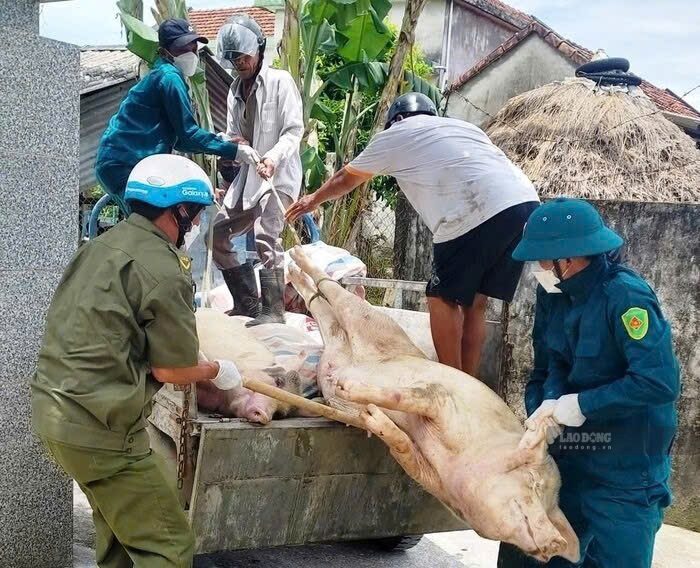
According to the Department of Agriculture and Rural Development, from the beginning of 2026 to now, African swine fever has occurred in 243 farming households, belonging to 86 villages and residential groups of 34 communes and wards. The total number of pigs infected, dead and forced to be destroyed is more than 1,600, with a weight of nearly 95 tons.
African swine fever has become more complicated since the beginning of July 2026. From July 1 to August 4, 2026, the epidemic occurred in 178 livestock households, belonging to 51 villages and residential groups of 19 communes and wards, causing 1,076 pigs to get sick, die and be forced to be destroyed, with a total weight of more than 59 tons.
The Department of Agriculture and Rural Development assessed that dangerous infectious diseases in animals in the past time have basically been detected and handled promptly. However, African swine fever is still developing complicatedly, the number of outbreaks in July increased compared to previous months, mainly concentrated in small-scale livestock households that do not ensure biosafety conditions.
One of the reasons is that small-scale farming still accounts for a large proportion; barns of many households are located near each other, near houses and traffic roads, and farming conditions do not meet biosafety requirements. Some households have not promptly reported when livestock diseases appear.
After arranging commune-level administrative units, epidemic prevention and control in some localities also faced difficulties. Advising and handling outbreaks, reporting and guiding livestock farmers in some places is still slow.
Notably, among 96 communes, wards, and special zones, currently only 53 localities have civil servants and public employees with veterinary or animal husbandry expertise in charge of this field; 43 communes and wards do not have specialized personnel.
The risk of epidemics in the coming time is assessed to be still high due to pathogens circulating in the environment, while the total pig herd tends to increase to serve the year-end market. Transportation, trading, slaughtering of animals and animal products also increase the risk of spreading pathogens.
Since the beginning of the year, localities have destroyed more than 1,600 pigs infected with African swine fever. The agricultural sector has also distributed more than 1.22 million doses of avian flu vaccine along with many other disease prevention vaccines and 13.5 thousand liters of chemicals for localities to deploy epidemic prevention and control.
The Department of Agriculture and Rural Environment requests the People's Committees of communes, wards, and special zones to focus on synchronously implementing epidemic prevention and control measures; arrange staff with expertise in animal husbandry and veterinary medicine; proactively source funding, vaccines, chemicals and necessary supplies.


