
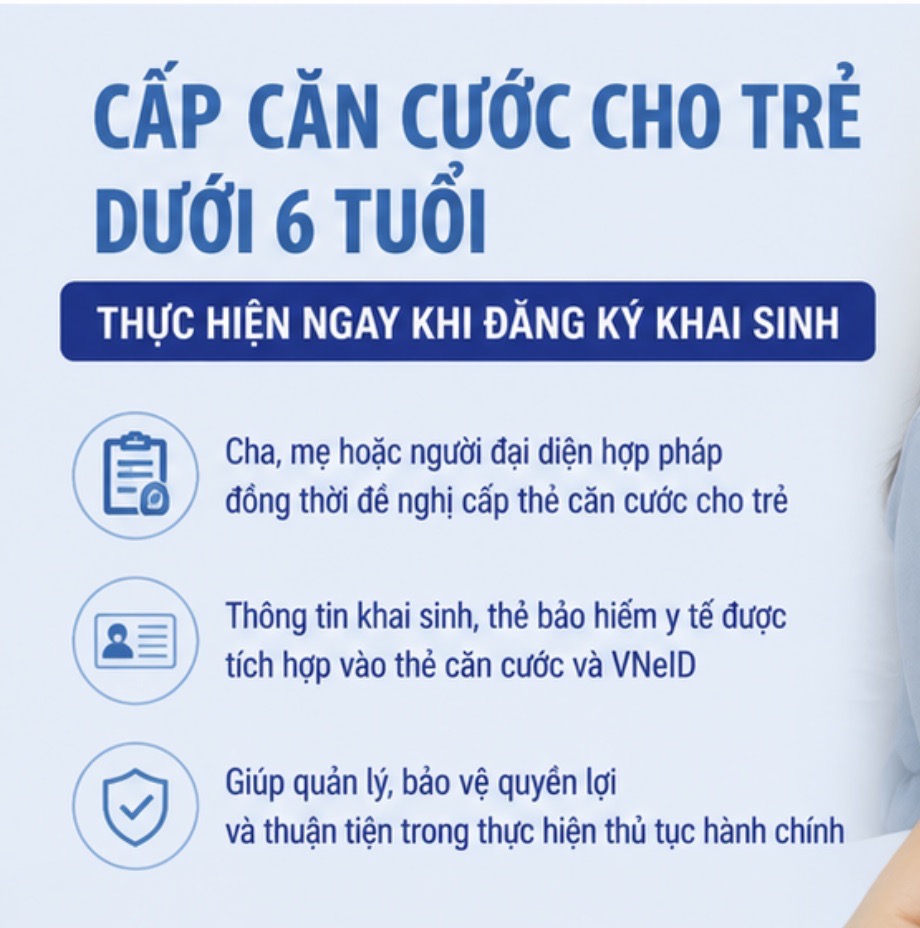
Children under 6 years old are issued ID cards
From September 1st, Decree 301/2026/ND-CP of the Government officially took effect, adding the procedure for issuing ID cards to children under 6 years old to the electronic interconnection process.
Accordingly, when carrying out the group of procedures for birth registration, permanent residence registration and health insurance card issuance for children under 6 years old, the legal representative can simultaneously request the issuance of an ID card for the child.
Thus, instead of having to carry out separate ID card issuance procedures, parents in need can register immediately in the interconnected birth registration process on the electronic environment.
Information on birth certificates and health insurance cards are also integrated into the child's ID card and electronic identification account as prescribed.
The Decree also completes the data exchange between the National Public Service Portal, the civil status and residence system, and the identity card issuance, production, and management system to reduce procedures and processing time for people's dossiers.
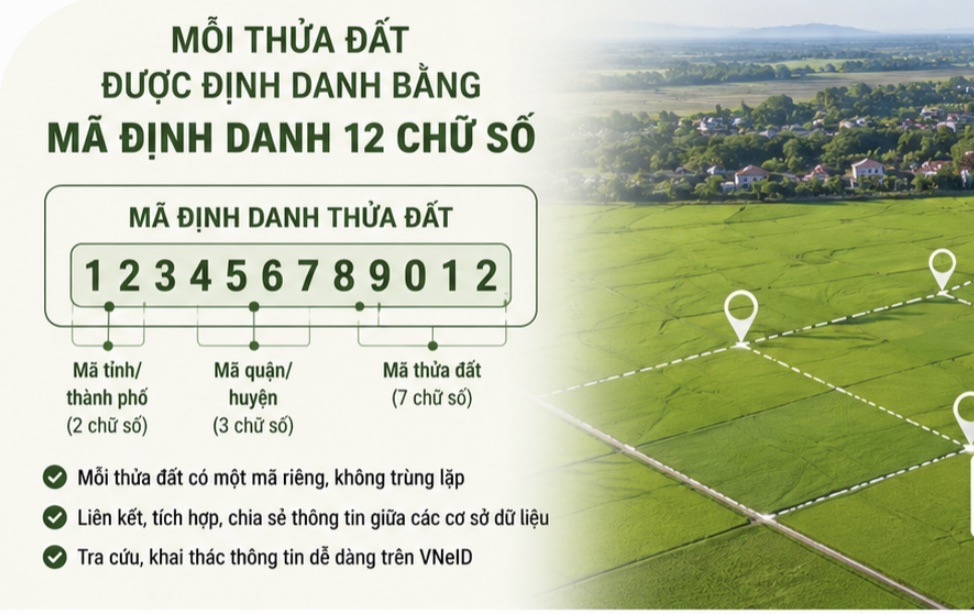
Each land plot is identified by a 12-digit identification code
From September 1st, Decree 326/2026/ND-CP regulating the identification of locations takes effect.
Accordingly, the location identification code is a natural 12-digit sequence of numbers established by the location identification database. Each location is attached with a separate, non-duplicate code.
The identified objects include land plots, architectural works, construction works, construction structures, place names, physical structures and other objects in the prescribed list. The identification aims to create a unified basis for linking, integrating, connecting, sharing and exploiting information between databases nationwide.
Organizations and individuals are allowed to exploit public data on location identification on VNeID; and can also exploit information of locations under their ownership and management according to regulations.
For subjects in the location identification list that have sufficient minimum information, ministries and ministerial-level agencies shall synchronously implement the Location identification database to ensure implementation when this Decree takes effect. For subjects that do not have enough data, competent authorities will have a roadmap for collection, supplementation and synchronization.
Teacher with minimum level 4 foreign language proficiency
Decree 222/2025/ND-CP of the Government regulating teaching and learning in foreign languages in educational institutions takes effect from September 25, 2025.
The Decree details the requirements for expertise, professional skills and foreign language proficiency for teachers. Accordingly, teachers must meet the requirements for expertise, professional skills, training level, and fostering according to regulations for each level of education and training level; have foreign language proficiency at least level 4 or higher.
Primary and secondary school teachers must have minimum level 4 foreign language proficiency according to the 6-level Foreign Language Proficiency Framework for Vietnam or equivalent; high school teachers must have minimum level 5 foreign language proficiency.
Teachers of vocational education levels must have minimum foreign language proficiency level 5.
Lecturers teaching higher education levels must have foreign language proficiency that meets the teaching requirements of the training program, at least level 5.
Pension and allowance payment via VNeID
Decree 320/2026/ND-CP on electronic identification and authentication, effective from September 28.
The Decree for the first time stipulates social security benefit accounts on VNeID. This is identification information that allows people to integrate payment accounts, e-wallets or mobile money accounts to receive support, pensions, social security payments and legal funds.
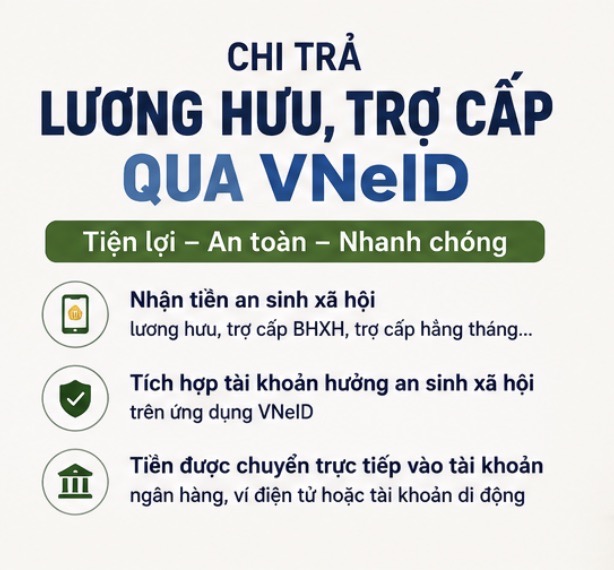
Accordingly, people can receive pensions, allowances and social security benefits through social security benefits accounts on VNeID.
In case the beneficiary has not created this account and does not have a written authorization to receive it, the social security contribution is paid in other forms as prescribed.
Decree 320 also stipulates that when resolving administrative procedures and public services, agencies and organizations are not allowed to require people to submit or present originals and copies of documents that have been integrated on VNeID.
In addition, the decree supplements the list of 206 types of documents that can be integrated and updated on VNeID, including 66 types of personal documents and 140 types of documents of agencies and organizations.


