
Waste collection pressure increases many times after Tet
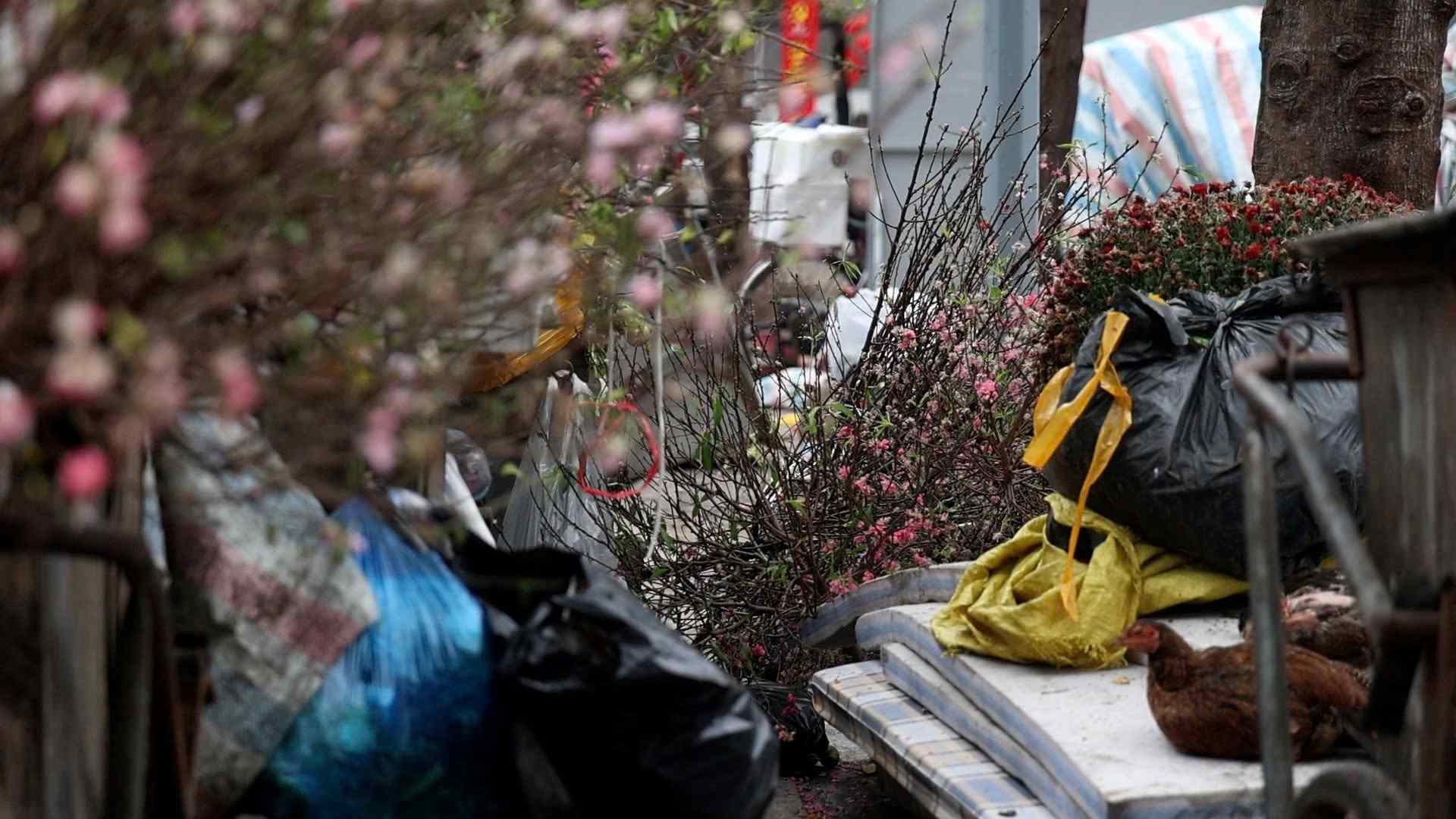
In the days after the 2026 Binh Ngo Lunar New Year holiday, many streets in Hanoi have seen the situation of peach branches, kumquat trees, and ornamental plants being scattered on sidewalks and garbage collection areas. The amount of bulky garbage has increased sharply, causing environmental workers to work overloaded for many days.
Reporters' records in Yen Hoa ward, Vu Pham Ham street, Ha Yen Quyet street... do not find it difficult to see scenes of large peach branches, kumquat roots, and potted ornamental plants being left scattered. Many garbage collection points are overloaded, garbage piled up high, occupying the entire road and sidewalk, causing urban unsightliness and obstructing traffic.
Having been attached to the profession for nearly 30 years, Ms. Nguyen Thi Thanh Thuy - an environmental worker of Vinh Yen Urban Environment and Service Joint Stock Company - said that every year she prepares herself mentally for the peak period of waste before, during and after Tet. However, the workload is still always a big challenge.
According to Ms. Thuy, on normal days, work is already heavy, but after Tet, the amount of garbage increases 3-4 times, mainly domestic waste, leftover food and especially peach branches, kumquats, and ornamental plants that people throw away.
“The work after Tet is very hard. People throw away a lot of bulky trash such as peach branches and kumquat trees, so the collection points are always overloaded, full of trash day and night. Environmental workers have to work continuously to be able to handle it in time” - Ms. Thuy shared.
According to workers, some households are aware that cutting down branches and bundling them neatly before littering will make collection more convenient. However, in many cases, people throw large peach branches or heavy ornamental plants right on the sidewalk, causing difficulties for transportation, and even having to mobilize more manpower to handle them.
Also working in the environmental industry, Ms. Kim Anh (environmental sanitation worker) said that the volume of garbage after Tet has increased significantly compared to normal days. If before Tet, about 7-8 garbage trucks were collected each day, then after Tet, some days it increased to 15 trucks operating continuously.
Vehicles run at almost full capacity, workers have to work more shifts to meet the schedule. The amount of bulky waste is too large, so the collection is slower than usual" - Ms. Kim Anh said. According to her forecast, the sharp increase in waste may last until around January 20th of the lunar calendar before gradually decreasing, when people complete cleaning after Tet.
Silently preserving the urban environment
Despite the heavy work and increased pressure, environmental workers still persistently work from early morning until late at night to keep the streets clean. Many workers are willing to work overtime and overtime continuously in the first days of the new year, a time that should be the time to rest after a year of work.
Not only facing a large amount of garbage, environmental workers also suffer from odors, cold and humid weather at the beginning of spring, and the risk of accidents when collecting bulky garbage on crowded streets.
Environmental workers hope that each citizen when dumping waste will be more conscious, such as chopping and bundling ornamental plants or contacting collection units in accordance with regulations, which will help reduce pressure on environmental sanitation forces and contribute to preserving urban beauty.
After each Tet season, when peach blossoms and ornamental kumquats complete their decorative role, behind the cleanliness and beauty of the streets are the silent efforts of environmental workers, who silently work to quickly return the city to its normal rhythm of life.


