
Tet is like a normal day
During Tet days, when many families gather around a meal to reunite, simple shacks still faintly appear in the fields stretching across the Mekong Delta. There, many duck farmers are quietly making a living. For them, Tet is often just one day like any other day - picking eggs in the morning, releasing ducks at noon, herding them back in the afternoon and sleeping in the middle of the field at night.
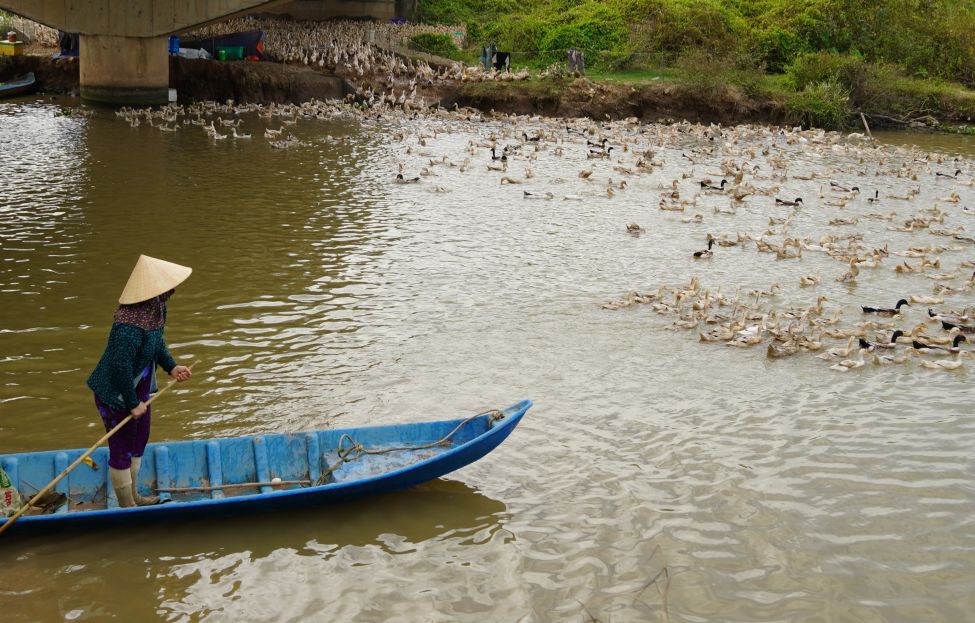
Approaching Tet, Ms. Thu (Phu Tam commune, Can Tho city) is busy bringing her flock of about 4,000 ducks to the fields of Tai Van commune, dozens of kilometers from her house. More than 20 years in the profession, she and her husband are used to the scene of being here today and there tomorrow, taking care of the flock of ducks themselves, without hiring more workers.
The flock of ducks has just changed fur for more than a month and a half, each night giving more than 1,000 eggs. During the day, she releases ducks to eat fallen rice after harvest, takes advantage of taking the eggs to retail and then returns to look after them. The work is repeated all year round, including during Tet days.
According to Ms. Thu, the cost of following the profession is not small. The rent ranges from 100,000 - 150,000 VND/cong. Some fields only "eat" for more than ten days because they grow 3 rice crops/year, but there are also places that last for several months if the area is large, growing 2 crops. In addition, there is also money for medicine, supplementary food and transportation costs for ducks from one field to another.
The fields near my house are still green during Tet, so every year I have to take the ducks far away. Everyone wants to come home for Tet to reunite, but if the ducks are not cared for, I dare not leave them. So Tet is just like normal days, I only plan to go home when the fields run out," Ms. Thu shared.
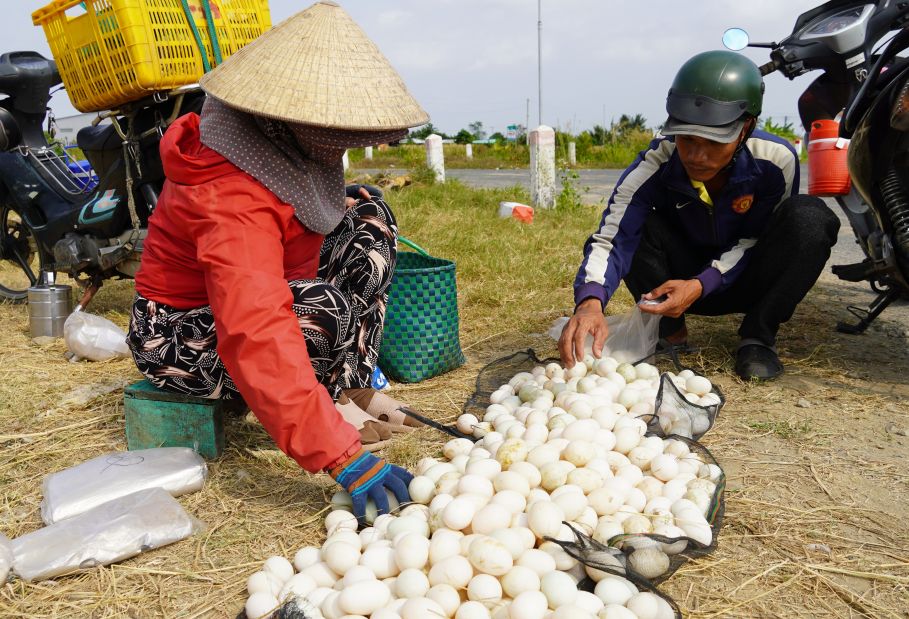
In the same locality, Mr. Canh continued his family business with a flock of thousands of ducks. Before Tet, he sold 3,000 ducks for 80,000 VND/duck. Currently, there are still 3,000 ducks, each night giving more than 1,000 eggs, but the price of eggs near Tet has decreased sharply, from more than 2,000 VND to about 1,400 VND/egg.
According to Mr. Canh, this "nomad" profession is hard in every way. At night, he and his colleagues hang hammocks to sleep on trees to avoid ants and mosquitoes. Sleeping in hammocks for a long time causes neck pain and aches, but it becomes a habit. During Tet, he hires two more helpers, taking turns going home for one day so that work is not interrupted.
Nearly 40 years in the profession, Mr. Nguyen Van Khai (My Quoi ward, Can Tho city) also considers celebrating Tet in the middle of the field as normal. His New Year's Eve only has the sound of frogs, dogs barking far away and ducks laying eggs. In the tent in the middle of the field, he calls home to wish Tet to his children and grandchildren, promising a day of reunion when the harvest near home begins.
If you are far from residential areas, duck herders contribute a little fish, a bunch of vegetables, a few eggs and a little wine to welcome the new year. If you are near people's houses, people invite you to celebrate Tet together. Everywhere there is village and neighborhood affection. Tet away from home is also warm to the heart," Mr. Khai confided.
Livelihood here and there
Having been attached to the profession for more than 20 years, Mr. Huynh Thanh Phuong (Lam Tan commune, Can Tho city) has become accustomed to being away from home all year round. Every year, he only stays at home for about a month when the rice ripens. When people plant new crops, he herds ducks to find other fields. Dong Thap, An Giang, Vinh Long... wherever there is ripe rice, he goes.
Each time he moves, Mr. Phuong has to hire a car or boat to transport the duck flock, costing from 5 - 7 million VND/trip. To have money to feed the ducks, farmers have to ask local people to agree in advance with the field owner, the price is from 40,000 - 100,000 VND/cong.
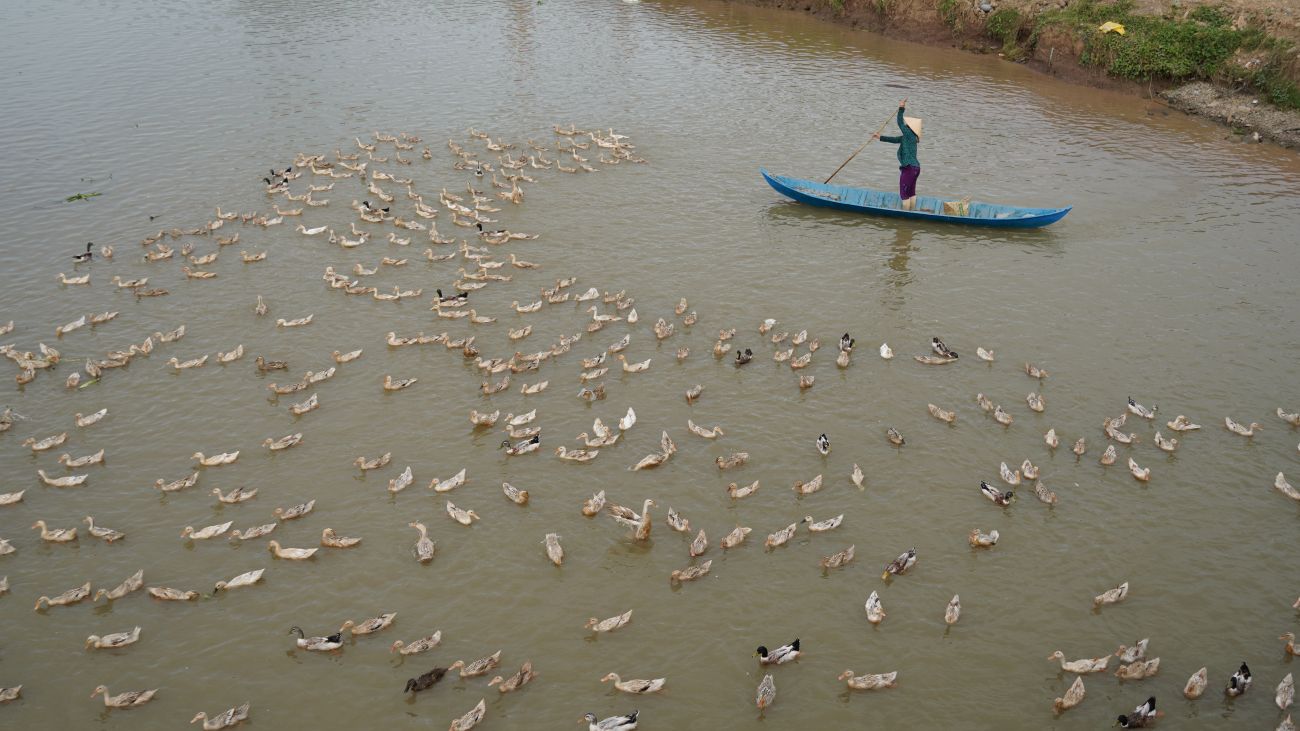
Ms. Le Thi Thanh (Phu Tam commune, Can Tho city) said that the field duck farming profession is now less difficult than before thanks to surrounding the field with nets, limiting the situation of stray ducks. However, difficulties due to the weather are still constant.
In the middle of the field, when it rains, I only know how to wear a raincoat and endure it. Drilling in the rain a lot also gets a cold, but getting used to it, I always bring medicine," she said.
More than 20 years of wandering, Ms. Thanh and her husband have gone through countless fields. Each place only stays for 2–4 weeks, depending on the area and food source. But if the field owner needs to sow early, the plow goes down to the field, the flock of ducks is forced to continue on the road.


