
Tet of cultural harmony
Can Tho City currently has more than 411,000 Khmer people living. This is a crowded community, rich in cultural traditions, with a long-standing cohabitation process with Kinh and Hoa people. That intersection is not only shown in daily life but also clearly every spring.
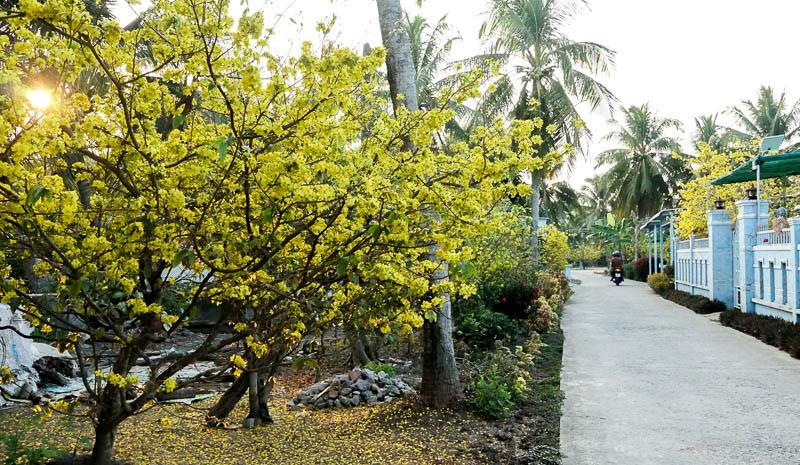
Although the traditional Tet of the Khmer people is Chol Chnam Thmay, Lunar New Year still becomes a common gathering occasion for all three ethnic groups. In the last days of the year, Khmer villages and hamlets are brilliant with yellow apricot blossoms, and the smell of braised meat spreads from the small kitchens.
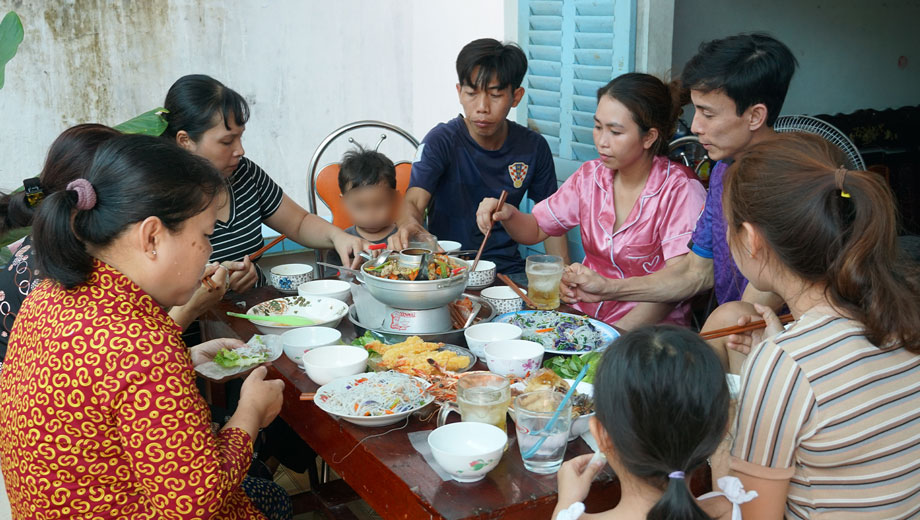
In the house in My Xuyen ward, Mrs. Duong Thi Quy's family has been busy preparing to welcome the new year for more than half a month before Tet. Although she is Khmer, every year she cooks enough dishes of braised pork, bitter melon stew, pickled bean sprouts... according to Kinh customs. Her children and grandchildren take care of the marigold pot, choose a pair of red watermelons to display for Tet.
“Most of the people around here are Kinh people, so I also celebrate Tet like that for fun. There are not many rituals like the traditional Tet of the Khmer people, but this is an opportunity for children and grandchildren to reunite, gather around the year-end meal, and exchange New Year greetings,” Ms. Quy shared.
This year's Tet is even more complete as her 4 children, along with her daughter-in-law and son-in-law, all have stable jobs. According to Ms. Quy, the most important thing for the family to prosper is to take care of their education. "With education, we can progress and escape poverty sustainably," she said.
Not far from there, Mr. Lam Van Hung - a Khmer farmer - also welcomed the Lunar New Year quite neatly. Approaching Tet, he just finished harvesting the vegetable crop, so he has additional income to cover year-end expenses. A few days after Tet, he will continue to harvest 5 cong of ST25 rice in association with businesses.
Thanks to close production links for many years, his family's income from the fields is more stable than before. "The lives of Khmer people are much better now, so Tet is also more fulfilling. Having jobs and income makes Tet happier," Mr. Hung shared.
Policy to support rising
In 2025, ethnic minority programs and policies, especially the National Target Program for socio-economic development in ethnic minority and mountainous areas, were synchronously implemented by Can Tho City, contributing to improving living standards, multidimensional poverty reduction, narrowing the development gap between regions, and creating sustainable livelihoods for people.
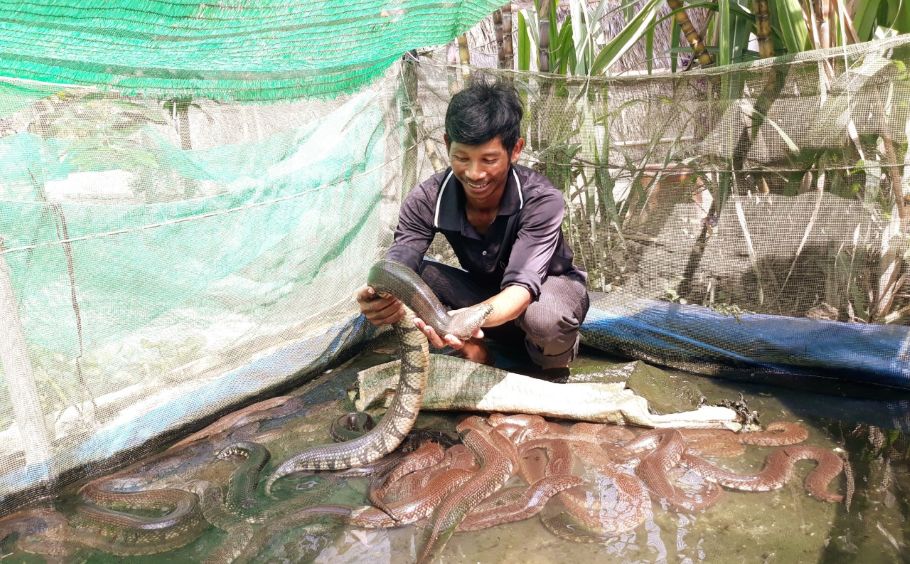
Welcoming the 2026 Binh Ngo spring, Mr. Dinh Xuan Tuoi's family (in Ngoc To commune, Can Tho city) is even more excited as they have just escaped poverty. He was also supported with 2 breeding cows from the National Target Program for Sustainable Poverty Reduction.
“Previously, I only grew crops, income was precarious. Now that the State supports breeding cows for secondary economy, I plan to develop the herd, increasing a few more each year to accumulate capital and stabilize for a long time,” Mr. Tuoi expressed.
In Tra Canh B hamlet, Thuan Hoa commune - where about 70% of Khmer people live, the rural appearance has also changed significantly. Thanks to policies to support housing, breeds, and vocational conversion, the whole hamlet now has only 18 poor households and 12 near-poor households.
Mr. Ly Dong - Secretary of Tra Canh B hamlet Party Cell - said that the concern of the Party and State has created motivation for people to strive to rise up. "In the new year, we hope to continue to support households that are still facing difficulties in housing, jobs, and production to improve their lives," he said.
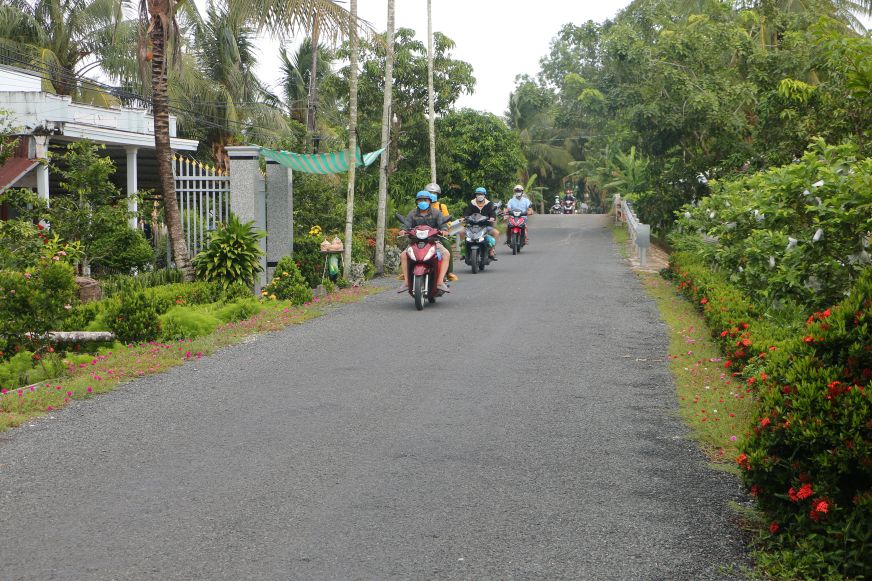
Currently, 100% of communes and wards in Can Tho City have national grid electricity; over 99.8% of ethnic minority households have electricity use. People have full access to telecommunications, information, health, and education services. The work of preserving and promoting the tangible and intangible cultural values of the Khmer people is increasingly being concerned.


