
This is the direction of Vice Chairman of Ho Chi Minh City People's Committee Hoang Nguyen Dinh at a meeting on the results of researching projects to control emissions of vehicles and develop green traffic in the city.
According to the conclusion of the meeting, for the central area of Ho Chi Minh City - where a low emission zone (LEZ) is expected to be formed, the city requests to study a pilot implementation plan with appropriate scope and small scale to monitor impacts, evaluate efficiency and draw lessons before expanding to the entire region.
This move is considered an adjustment compared to the previous research plan when the Department of Construction proposed establishing a LEZ within Ring Road 2, surrounded by roads such as Do Muoi - Le Duc Anh - Le Kha Phieu (Old National Highway 1) - Nguyen Van Linh - Phu My bridge - Vo Chi Cong - Nguyen Thi Dinh - Dong Van Cong - Mai Chi Tho - Vo Nguyen Giap - Hanoi Highway.
Besides the central area, Ho Chi Minh City also requests to adjust the emission control plan in Thanh An island commune in the direction of shortening the completion time.
Regarding the green transportation transition process, the city requires state agencies, officials, civil servants, and public employees to pioneer the use of electric vehicles and green energy; accelerate the transition time for official vehicles and personal vehicles belonging to this group.
Ho Chi Minh City also requested to accelerate the progress of switching to electric vehicles and vehicles using green energy for inter-provincial buses and passenger transport business vehicles under contracts with fewer than 9 seats compared to the previous draft plan.
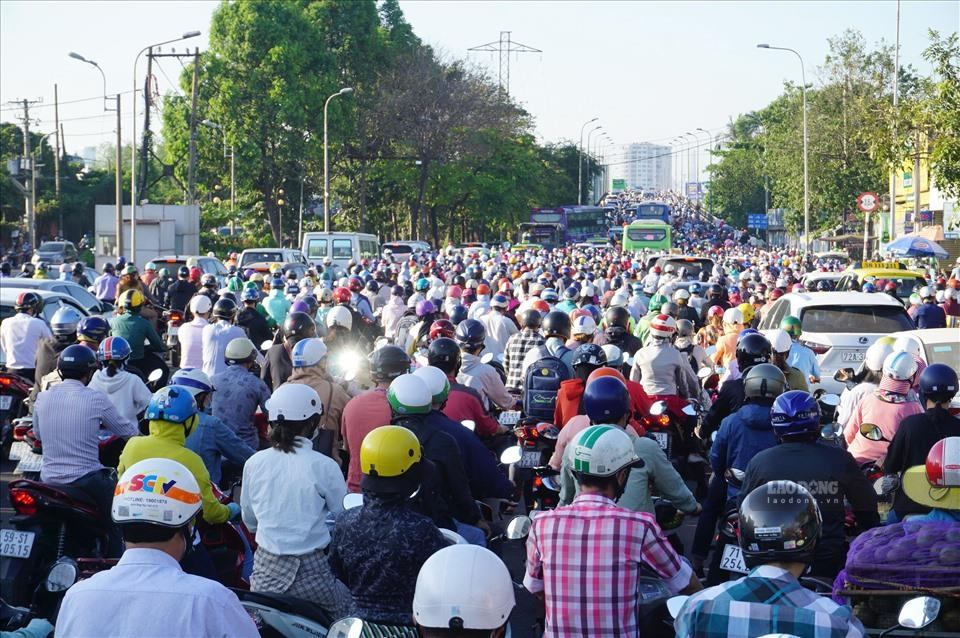
The Ho Chi Minh City Department of Construction is assigned to study international experiences on the green transportation transition process, comprehensively assess the necessity of vehicle conversion to serve the city's sustainable development goals.
To promote the conversion process, the Ho Chi Minh City People's Committee requests research to increase support levels for some special areas and groups that need to be encouraged to convert vehicles.
However, support policies also need to be calculated in the direction of gradually reducing over time, in accordance with the budget capacity and the adaptability of people and businesses.
After completing the project, the Department of Construction will organize to collect opinions from departments, branches, localities and related units; and at the same time coordinate with the Vietnam Fatherland Front Committee of Ho Chi Minh City to organize social criticism.
Based on the contributed opinions, the Department of Construction will complete the project dossier, advise the Ho Chi Minh City People's Committee to submit it to the Party Committee of the City People's Committee and the Standing Committee of the City Party Committee for consideration, before submitting it to the City People's Council according to regulations. This work will be completed in August 2026.
According to the previously researched plan, in the LEZ area, Ho Chi Minh City plans to apply an emission control roadmap for each vehicle group.
Specifically, from 2027, all buses operating in low-emission areas must use electricity or green energy.
From 2028, taxis, contract cars, trucks and private cars circulating in the area must meet emission standards of level 4 or level 5 depending on the type of vehicle.
For motorbikes, from 2029, vehicles operating in LEZs must meet emission standards of level 4 or higher.
From 2030, the city will continue to tighten regulations for vehicles using internal combustion engines, while promoting the transition to electric vehicles, hybrid vehicles and vehicles using green energy.
According to the proposed roadmap, by 2035, all vehicles operating in low-emission zones will switch to using electricity or green energy.
Further, Ho Chi Minh City sets a target that by January 1, 2040, all vehicles in the city will switch to using electricity or green energy, towards a low-emission and environmentally friendly transportation system.


