Ho Chi Minh City officials and civil servants plan to use completely electric vehicles from 2030

MINH QUÂN |

Ho Chi Minh City expects that from 2030, all motorbikes of officials, civil servants, and public employees must switch to using electricity or green energy.

This is one of the notable contents mentioned in the draft Project on green transformation of the transport sector in Ho Chi Minh City.

According to the draft, officials, civil servants and state agencies will switch to electric vehicles first to show the pioneering role of the public sector, creating trust and consensus before expanding to people and businesses.

From January 1, 2027, 100% of cars, motorbikes and mopeds belonging to state agencies, public non-business units, socio-political organizations that have reached the replacement or new investment deadline must use electricity or green energy.

By January 1, 2030, all vehicles in circulation belonging to these units must switch to using electricity or green energy, except for some specialized vehicles.
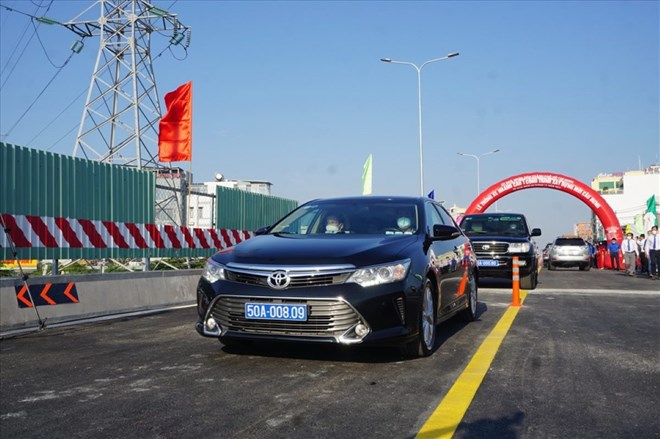
TPHCM dự kiến chuyển toàn bộ xe công sang xe điện năm 2030. Ảnh: Minh Quân
Ho Chi Minh City plans to convert all public cars to electric vehicles in 2030. Photo: Minh Quan

Notably, motorbikes of officials, civil servants, and public employees are also subject to mandatory conversion. According to the proposed roadmap, from January 1, 2030, 100% of motorbikes and mopeds of this group must use electricity or green energy.

In addition to the city center area and areas applying separate roadmaps such as Con Dao Special Zone, Binh Khanh, An Thoi Dong, Can Gio and Thanh An communes, Ho Chi Minh City also built a conversion roadmap for the remaining areas.

The scope of application is the area outside the ring road including the routes Do Muoi - Le Duc Anh - Le Kha Phieu (Old National Highway 1) - Nguyen Van Linh - Phu My bridge - Vo Chi Cong - Dong Van Cong - Mai Chi Tho - Vo Nguyen Giap - Hanoi Highway.

For motorbikes and mopeds of people and organizations, from January 1, 2030, all vehicles in circulation must meet emission standards of level 3 or higher. From January 1, 2035, vehicles must meet emission standards of level 4. By January 1, 2040, all motorbikes must switch to using electricity or green energy.

For technology vehicles, from January 1, 2030, 100% of motorbikes and mopeds operating in areas outside the city center must use electricity or green energy. Meanwhile, the city center area is expected to apply this requirement from 2028.

For private cars not engaged in transportation business, from 2030, 100% of vehicles in circulation must meet emission standards of level 4 or higher; by 2035 it must reach level 5 and from 2040 it must switch to using electricity or green energy.

For contract cars with fewer than 9 seats, from 2030, vehicles must meet emission standards of level 4 or higher. By 2035, all vehicles must switch to using electricity or green energy.

Contract vehicles from 10 seats or more, passenger cars and trucks, from 2030, vehicles must meet emission standard level 4; from 2035 reach level 5; and by 2040 complete conversion to electricity or green energy.

For taxis, from January 1, 2030, 100% of vehicles operating in the city must use electricity or green energy.

Inter-provincial buses will complete the conversion to electricity or green energy from January 1, 2027. Meanwhile, inter-provincial buses operating in Ho Chi Minh City are required to complete the conversion before 2030.

MINH QUÂN
RELATED NEWS

Ho Chi Minh City proposes a roadmap to replace gasoline and oil vehicles with electric vehicles in Can Gio, Con Dao

|

Ho Chi Minh City proposes a roadmap to convert all gasoline and oil vehicles to electric vehicles in Con Dao and Can Gio, and at the same time introduces many support policies for people.

Gasoline motorbikes may be restricted from entering Ho Chi Minh City center from 2029

|

Ho Chi Minh City - Motorbikes circulating in the center of Ho Chi Minh City are expected to meet emission standards of level 4 or higher from 2029 and will be completely banned from January 1, 2035.

Proposal for Ho Chi Minh City to restrict private cars from entering the center, applying fees to reduce congestion

|

Ho Chi Minh City is proposed to be granted the right to restrict private cars from entering the center, applying congestion reduction fees to reduce traffic jams and reduce emissions.

10th grade Math exam in Hanoi: Some candidates burst into tears and left the exam room

|

At the end of the Math exam for 10th grade in Hanoi this year, some candidates breathed a sigh of relief, but some also burst into tears and left the exam room.

US attacks ship suspected of drug trafficking again, 3 people killed

|

The US anti-smuggling campaign at sea continues to be controversial as the death toll rises.

Luis Enrique set a record after PSG won the UEFA Champions League

|

Luis Enrique has become the fifth coach in history to win 3 Champions League titles, after PSG defeated Arsenal.

Many rice milling plants accused of causing pollution, functional agencies in Can Tho inspect

|

Can Tho - Functional agencies have inspected many rice milling plants along the Thot Not canal (Co Do commune) to clarify compliance with environmental protection regulations.

Ho Chi Minh City proposes a roadmap to replace gasoline and oil vehicles with electric vehicles in Can Gio, Con Dao

MINH QUÂN |

Ho Chi Minh City proposes a roadmap to convert all gasoline and oil vehicles to electric vehicles in Con Dao and Can Gio, and at the same time introduces many support policies for people.

Gasoline motorbikes may be restricted from entering Ho Chi Minh City center from 2029

MINH QUÂN |

Ho Chi Minh City - Motorbikes circulating in the center of Ho Chi Minh City are expected to meet emission standards of level 4 or higher from 2029 and will be completely banned from January 1, 2035.

Proposal for Ho Chi Minh City to restrict private cars from entering the center, applying fees to reduce congestion

MINH QUÂN |

Ho Chi Minh City is proposed to be granted the right to restrict private cars from entering the center, applying congestion reduction fees to reduce traffic jams and reduce emissions.