
It is expected that tomorrow (September 11), the Ho Chi Minh City Department of Construction will coordinate with the Vietnam Fatherland Front Committee of Ho Chi Minh City to organize a conference to criticize the Project on controlling emissions of vehicles in Ho Chi Minh City.
According to the draft project, the central urban area is assessed to have many suitable conditions for deploying low-emission zones (LEZs), thanks to the system of roads and bridges that are relatively favorable for vehicle control, and also has a public transport network such as Metro No. 1 (Ben Thanh - Suoi Tien), buses, bicycles and public electric bicycles.
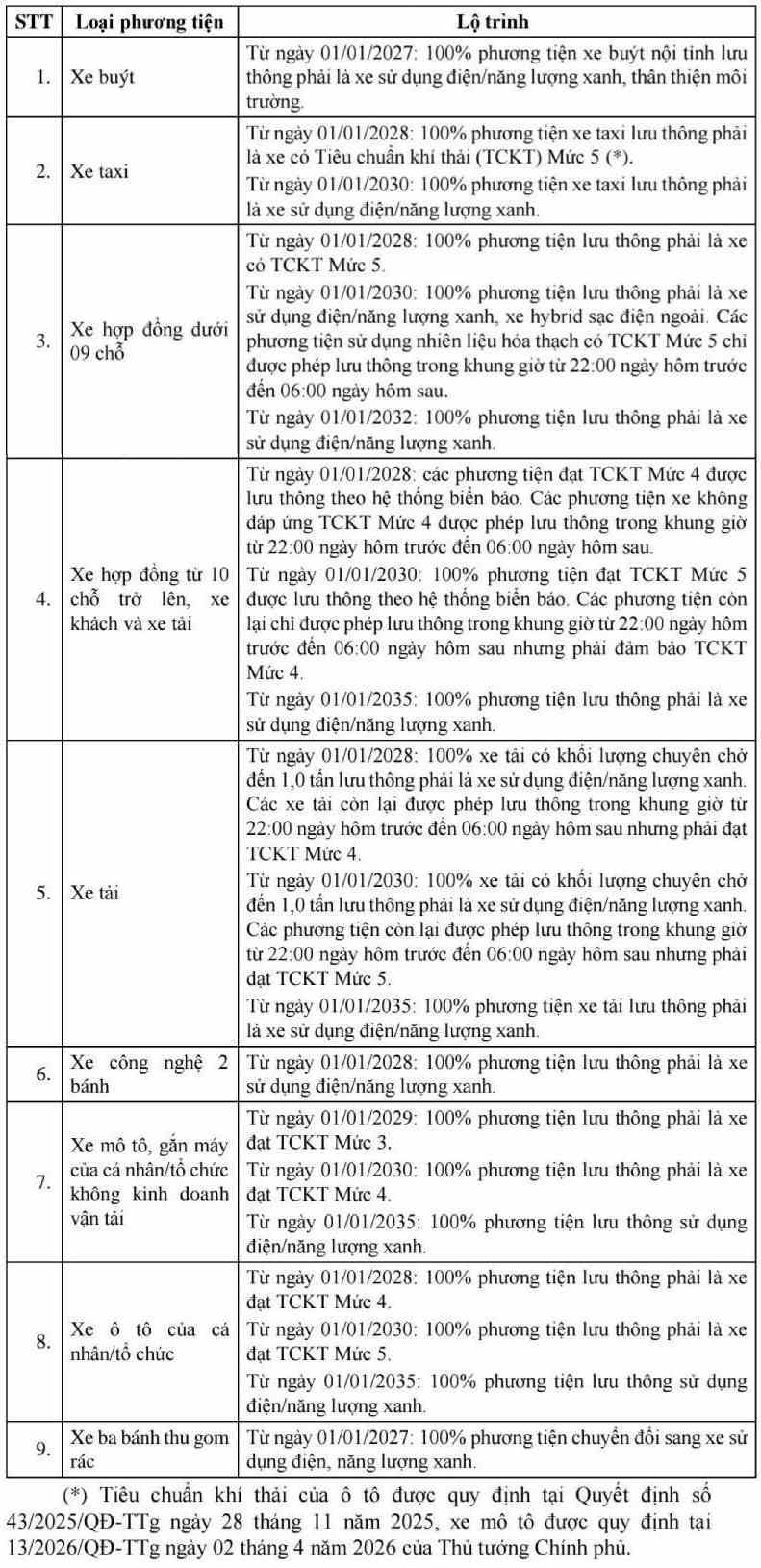
The project proposes to pilot LEZ 1 from July 2027 in the core central area of about 930 ha and Thu Thiem New Urban Area, about 16.6 km2.
The boundary of this area is determined according to the axes Saigon Bridge - Nguyen Huu Canh - Van Thanh 2 Bridge - Thi Nghe 2 Bridge - Hoang Sa - Vo Thi Sau - Cach Mang Thang 8 - Nguyen Thi Minh Khai - Cong Quynh - Tran Hung Dao - Nguyen Thai Hoc - Vo Van Kiet - Saigon River Tunnel - Thu Thiem - Mai Chi Tho - Tran Nao - Saigon Bridge.
From 2029, LEZ 2 is proposed to be expanded to Ring Road 2 of Ho Chi Minh City (truck restriction ring road), with an area of about 280 km2, formed by Do Muoi, Le Duc Anh, Le Kha Phieu, Nguyen Van Linh routes, Phu My approach road and bridge, Vo Chi Cong, Nguyen Thi Dinh, Dong Van Cong, Mai Chi Tho, Vo Nguyen Giap, Hanoi Highway.
More than 200 gateways will be monitored
One of the important solutions to operate LEZs is to build an automatic vehicle monitoring system through cameras, intelligent transportation systems (ITS), operating centers and emission databases.
It is expected that LEZ 1 will have about 60 control gateways, while LEZ 2 will have about 157 gateways.
This system will identify vehicles, determine emission standards, check traffic conditions and serve as a basis for handling violations.
At the same time, Ho Chi Minh City will deploy emission testing for motorbikes and mopeds to determine the emission level of vehicles in circulation.
Prepare plans for people to switch to green vehicles
Limiting high-emission vehicles is placed in the overall solution of developing green transportation, instead of simply banning or restricting vehicles.
The Ho Chi Minh City Department of Construction proposed to continue implementing the free bus policy according to the current policy, and at the same time study opening 3 new LEZ support bus routes to serve people in and around restricted areas.
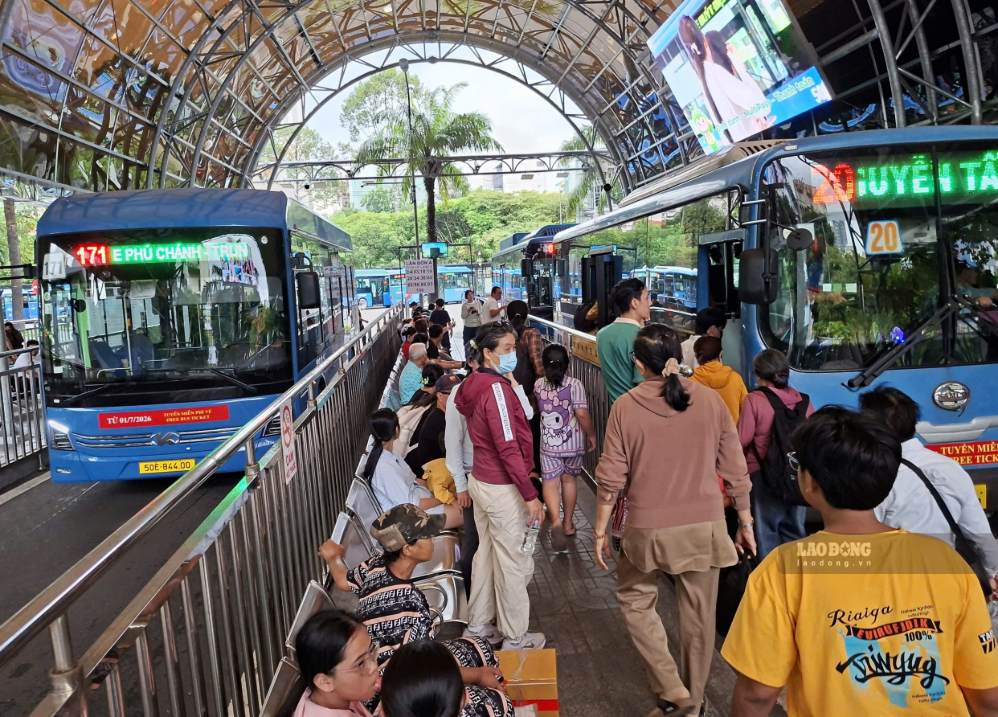
Ho Chi Minh City also plans to invest and organize parking spots to serve public transport users with a total area of about 40,131 m2, of which the area for parking spaces is about 9,989 m2.
This is considered one of the important conditions for people to send vehicles outside LEZ and then switch to buses, metro or other public transport when entering the center.
In addition, the city will develop short-distance vehicles such as bicycles, electric bicycles and public electric motorbikes in the central area and LEZ gateways.
LEZ 1 currently has 54 public bicycle stations with about 1,200 vehicles. The city plans to add about 1,800 vehicles.
For LEZ 2, it is expected to need to add about 3,800 vehicles to meet travel needs.
Strongly increase charging stations, change batteries
One of the issues that people and businesses are concerned about when switching to electric vehicles is the charging and battery exchange infrastructure.
According to the project, Ho Chi Minh City plans to encourage and support investment in charging stations and battery exchange cabinets for electric vehicles.
At LEZ 1, by May 2026, there were about 456 charging pillars and 341 battery exchange cabinets. The city plans to continue to support the development of this infrastructure, including a policy of free use of roads and sidewalks suitable for arranging charging pillars, battery exchange cabinets and supporting 50% of investment interest.
At LEZ 2, there are currently about 2,314 charging pillars and 1,718 battery exchange cabinets. In the period 2026 - 2030, this area is expected to be supplemented with about 3,322 fast charging pillars with a capacity of 120 kW and 8,900 battery exchange cabinets.


