
The above information was stated by the Ho Chi Minh City Department of Construction in a document sent to the Office of the Ho Chi Minh City People's Committee responding to voters' petitions after the 10th session, 15th National Assembly.
Voters proposed that there should be a roadmap for converting transport vehicles from using fossil fuels to electric vehicles suitable to Vietnam's socio-economic conditions, avoiding sudden implementation.
In the transitional period, it is necessary to encourage the development of hybrid vehicles (combining gasoline and electricity) as many developed countries are applying, in order to save fuel, reduce emissions and limit pressure on national electricity infrastructure.
Regarding this matter, the Ho Chi Minh City Department of Construction said that, implementing Resolution 98/2023/QH15 of the National Assembly on piloting specific mechanisms and policies for the development of Ho Chi Minh City, the City People's Committee has assigned the Department of Transport (now the Department of Construction) to develop a Project on controlling emissions of vehicles in two phases.
Phase 1 focuses on building and submitting a roadmap for conversion, along with policies to support the conversion of public passenger transport by electric and green-energy buses.
Phase 2 will build and submit for promulgation emission reduction policies for the remaining road vehicles in the area.
Currently, the Ho Chi Minh City Public Transport Management Center is completing the project to report to the Department of Construction.
The content includes: Vehicle conversion roadmap; policies to support the conversion from fossil fuels to electricity, green energy for taxis, technology vehicles, contract vehicles, passenger cars, trucks, personal vehicles, cars and vehicles belonging to administrative agencies, state-owned and private enterprises; at the same time, emission control zoning in the central area, Can Gio and Con Dao.
In the process of policy making, the Department of Construction said that it will widely consult people, organizations and units directly affected before submitting to the Ho Chi Minh City People's Committee.
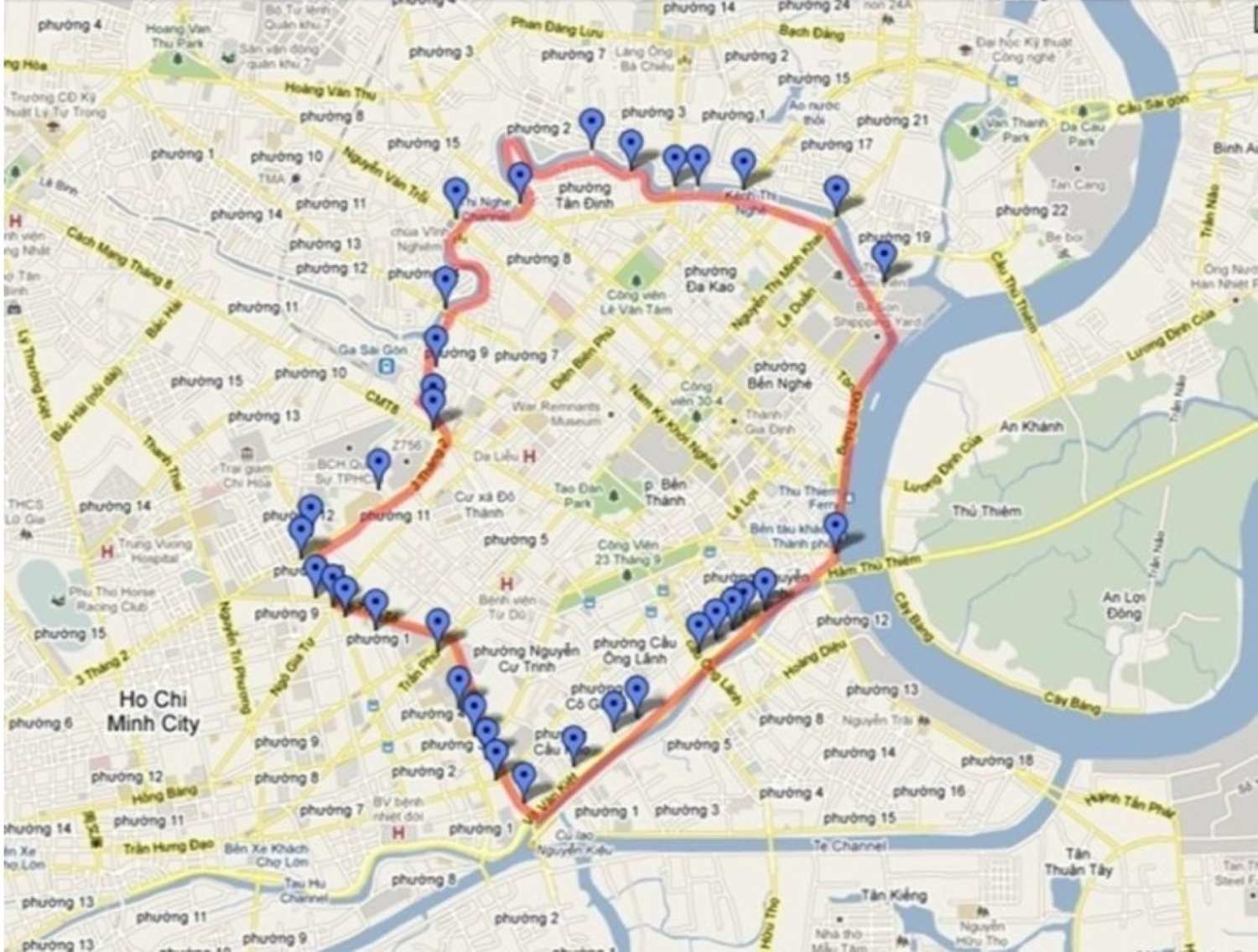
According to the draft phase 2, from the beginning of 2027, Ho Chi Minh City is expected to establish a low-emission zone (LEZ) in the central area.
The expected scope includes old districts: 1, 3, 5, 6, 8, 10, 11, Binh Thanh, Tan Binh, Tan Phu, Phu Nhuan; limited by 15 bridges and 17 main roads.
When LEZs are applied, cars that do not meet Euro 4 emission standards will be charged when entering the center (except for ambulances, fire trucks, national defense, police and funeral vehicles).
From September 2027, motorbikes that do not meet Euro 2 standards will be banned from entering the LEZ area during two peak hours: 6 - 9 am and 4 - 7 pm.
According to the roadmap, by 2028, all gasoline motorbikes will be banned from circulating in the LEZ area (except for vehicles for people with disabilities). At the same time, Euro 4 cars are also banned from entering the city center during peak hours, except for special vehicles.
By 2030, the low-emission zone is expected to expand to the Ring Road 1 area, including major axes such as Pham Van Dong, Kha Van Can, the area around Tan Son Nhat airport, Cach Mang Thang Tam, Au Co, Luy Ban Bich, Kinh Duong Vuong and Vo Van Kiet. Emission control measures will continue to be tightened in stages.
In addition to the central area, the project proposes to soon implement green transformation solutions in Con Dao and Can Gio.
In Con Dao, the goal by the end of 2026 is to basically complete the conversion of gasoline and oil vehicles to electric and green energy vehicles, except for trucks from 2 tons or more and specialized vehicles.
For Can Gio, a similar roadmap is expected to be completed by the end of 2028.


