
Install 20,000 battery exchange cabinets in 2026
According to the Ho Chi Minh City Department of Construction, from 2029, the city will convert 100% of motorbikes and mopeds participating in technology transportation of passengers and goods to using electricity or green energy. The estimated scale is about 400,000 vehicles.
It is forecasted that by 2030, Ho Chi Minh City will have about 1.2 million electric motorbikes circulating. To meet the demand, the city needs to develop more than 25,000 charging pillars and public battery exchange cabinets.
The Department of Construction has announced 52 locations eligible to install electric motorbike battery exchange cabinets on sidewalks, concentrated in Saigon, Hoa Hung, Tan Hoa, Vuon Lai, Binh Hung Hoa, Dien Hong, An Lac and Tan Tao wards.
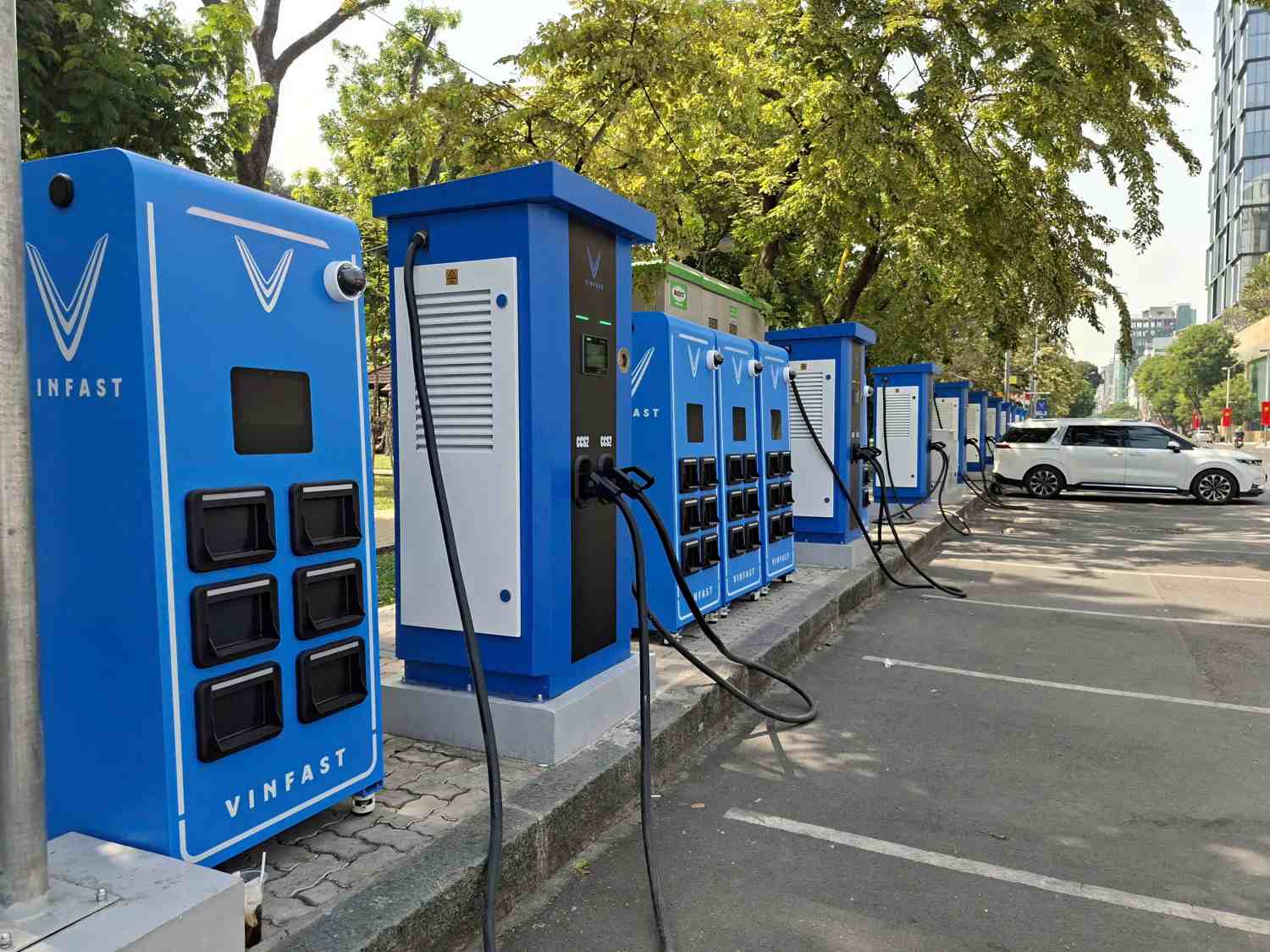
It is expected that in 2026, Great Wealth Trading and Service Co., Ltd. and V-Green Global Charging Station Development Joint Stock Company will install 20,000 battery exchange cabinets in the area.
The city requires battery exchange cabinets to ensure common use and technical compatibility. Charging trunk designs need to be flexible in size, support many types of batteries of different brands or apply open connection protocols.
Add 1,500 fast charging pillars
Ho Chi Minh City currently has nearly 2,500 operating buses, of which 66 routes with more than 1,082 vehicles using clean fuel, accounting for about 46%. The goal by 2030 is 100% of buses using green energy.
The electric bus charging system is currently deployed by VinBus Ecological Transport Service Co., Ltd. and Phuong Trang Passenger Car Joint Stock Company. From March 1st, the two units plan to put more electric bus routes into operation.
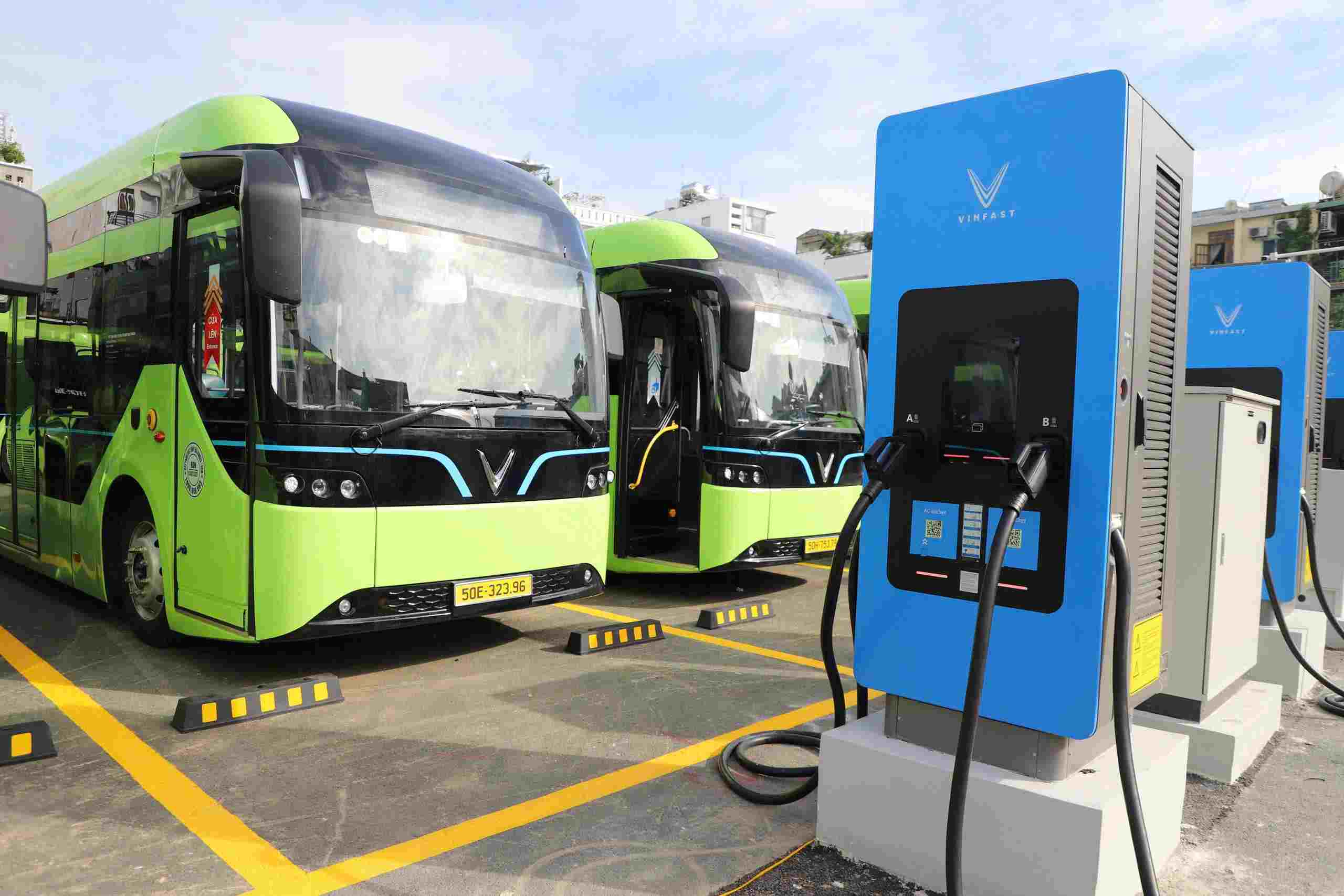
In the taxi sector, the city has 18,613 vehicles, of which 13,124 vehicles are electric taxis, accounting for 71%.
The whole city currently has about 1,000 charging stations. V-Green alone operates 900 stations with 9,432 charging pillars and 14,743 charging ports, including 4,792 car fast charging ports and 9,839 slow charging ports.
According to international recommendations, on average, 10 electric cars need 1 charger. Therefore, the Department of Construction determines that it is necessary to develop at least 1,500 fast charging pillars at key locations to meet the increasing speed of electric vehicles.
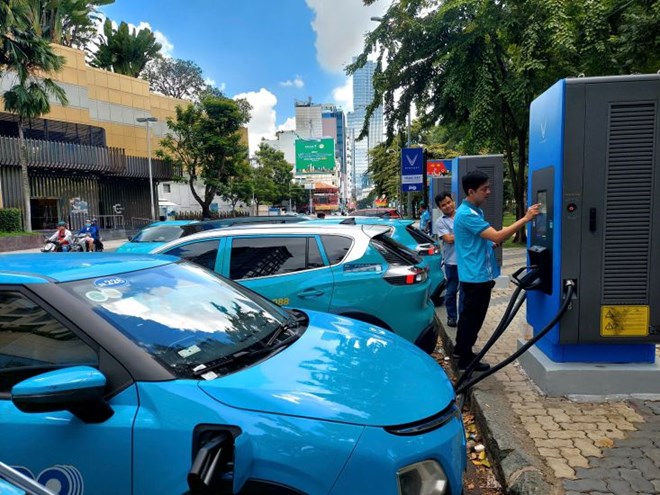
The city is also developing a project to exploit infrastructure assets of road transport (bus stations, parking lots) to invest in charging pole systems.
19 stations and yards selected include: Van Thanh, Saigon, Cho Lon, Dam Sen, Tan Phu, Linh Trung 2 Export Processing Zone, Linh Dong, Hiep Thanh, Thoi An, Hoc Mon, Tan Quy, An Nhon Tay, Le Minh Xuan logistics and technical yards, Tran Dai Nghia bus route terminal, District 8 Bus Station, Kenh Lo bridge, Can Gio, Cu Chi and Binh Thai.
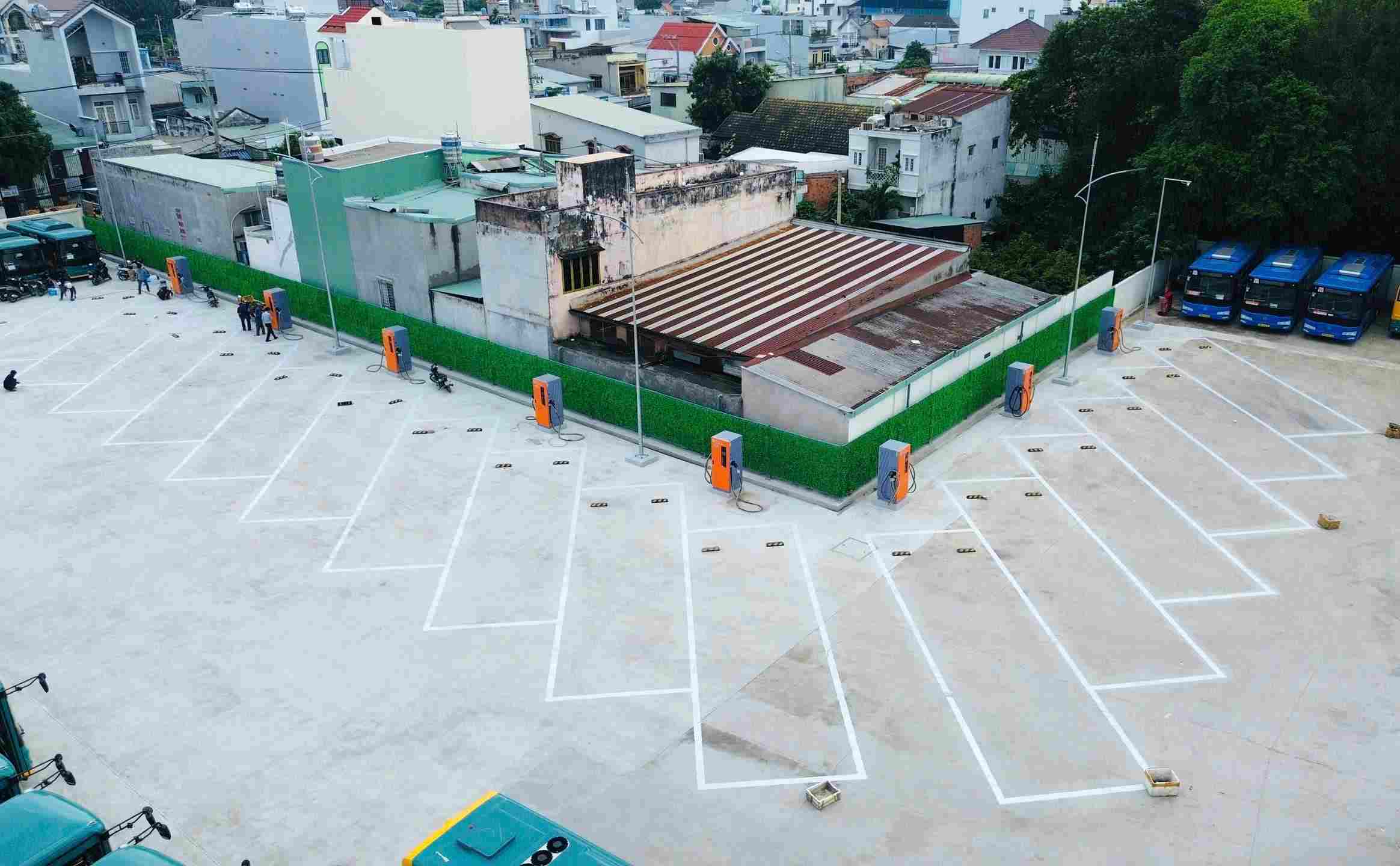
The total area of the wharves is nearly 110,000 m2, of which more than 25,000 m2 is leased for operation through auctions for 7 years. The revenue after deducting expenses will be paid to the budget, prioritizing reinvestment and upgrading of transport infrastructure.
Charging pillars at the station will prioritize serving electric buses from 9 pm the previous day to 6 am the next morning. The system uses CCS2 gates and open control software, allowing electric cars to charge together.
Establishing low emission zones, gradually tightening gasoline trucks into the center
In parallel with developing charging infrastructure, Ho Chi Minh City is developing a Project to control emissions from vehicles, proposing to establish low-emission zones (LEZs) in the central area from the beginning of 2027.
The expected scope includes old districts: 1, 3, 5, 6, 8, 10, 11, Binh Thanh, Tan Binh, Tan Phu, Phu Nhuan; limited by 15 bridges and 17 main roads.
When LEZs are applied, cars that do not meet Euro 4 emission standards will be charged when entering the center (except for ambulances, fire trucks, national defense, police, funeral vehicles).
From September 2027, motorbikes that do not meet Euro 2 standards will be banned from entering the LEZ area during two peak hours: 6-9am and 4-7pm.
According to the roadmap, by 2028, all gasoline and diesel motorbikes will be banned from circulating in the LEZ area (except for vehicles for people with disabilities). At the same time, Euro 4 cars are also banned from entering the city center during peak hours, except for special vehicles.
By 2030, the low-emission zone is expected to expand to Ring Road 1 area, including major axes such as Pham Van Dong, Kha Van Can, the area around Tan Son Nhat airport, Cach Mang Thang Tam, Au Co, Luy Ban Bich, Kinh Duong Vuong and Vo Van Kiet. Emission control measures will continue to be tightened in stages.


