Great expectations from sidewalk fee collection policy
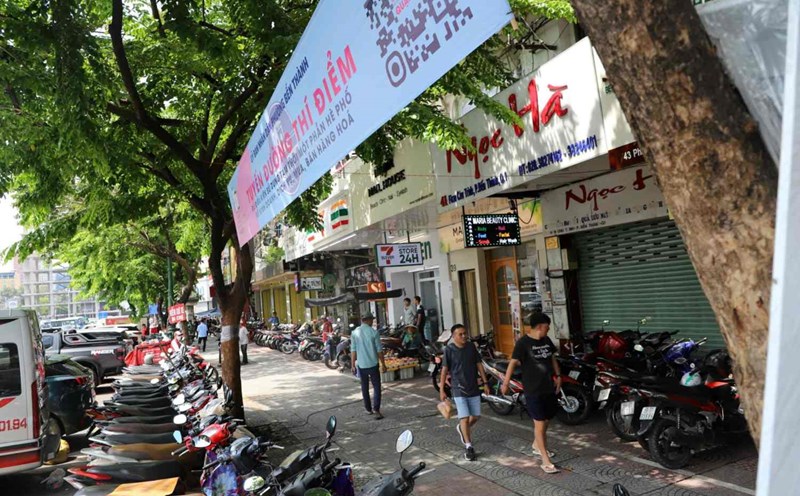
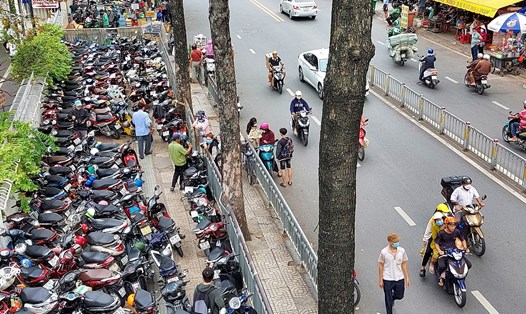
The situation of encroachment on roads and sidewalks has become a burning issue in Ho Chi Minh City for many years.
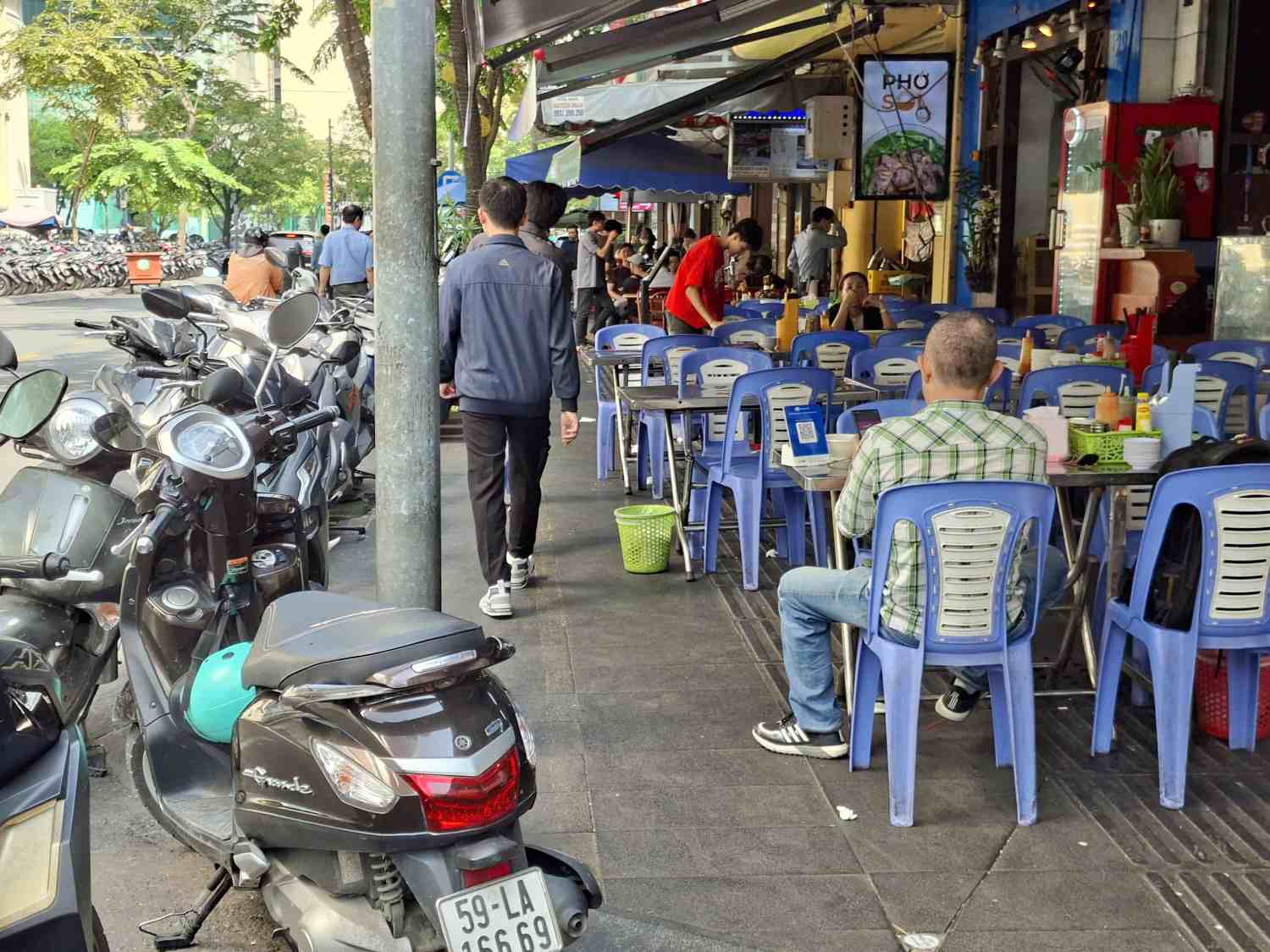
Many roads have been turned into spontaneous trading places, eateries, and parking lots, forcing pedestrians to take to the road, posing a risk of traffic accidents and damaging urban aesthetics.
Localities have repeatedly launched campaigns to restore sidewalk order, but the effectiveness is not sustainable, often falling into the situation of "catching and releasing".
In that context, allowing the temporary use of part of sidewalks and roadways with fees was once expected to help manage urban order better, while creating additional revenue for the budget.
In 2023, the Ho Chi Minh City People's Committee issued Decision 32/2023/QD-UBND on temporary management and use of a part of the roadway and sidewalk. According to regulations, from January 1, 2024, some cases are allowed to temporarily use sidewalks and roadways and must pay fees.
The permitted activities include business services, goods trading, parking, cultural activities, construction material transit and some other public needs.
The collection level is calculated by area, ranging from 20,000 - 100,000 VND/m2/month for business sidewalks and from 50,000 - 350,000 VND/m2/month for parking.
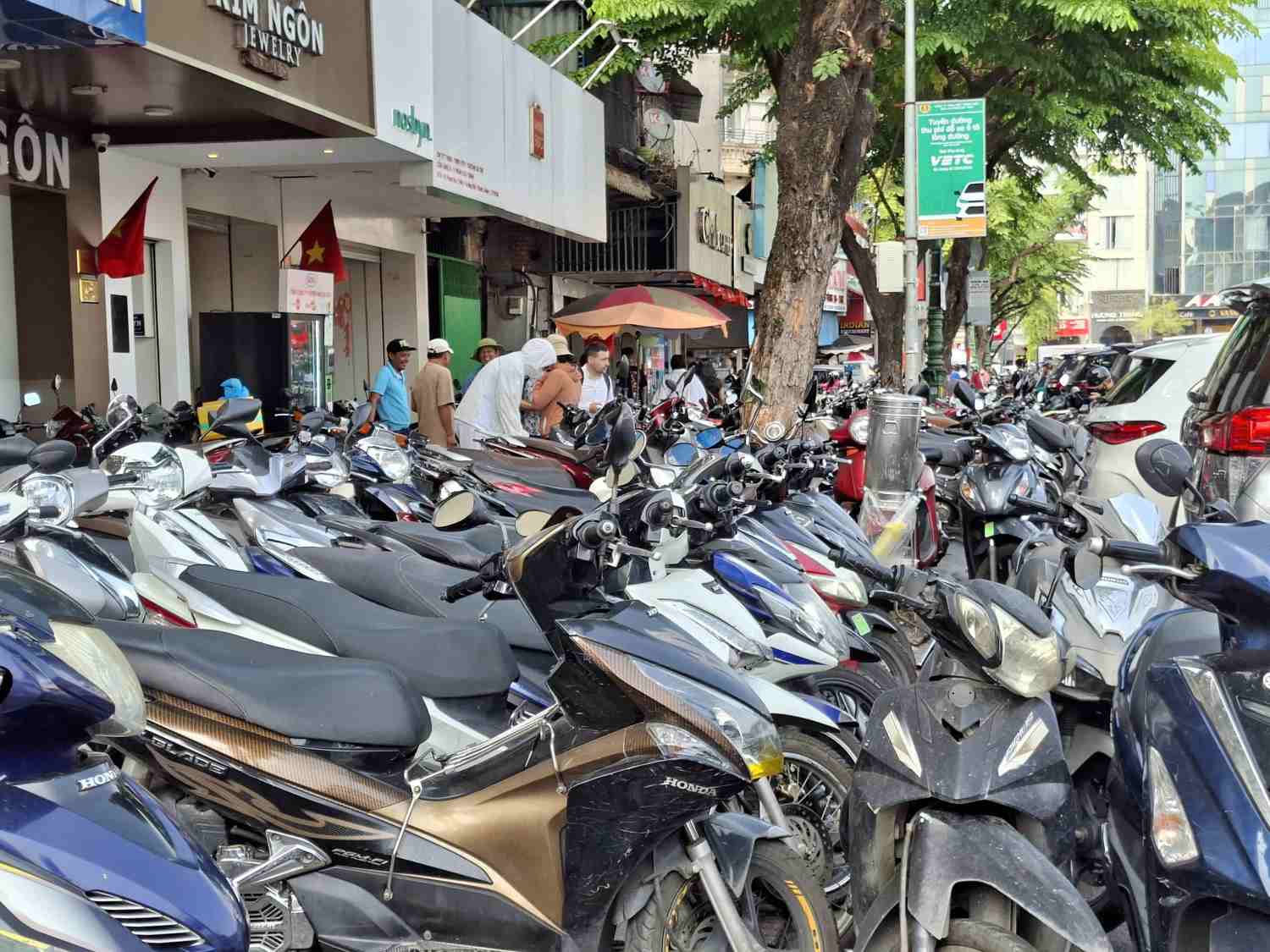
When building the project, the city once placed high expectations on revenue. According to calculations, if more than 600 roads eligible for parking are effectively exploited, the city can collect about 550 billion VND per year.
In addition, more than 1,100 roads with sidewalks 3m wide or wider, if leased for business, can bring in nearly 1,000 billion VND/year.
Real implementation is not as expected
However, the actual implementation is not as expected. Although the policy took effect from the beginning of 2024, it was not until May 2024 that District 1 (formerly) was the first locality to pilot sidewalk rental for business. After that, some districts such as 3, 4, 8, 10 and 12 (formerly) began to implement it.
By July 2025, the total fee collected was only about 8.5 billion VND and only 6/22 districts and Thu Duc City at that time deployed fee collection. This figure is much lower than initial expectations.
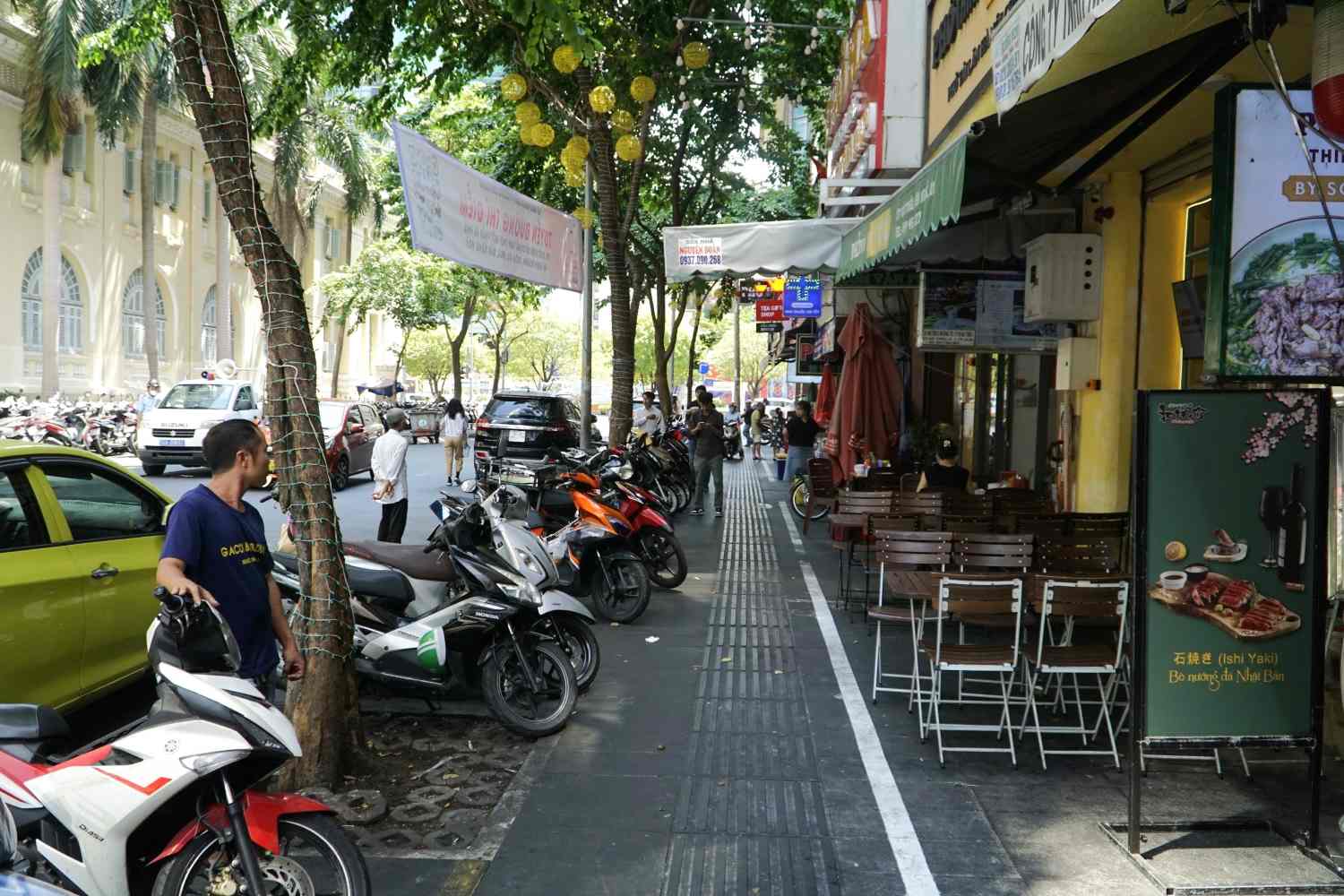
However, toll collection also shows some positive signs. On pilot roads, sidewalk space is more clearly divided for pedestrians, businesses and parking. Some areas have become more neat and orderly than before.
According to the Ho Chi Minh City Department of Construction, the reason why the policy has not been effective is that many localities have implemented it unsynchronizedly, and are still confused in reviewing and licensing. Meanwhile, the situation of illegal trading and parking still occurs widely, causing unfair psychology and raising doubts about transparency.
After that, Decree 165/2024/ND-CP detailing the implementation of the Road Law and the Law on Road Traffic Order and Safety no longer allows provincial-level People's Committees to issue separate regulations on the use of sidewalks for business purposes and for buying and selling goods.
In November 2025, the Ho Chi Minh City People's Committee officially abolished Decision 32/2023/QD-UBND. According to current regulations, only a few cases are considered for temporary use of sidewalks and roadways such as serving events, construction, material gathering, organizing funerals or parking when necessary. Business and trading activities are no longer eligible for licensing.
Representatives of the Ho Chi Minh City Department of Construction said that in the process of contributing opinions to amend Decree 165/2024, the unit has proposed a number of mechanisms suitable to the actual conditions of the city. If the decree is amended in the direction of decentralizing power to localities, Ho Chi Minh City will develop a separate project to manage sidewalk use activities for business purposes.