
Hanoi is accelerating the roadmap for converting public passenger transport, aiming for the goal that by 2030 all buses will use clean energy.
From the beginning of 2026 to now, Hanoi City has continuously put many more electric bus routes into operation. From the beginning of April 2026 alone, the city has put into operation 10 more electric bus routes with 288 new vehicles. After that, many routes such as 74, 90, 36, 16, 24, 29... continue to be replaced by diesel vehicles with modern, environmentally friendly electric buses.
As a key unit in the green transition process, Hanoi Transport Corporation (Transerco) has put more than 150 medium and large-sized electric buses into operation on many key routes. New vehicles are equipped with air conditioners, wifi, surveillance cameras, electronic payments and safety warning systems. Vehicles operate more smoothly, reduce noise and do not emit directly into the urban environment.
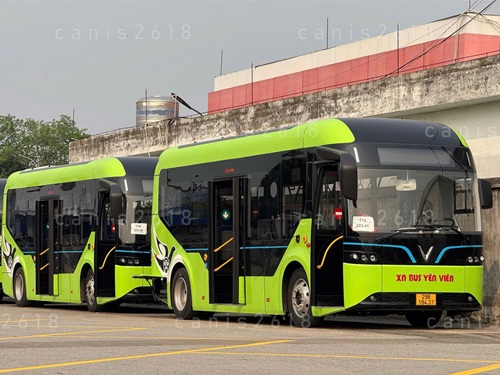
Not only Transerco, many other transport businesses such as Bao Yen, Lien Ninh Transport and Service Joint Stock Company... are also accelerating the process of transitioning from diesel buses to electric buses.
Talking to a reporter from Lao Dong Newspaper, Mr. Thai Ho Phuong - Director of the Hanoi City Traffic Management and Operation Center - said that as of April 30, 2026, the whole city has over 800 electric and green-energy buses, including 683 electric buses and 139 CNG-using buses, accounting for about 42.1% of the total number of vehicles in the whole network.
Electric buses alone currently account for about 35% of the total number of vehicles. Compared to the target of 2026 reaching 20 - 23%, Hanoi has exceeded the set plan and completed ahead of schedule for 2027.
According to the plan of the Hanoi People's Committee, by 2030 at the latest, all gasoline and diesel-fueled buses will be replaced by electric buses and vehicles using green energy. The inner city area will be prioritized for early completion to reduce emissions and improve air quality.
To achieve this goal, the city is implementing many synchronous solutions such as building a mechanism to support businesses investing in electric buses, charging stations and related technical infrastructure.
In parallel with that, Hanoi promotes the planning of charging station systems at depots, wharves and bus terminals to ensure continuous operation for electric vehicles.
The city also promotes the application of technology in public transport management such as the deployment of interconnected electronic tickets, smart traffic management and transport data digitization.
According to transportation experts, the transition to electric buses is an important solution to help reduce urban emissions and improve the living environment. However, this process still faces many challenges such as large investment capital pressure, the requirement to upgrade electricity infrastructure and the lack of land for depots and charging stations.
To make electric buses effective, Hanoi needs to continue to improve service quality, expand the route network and increase connectivity with metro and BRT to attract people to use public transport instead of personal vehicles. This shows the city's great determination in developing a green, modern and low-emission public transport system.


