
On May 21, the Vietnam Entomology Association and the National Institute of Malariology - Parasitology - Entomology organized the 12th National Entomology Conference.
The conference is an opportunity for scientists to share research and achieved results, thereby providing scientific evidence for policymakers in proposing intervention measures in the field of insect prevention.
Not all insects are harmful
Sharing at the Conference, Prof. Dr. Vu Quang Con - Chairman of the Vietnam Society of Entomology - said that it is necessary to re-examine the role of insects objectively, instead of just considering them as harmful agents.
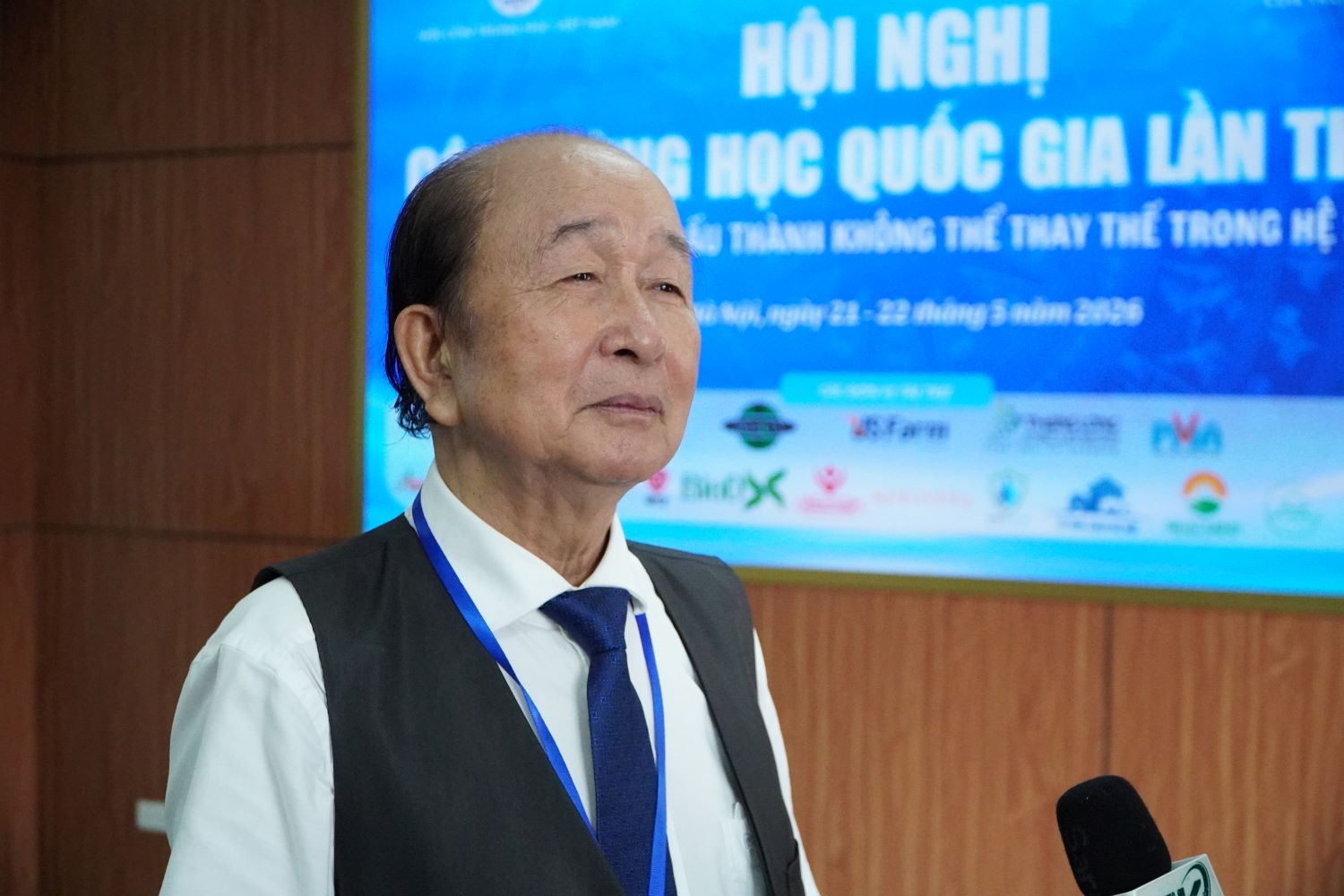
According to Prof. Dr. Vu Quang Con, many insect species play an important role in the ecosystem, being a food source for birds, amphibians, reptiles, and also participating in regulating the development of crops.
If all insects considered'harmful' are killed, the ecosystem will be destroyed," he emphasized.
He also warned that the abuse of pesticides can have adverse consequences. "Poisoning indiscriminately not only kills pests but also kills natural enemies, birds, frogs... thereby disrupting ecological balance and making epidemics more likely to break out," he said.
In addition, climate change and living environment changes are impacting insect populations. "The increase and change of epidemics is not entirely due to climate but also due to changes in living environment, urbanization and human behavior" - Prof. Dr. Vu Quang Con said.
The epidemic is no longer following the old cycle
According to Assoc. Prof. Dr. Hoang Dinh Canh, Director of the National Institute of Malariology - Parasitology - Entomology, infectious diseases caused by insects are still a major challenge. "Currently, there are dozens of diseases transmitted through insect vectors. The clearest are diseases such as malaria, dengue fever and some other diseases," he said.
However, Vietnam has achieved many remarkable results in epidemic prevention and control, especially malaria. "From millions of cases each year, malaria in Vietnam is now very well controlled, with only a few hundred cases left" - Assoc. Prof. Dr. Hoang Dinh Canh said, while emphasizing the goal of eliminating malaria by 2030.
However, he also warned that the epidemic diễn biến is changing a lot. "Previously, the outbreak cycle was usually about once every 5 years, but now this rule is no longer as clear as before," he said.
The reason is said to be due to the characteristics of the tropical climate, high humidity, heavy rain creating favorable conditions for mosquitoes to develop, along with living conditions and living environment of people.

To serve research, scientists must work in specific conditions. "We have to go to the field, set traps in many different environments such as livestock barns, forest edges... and even have to use human bodies to attract mosquitoes to measure density.
These studies must be carried out continuously 24 hours a day, lasting many days, with many different survey sites. Working conditions are very hard, requiring great endurance for research staff" - he shared.
The biggest loophole is subjectivity
While the epidemic is becoming increasingly complex, Dr. Nguyen Van Dung, Head of the Department of Insectology - Vietnam Institute of Malariology - Parasitology - Entomology, believes that human subjectivity is still the most worrying factor.
According to him, currently diseases transmitted by mosquitoes such as dengue fever, malaria, Japanese encephalitis, Zika or Chikungunya are "really very difficult to control".
Although there are vaccines for some diseases, accessibility is still limited. "For example, dengue fever vaccine has a fairly narrow coverage rate and prices are difficult to reach the majority of people," he said.
Notably, dengue fever currently has no specific treatment, so mosquito prevention is still the main thing, not treatment.

Dr. Nguyen Van Dung also warned about subjective psychology in the community and the health system. In fact, deaths from malaria due to late diagnosis have been recorded. "People are subjective because they think Vietnam does not have malaria... when it is discovered, it is already malignant malaria, which cannot be treated anymore" - he said.
According to experts, the most effective disease prevention measure is still very basic. "The principle is that if there are no larvae, there is no dengue fever... environmental sanitation, covering unused water containers is the cheapest and most effective measure.


