
On January 30, information from Can Tho Central General Hospital said that doctors of the Intensive Care Unit - Poison Control (ICU) had just saved a patient with acute pancreatitis, septic shock, and ARDS (acute progressive respiratory failure syndrome) complications of very severe severity thanks to the application of VV-V ECMO (Hybrid ECMO) technique.
That is a male patient, transferred to the hospital by the previous tuyến on January 8 in a state of shock, severe respiratory failure by endovascular ventilation, drowsy consciousness, irritability, overweight and obesity. Previously, the patient had epigastric pain, severe vomiting (hospitalized at the previous tuyến).
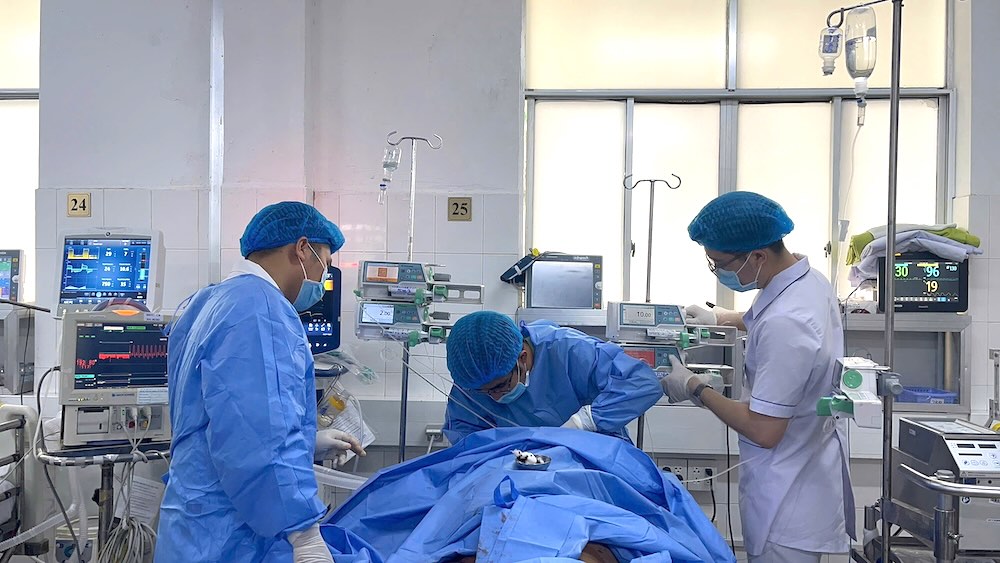
The patient was quickly put on a ventilator by the Emergency Department, used sedatives, vasopressors, performed tests and transferred to the Intensive Care - Anti-poison Department with diagnosis: septic shock; severe acute pancreatitis due to hypertriglyceridemia complicated with severe acute respiratory failure; acute kidney failure; acute liver failure. The patient was treated with specialized techniques: ventilator, continuous blood filtration...
After 5 days of treatment at the ICU, although the patient had undergone continuous hemodialysis, antibiotics, vasopressure, active resuscitation support..., the patient's kidney function improved, vasopressure was stopped, but the respiratory problem worsened. Severe lung injury with ARDS complications, the patient had optimal ventilator parameters installed but the patient's oxygen level did not reach the target accompanied by CO2 retention. The prognosis of the disease was very poor with a very high risk of death, the department leader consulted with the ECMO team and decided to perform VV-V ECMO technique for the patient (surgeal blood oxidation), the last chance of salvation for the patient.
Finally, blood oxygen levels and other organs gradually recovered, after 6 days of ECMO and continuous blood filtration, the patient had his ECMO removed, continuous blood filtration stopped, and test indicators were recovering well. The patient had his endotracheal tube removed 3 days later (January 22).
After 14 days of intensive treatment, the patient's vital signs stabilized, and he was ordered to quit the ventilator, remove the endotracheal tube and transferred to the Geriatrics Department for continued monitoring, treatment and care. Currently, the patient is stable, alert, has good contact, and his tests have returned to normal, discharged from the hospital on January 28.
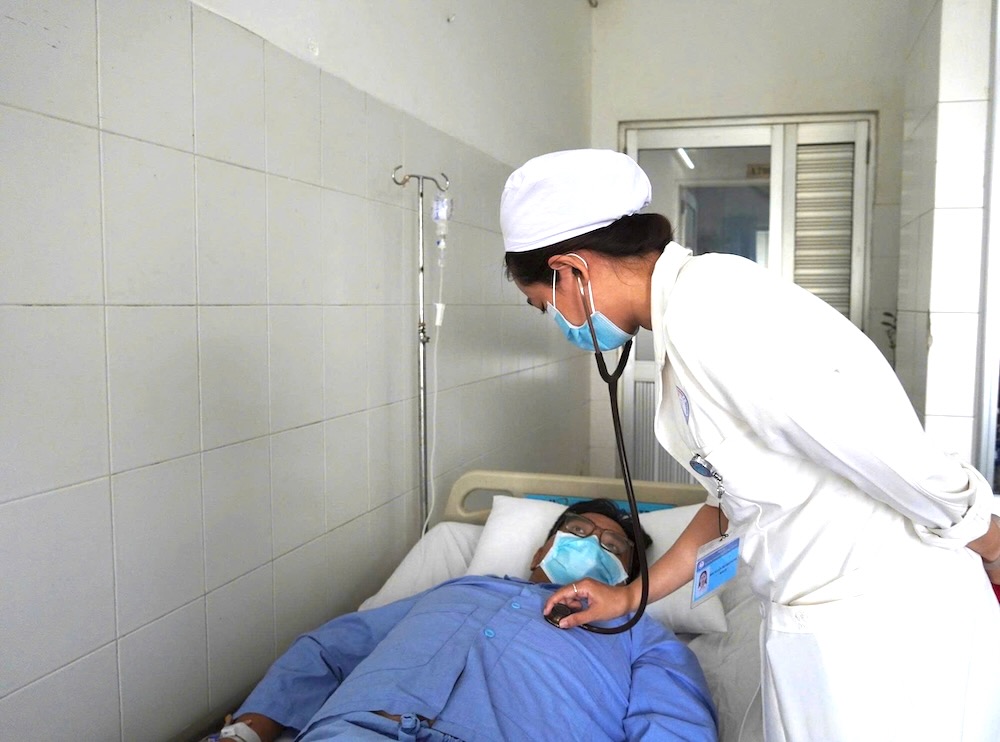
BS.CKII. Duong Thien Phuoc - Head of the ICU Department of the hospital informed that the success of the above case came from the fact that the patient was diagnosed accurately and treated actively according to the protocol from an early stage. However, due to the severe progression of the disease on the background of overweight and obesity, the treatment process encountered many difficulties.
Obesity is considered a relatively contraindication to ECMO technique, doctors have carefully considered and optimized all treatment methods to save patients' lives. The patient's good health recovery not only brings positive treatment results but also marks an important milestone of success for the hospital ECMO team.


