
Children with Adenovirus cross-infection in the family
Ms. Nguyen Thi Vinh's 8-year-old daughter (Chuong My ward, Hanoi) was hospitalized after 3 days of continuous high fever, poor response to fever-reducing medicine. Previously, her older brother also had Adenovirus with symptoms of high fever but responded well to treatment and quickly recovered.
However, in girls, the disease progressed more severely. In addition to high fever, the child also had conjunctivitis, swollen red eyes, many scabies and was diagnosed with Adenovirus upon admission to the hospital.
Before that, my son went to the swimming pool, so I thought he was infected there, because when I went to the hospital, I saw that many children also had such diseases," Ms. Nguyen Thi Vinh shared.
Not only Ms. Vinh's family, recently, many families have recorded continuous cases of children contracting Adenovirus.
Ms. Pham Thuy (Yen Nghia ward, Hanoi) said that both children contracted Adenovirus in just a short time. The older boy started the disease after swimming, high fever and eye pain. Because they did not know about Adenovirus, the family was subjective, so when admitted to the hospital, the child had conjunctivitis, corneal ulcers and had to have his pseudomembrane removed.
When my child came home from swimming, he had a fever at night, and the next morning his eyes hurt. The doctor diagnosed him with Adenovirus, he had a fever for 6 days, had keratitis ulcers, conjunctivitis, had to remove his pseudomembrane, was very painful and bleeding. At first, the family did not know about this virus, so they were still subjective. When the second child got sick, we became more proactive, took our child for an early examination and care, putting eye drops right from the beginning according to the doctor's instructions," Ms. Thuy said.
Number of Adenovirus cases increases
Records at many hospitals show that the number of Adenovirus cases is on the rise. Since the beginning of the year, the National Hospital of Pediatrics has recorded 2,777 cases positive for Adenovirus, 3 times higher than the same period in 2025.
At Hanoi Children's Hospital, Adenovirus is currently the disease group with the highest proportion in the Department of Tropical Diseases, with about 2/3 of pediatric patients being treated. According to doctors, during summer vacation, children often travel, participate in group activities, play in common living areas or swimming pools, increasing the risk of infection.
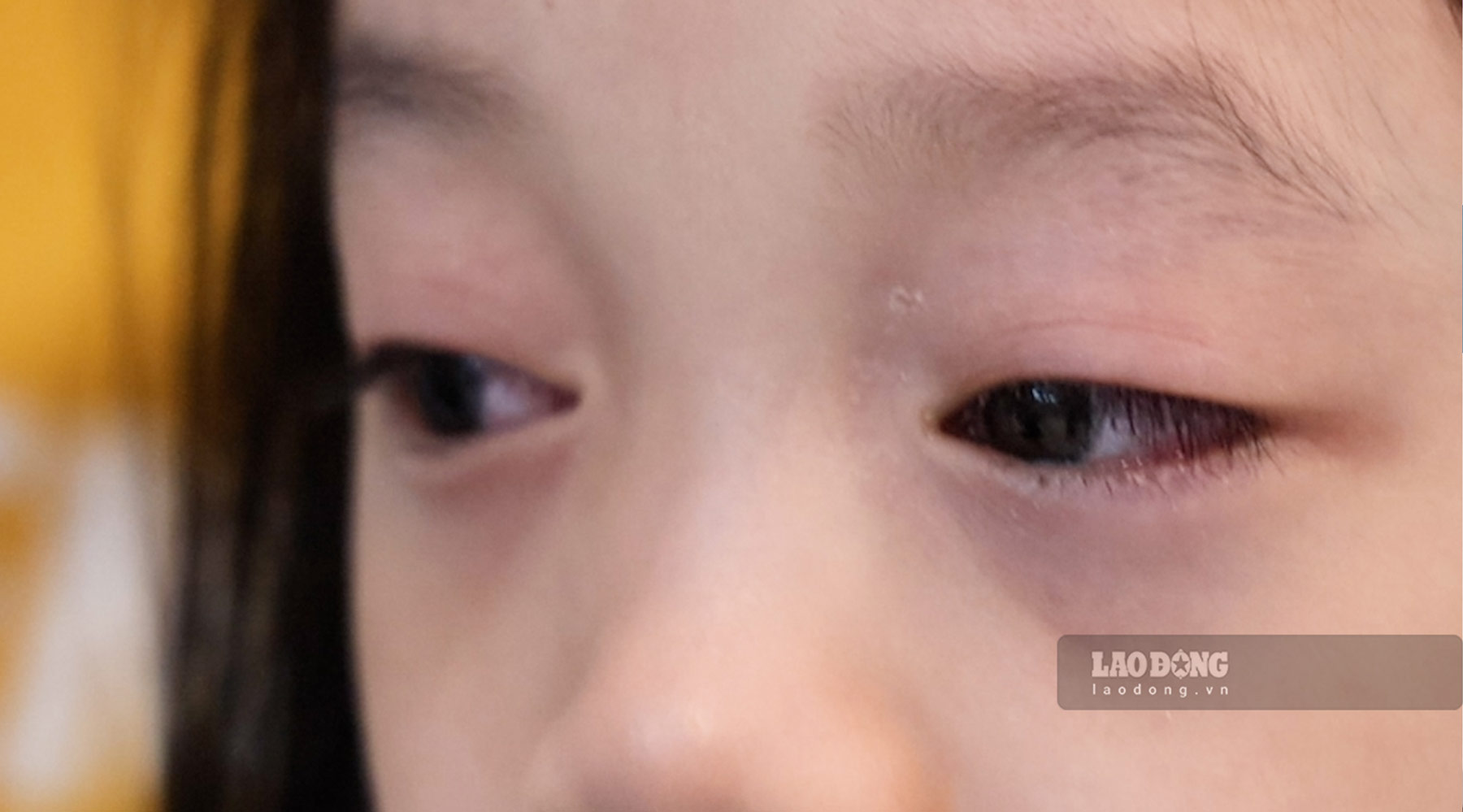
Adenovirus is not only transmitted through the respiratory tract, droplets, but can also be transmitted through the digestive tract, conjunctival secretions and contact with infected surfaces and utensils. Children with the disease often have a high fever lasting 5-6 days, and in many cases have poor response to fever-reducing medication.
In addition to fever, children may experience symptoms such as red eyes, a lot of glaucoma, diarrhea, otitis media, purulent tonsillitis or pneumonia. Because the virus can cause damage to many organs, children are often tired, fussy, lose appetite and are uncomfortable.
According to MSc. Dr. Le Thi Van, Department of Tropical Diseases, Hanoi Children's Hospital, when children have a prolonged high fever, poor response to fever-reducing medicine or are accompanied by symptoms such as red eyes, cough, digestive disorders, parents need to take children to medical facilities as soon as possible for examination, diagnosis and monitoring. At the same time, children need to limit contact with other children to reduce the risk of spread.
Doctors also note that if not detected and treated promptly, some cases of Adenovirus can progress severely.


