
Choose vegetables suitable for rooftop conditions
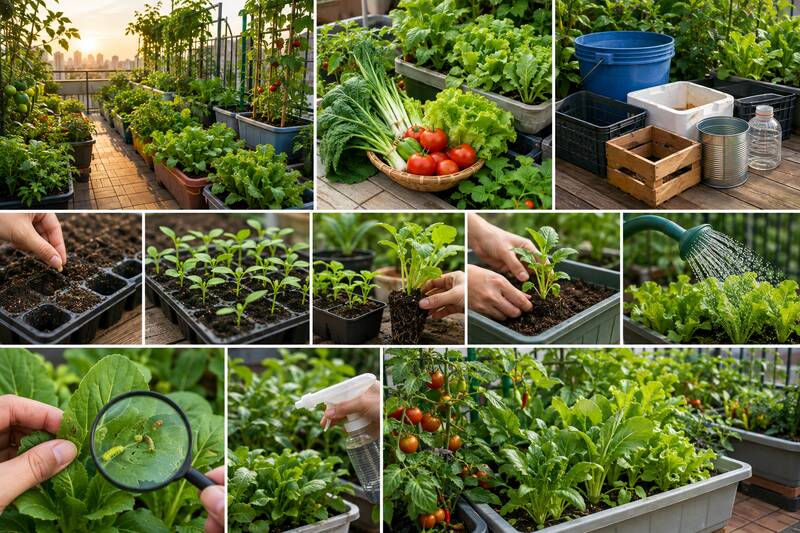
When growing vegetables on the rooftop or balcony, plant varieties should be chosen based on sun orientation and ventilation conditions of the space. Areas that receive a lot of light can grow a variety of vegetables year-round, while rooftops or balconies with little sunlight will be more suitable for sun-tolerant and seasonal vegetables.
Vegetables with a short harvest time such as bok choy, mustard greens, bean sprouts, napa cabbage and lettuce are suitable choices for beginners. If you want to harvest for a long time, you can grow tomatoes, peppers, chives, scallions, coriander or cilantro. Vegetables such as carrots, lettuce, scallions, ginger and coriander also do not take up much space. Meanwhile, chives, scallions, water spinach, sweet potato leaves and aloe vera are usually less susceptible to pests and diseases, making care simple.
Choose pots with good drainage
Most pots can be used to grow vegetables if they are sturdy enough and have drainage holes.
In addition to specialized plant pots, growers can take advantage of plastic buckets, wooden boxes, plastic boxes, metal cans, baskets or old household items to make plant pots. However, it is necessary to ensure that each pot has drainage holes to avoid root waterlogging.
Soil and fertilizer preparation
You can choose to grow vegetables in soil or hydroponically depending on the conditions.
With the soil-growing method, it is recommended to use a loose, organic-rich soil mixture such as garden soil combined with humus, rice husk ash, sand or decomposed organic fertilizer to increase drainage capacity and maintain nutrients. In the process of care, it is necessary to supplement fertilizer periodically for plants to develop healthily.
If hydroponics is applied, the plant will be grown in a substrate and provided with nutrients through specialized solutions. This method helps vegetables grow quickly, cleanly, with few pests and diseases and is convenient for care.
Sowing seeds and caring for seedlings
There are two common ways to grow vegetables: sowing seeds directly or nursing seedlings and transplanting them into pots.
For many types of vegetables, seeds should be processed and soaked before sowing to increase the germination rate. After the seedlings are healthy enough, they can be moved to the main planting pot. Watering, supplementing nutrients and proper care will help the plant grow well and yield harvest at the right time.
Proactively prevent pests and diseases
Vegetables grown on the terrace can still encounter similar pests and diseases to those grown in the field.
Growers should regularly check leaves, stems and roots to detect abnormal signs early. When plants develop poorly or pests and diseases appear, it is necessary to determine whether the cause is lack of water, lack of light, inappropriate temperature, poor soil nutrients or insect damage to have timely treatment measures. Proactive monitoring and care will help limit pests and diseases and improve harvest yield.


