
Along with the trend of green transformation, the demand for electric vehicles in Hanoi is increasing. However, in many apartment buildings, the car charging infrastructure does not meet the actual needs, causing residents to face many difficulties in the process of use.
Lao Dong Newspaper reporters have recorded many inadequacies related to electric vehicle charging infrastructure in some apartment buildings in Hanoi.
The entire apartment building only has 3 electric vehicle charging outlets
Reporters' records at Vinaconex 7 Apartment Building (Ho Tung Mau Street, Phu Dien Ward, Hanoi) show that the entire apartment building currently only has 3 electric motorbike chargers, causing many residents to encounter many inconveniences in the process of use.

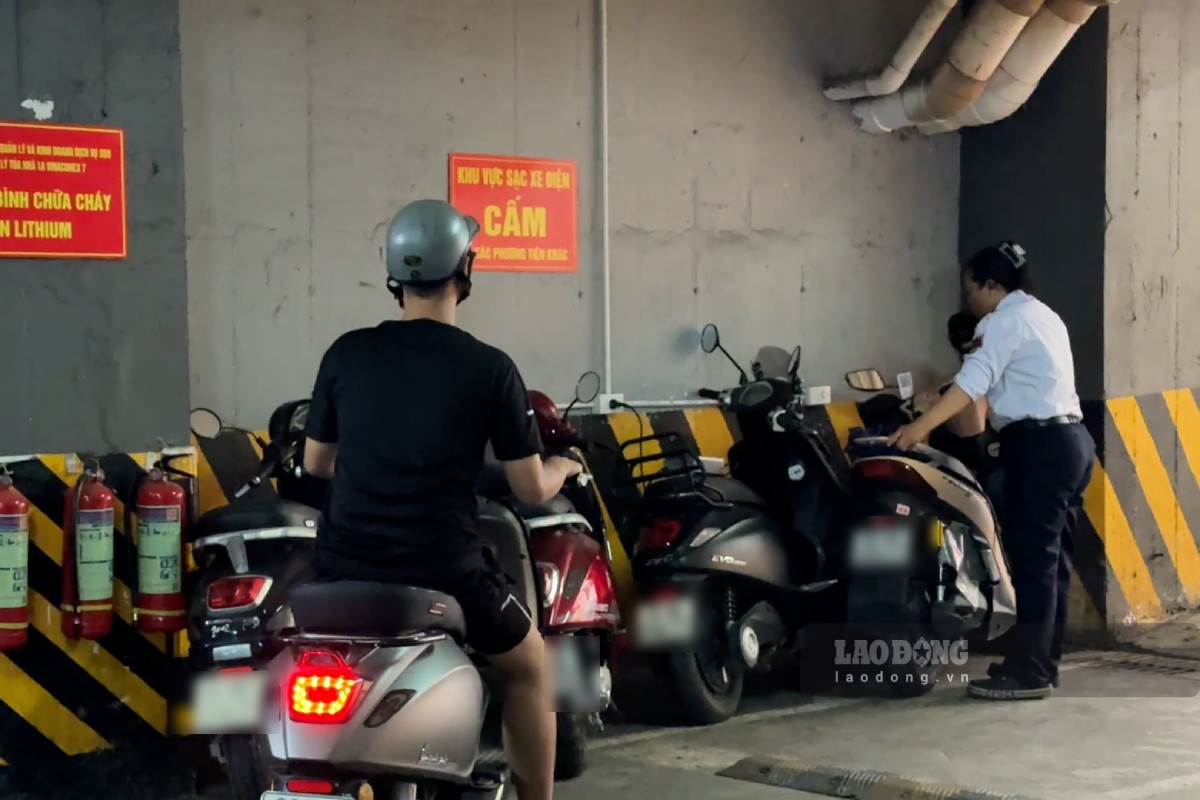
Nguyen Ngoc Linh (character name has been changed) - a resident living in Vinaconex 7 Apartment - said that because the charging area has too few sockets, every time he comes home from school, the charging locations are usually full. Therefore, it takes about 3-4 days for Linh to charge the car once. In case the charging socket is broken, Linh has to go to the adjacent apartment to charge with a cost of 10,000 - 15,000 VND/turn.
Lack of a place to charge electric vehicles makes me very inconvenient. When the car runs out of battery, I don't have transportation, many days I even have to call a technology car to go to school. Some days I have to wake up very early to have the opportunity to charge the car" - Linh shared.
Similarly, Ms. Hoa (character name has been changed), a resident of Vinaconex 7 Apartment Building, said that each time she charges her car, she has to wait because this area only serves a maximum of 3 cars at the same time. To charge, residents have to "stand in line", waiting for the cars in front to charge before their turn.
According to Ms. Hoa, in the coming time, when entering the new school year, the number of students using electric vehicles is expected to increase sharply. If the charging infrastructure is not supplemented, the overloading situation will become even more serious, causing more inconvenience for residents.
Talking to reporters, a representative of the Vinaconex 7 Apartment Building Management Board said that according to the initial design when the building was built in 2013, the parking basement area did not have electric vehicle charging infrastructure.
Faced with increasing usage demand, the management board has added charging points. Currently, building 1A of Vinaconex 7 Apartment Building has 3 electric motorbike charging outlets and 7 electric car charging outlets. The management board said it will accompany residents, and at the same time proposed to the investor to study and renovate the basement area to arrange more suitable charging infrastructure in the near future.
Many electric vehicle charging areas have no roofs, posing a risk of unsafety
A reporter's survey at many apartment buildings in Hanoi shows that electric vehicles are still allowed to be parked in basements or parking lots. However, many apartment buildings do not allow residents to charge cars underground but arrange separate charging areas outside, leading to many inadequacies in infrastructure and safety.
At New Skyline Apartment (Ha Dong ward, Hanoi), the electric vehicle charging area currently has no roof, the number of sockets is limited, posing a potential safety risk. While the parking basement is spacious with hundreds of electric vehicles, the charging area is placed outdoors, with only about 8 sockets and is temporarily shielded.
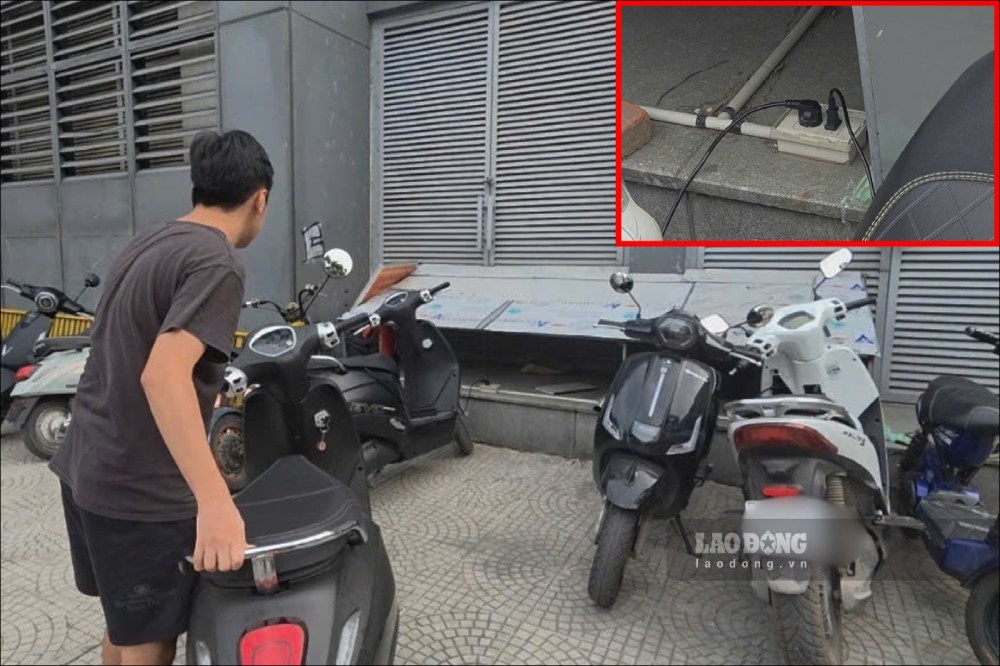
A security guard at the apartment building said that residents in need can charge their cars in the 1st floor yard area next to the parking basement. However, this area has no guards, people have to preserve their vehicles themselves. Because there is no roof, every time it rains or shines brightly, car charging also needs to be very careful.
Mr. Tran Manh Duc (name of the character has been changed), a resident of New Skyline Apartment, said that there are days when the car is almost out of battery but he sees it's about to rain, so he doesn't dare to charge it for fear of a short circuit. On hot sunny days, the charging area also has no roof, making him always feel insecure when using it.
Similarly, many residents at TSQ Euroland Apartment Building (Ha Dong ward, Hanoi) also expressed concern when they are not allowed to charge cars underground but are only arranged in a charging area near a security booth.
There are no specialized charging stations here, residents use ordinary electrical outlets. The electrical system is connected by many different outlets to serve many cars at the same time. Every time it rains or shines brightly, only a few cars are shielded, and most are still outside the roofed area.
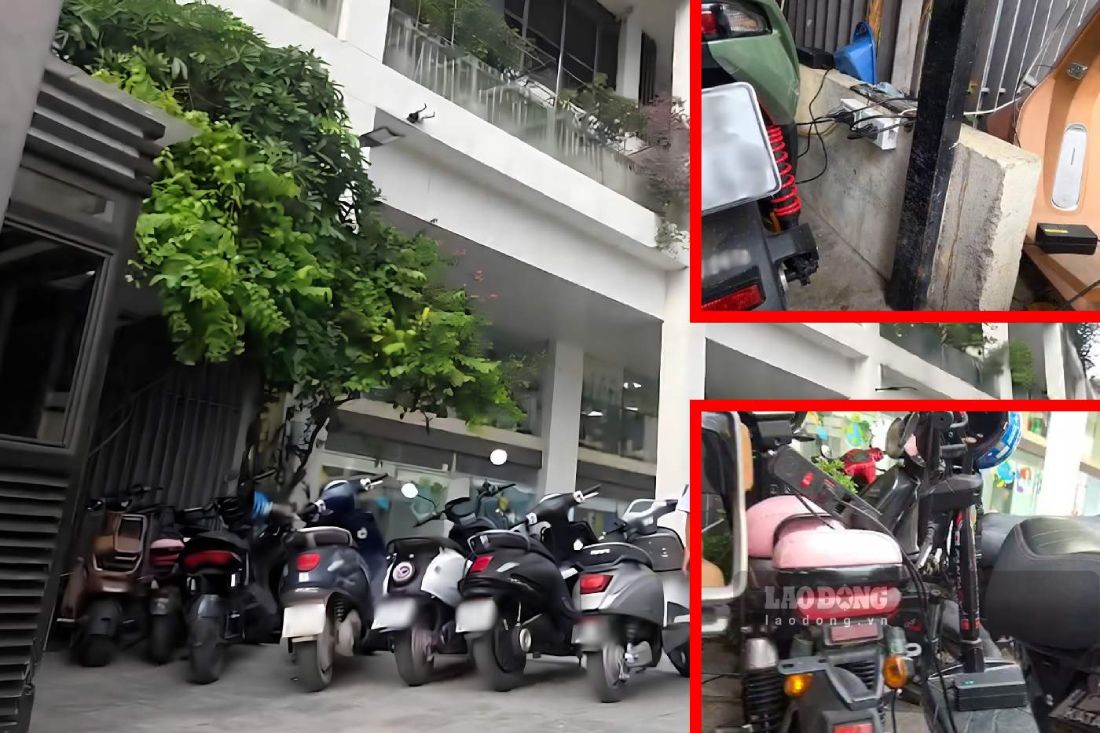
Mr. Nguyen Nhat Minh, a resident of TSQ Euroland Apartment, said that he just bought an electric vehicle not long ago. However, the inadequacies in car charging at his place of residence make him worried.
According to Minh, the management board currently arranges a temporary charging area next to the security booth. However, the number of electric vehicles is increasing while the area is quite small, the roof is only enough for a few vehicles. Every time it rains heavily, many vehicles have to charge outdoors, which can affect the durability and lifespan of the vehicle.
In addition, connecting more sockets to increase the number of cars to be charged also poses a risk of unsafety, especially the risk of fire and explosion. Therefore, you want the apartment building to soon invest in more specialized charging stations to ensure safety for residents.
The electric vehicle charging area must be designed scientifically and safely
Talking to Lao Dong Newspaper, Dr. Nguyen Xuan Thuy - traffic expert (former Director - Editor-in-Chief of GTVT Publishing House) said that for existing apartment buildings, first of all, it is necessary to arrange a separate electric vehicle parking area, separate from other vehicles. The charging area must also be placed in a suitable space, should not be arranged outdoors (not covered) to avoid the effects of rain and sun, reducing the risk of unsafety.
In addition, the charging system must be installed by a specialized unit. From outlets, wires to electrical equipment, all must ensure correct capacity, technical standards and meet fire safety requirements. The charging area also needs to be fully equipped with fire fighting equipment to promptly handle incidents if they occur.
The installation of charging infrastructure should not be left to residents to do themselves. The apartment building management board needs to proactively invest and arrange a separate charging area, designed scientifically, ensuring safety and meeting the needs of residents.
In fact, currently, in some apartment buildings, people automatically connect more sockets from one power source to charge many cars at the same time. This method poses many risks because when many devices use the same socket, the wires are easily overloaded, generate heat and increase the risk of fire and explosion.
According to Dr. Nguyen Xuan Thuy, the use of charging devices must comply with the manufacturer's instructions and be installed with specialized equipment. If the system does not allow the sharing of multiple sockets, it is not advisable to arbitrarily connect more. The apartment building management board should be responsible for organizing a centralized charging area, ensuring electricity capacity, having an insulation system, fire prevention and fighting equipment and not allowing people to spontaneously renovate and connect.
The probability of fire and explosion can still occur. Therefore, it is necessary to prevent it right from the design and operation stage of the charging system to ensure safety for all residents" - Dr. Nguyen Xuan Thuy said.
Reality shows that the demand for sending and charging electric vehicles in apartments is increasing. The lack of charging stations not only causes inconvenience but also makes it difficult to encourage people to switch to green vehicles.
According to Circular No. 31/2026/TT-BXD of the Ministry of Construction (effective from December 15, 2026) amending the National Technical Regulation on Apartment Buildings (QCVN 04:2021), supplementing regulations on parking areas, electric vehicle charging and battery replacement in newly built and existing apartment buildings.
For existing apartment buildings, the Ministry of Construction requires that within 6 months from the date Circular 31 takes effect, apartment building owners or authorized organizations and individuals must complete the review of buildings, in case they do not comply with regulations, they must carry out repairs and renovations of works according to new regulations.


