
Nghia Tan collective housing area is one of the old collective housing areas of Hanoi built in 1987 with nearly 30 apartment buildings from 3 to 5 floors high, with an average apartment area of 18 to 20 m2. After a long period of use, many items in Nghia Tan collective housing area have seriously deteriorated.
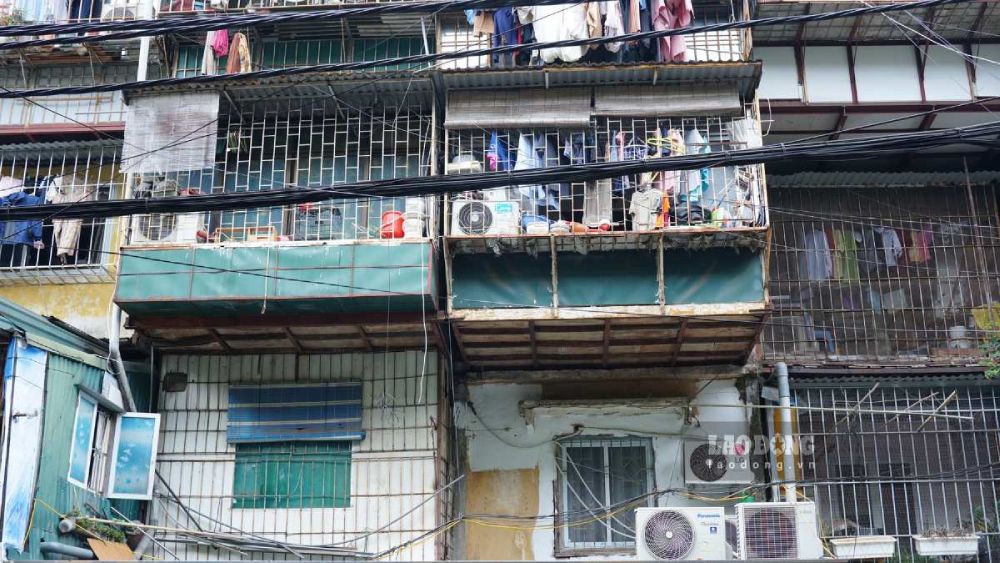
According to records, Nghia Tan collective housing area with about 6,000 residents, has been expanded with many "tiger cages" recently, posing a potential safety risk.
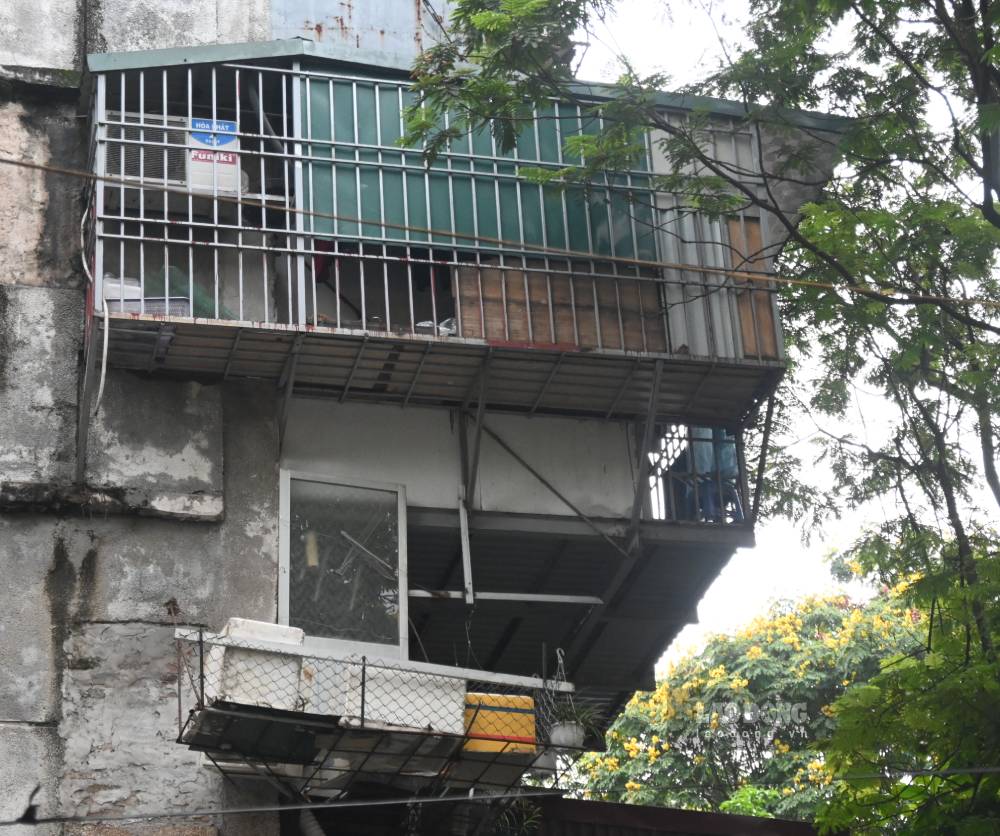
Recorded at building B7, Nghia Tan apartment complex, an unusually protruding extended structure appeared, hanging in the air, posing a potential safety risk for people living below as well as passersby.
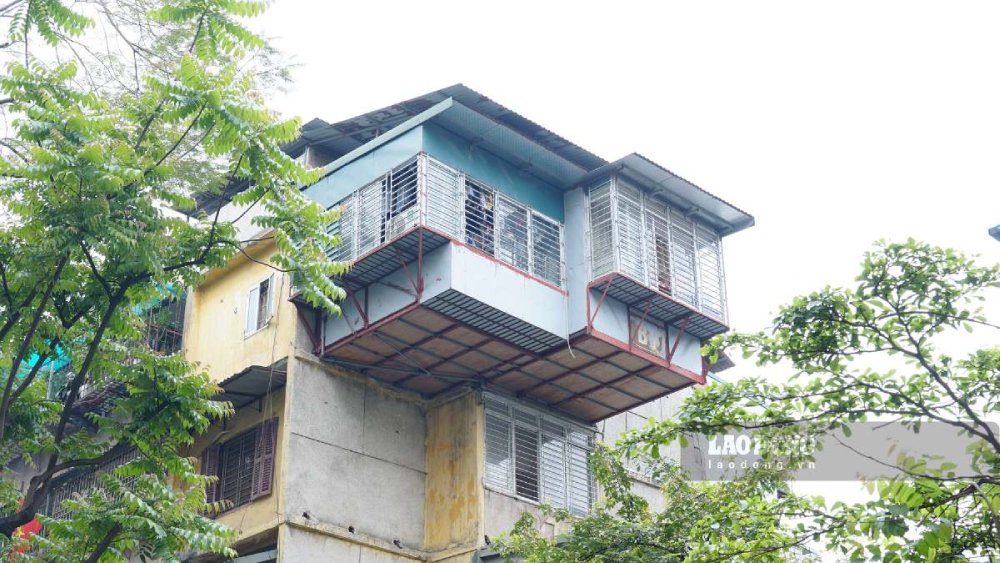
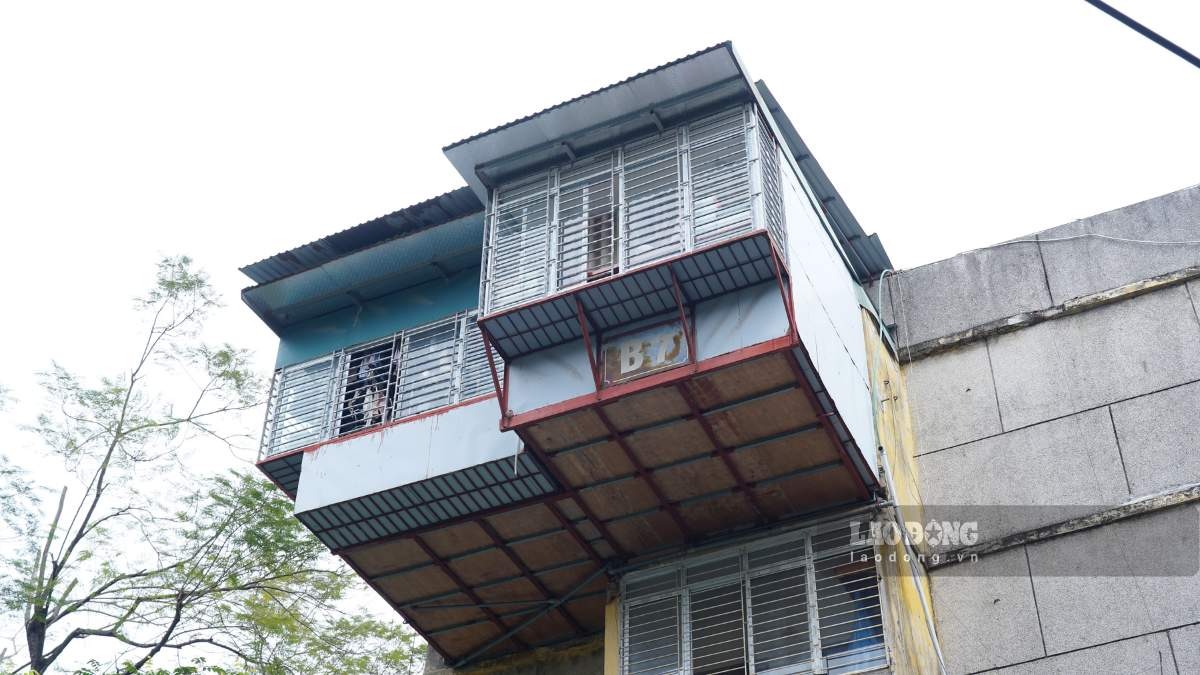
The base at the bottom is almost normal, while the top is rushing away from the main axis of the project, supported by the steel frame at the bottom, creating the feeling of a large "block" hanging in mid-air.
The entire expanded area is surrounded by corrugated iron and metal shutters, forming a significantly larger usable space than the original area. As a result, "tiger cages" items made of iron and concrete appear densely, covering almost the entire back of the buildings.
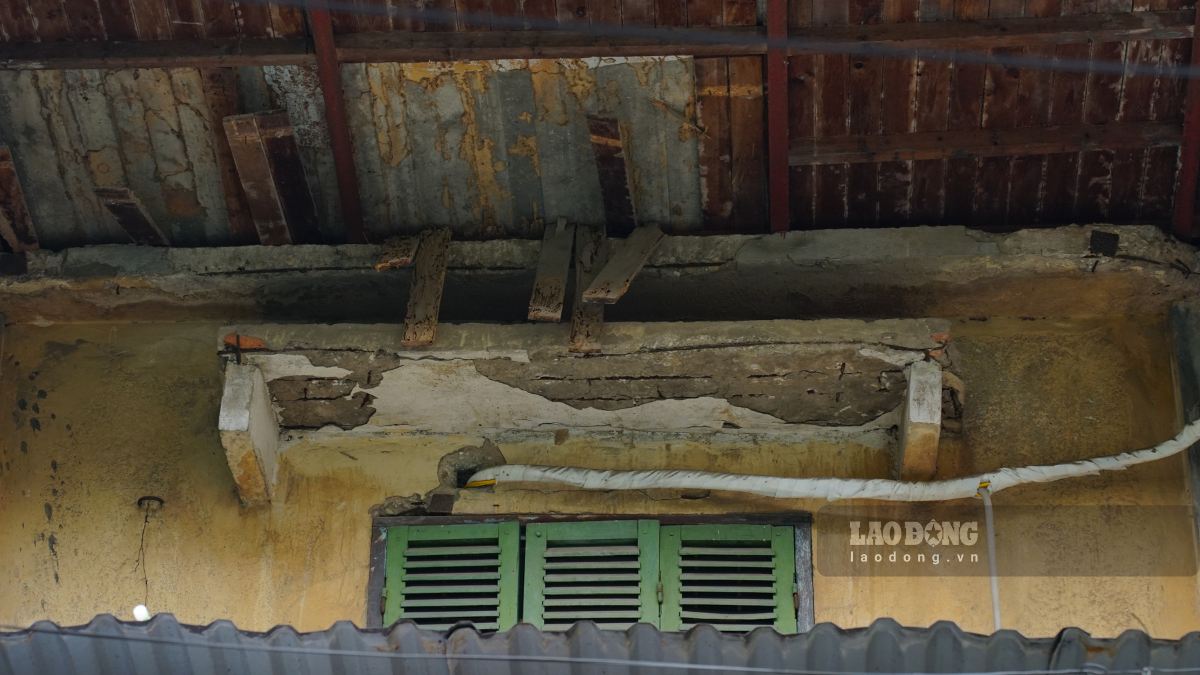
Sharing with Lao Dong Newspaper, Ms. Tran Thi Tam (resident living in Nghia Tan collective housing area) - said that she is very worried about living in a degraded collective housing area.
According to Ms. Tam, here many households have expanded their living areas into "tiger cages", so the entire building seems to only have one escape route, which is the staircase. However, in many areas it has become a motorbike parking place, posing a potential safety risk when fires and explosions occur.
In early 2026, the Hanoi People's Committee issued a plan to inspect and evaluate the quality of all old apartment buildings in 48 communes and wards to determine the level of danger, thereby creating a basis for implementing the renovation and reconstruction plan. Specific progress and implementation plans are developed by the People's Committees of communes and wards, ensuring compliance with the city's general plan.
It is known that in the city there are nearly 1,600 old apartment buildings (old collective houses), mainly built in the period 1960 - 1990. After reviewing and classifying, there are 200 dangerous level C houses, 137 level B houses and 7 dangerous level D houses (highest level) that need to be renovated soon...
Talking to Lao Dong Newspaper, Dr. Architect Dao Ngoc Nghiem - Vice Chairman of the Vietnam Urban Planning and Development Association said that Hanoi is currently a locality with a very large number of old apartment buildings. The city has built a project to renovate old apartment buildings since 2001. However, in reality, the renovation of old apartment buildings in Hanoi has not achieved the desired results and is also not in accordance with the set plan, becoming a major challenge for the city.
Regarding construction structure, apartment buildings are built through many different stages. Initially, it was load-bearing brick wall houses, then switched to concrete column frame structure, followed by small panel assembly technology, and then large panel assembly. Meanwhile, current construction projects have applied more modern technologies. Therefore, many structures of old apartment buildings are no longer suitable, many households have expanded their apartments into "tiger cages" and do not ensure the lifespan of the project, becoming one of the reasons for renovation.
According to Dr. Architect Dao Ngoc Nghiem, with the large number of old apartment buildings and the very large need for renovation, the investment resources for renovation are still limited, so the implementation process is quite slow.
Mr. Nghiem said that the policy of reviewing and inspecting old apartment buildings has been set out for a long time, but the implementation is still slow. In the current context, when the two-level government model is undergoing innovation, he expects this process to be accelerated, thereby contributing to removing one of the major bottlenecks in Hanoi's urban reconstruction process.


