
End of term does not mean apartment loss
Resolution No. 21-NQ/TW dated July 28, 2026 on viewpoints and orientations for amending the Land Law and related laws is receiving attention from owners and people who need to buy apartments.
According to the Resolution, for newly built apartment buildings, the term of use of apartments is regulated according to the construction year, associated with ensuring property rights; owners are entitled to fulfill financial obligations to rebuild apartment buildings when the term of use expires.
The above content gives an understanding that after the law is amended, new apartments will only be owned for a certain period of time. When the building expires, people may lose the apartment or immediately have to pay more money to continue using it.
Discussing this issue, Lawyer Nguyen Van Dinh said that it is necessary to distinguish three concepts including land use term, apartment ownership and project use term.
Through studying Resolution 21, Lawyer Dinh assessed that land policies for commercial housing, including apartment buildings, are basically still maintained as currently regulated. Land for building commercial housing for sale is still determined to be used for long-term use, not to switch to a 50-year or 70-year land use regime.
According to Lawyer Dinh, the construction lifespan in the design dossier is the basis for monitoring, quality inspection and ensuring safety during use. This is not a time milestone after which apartment ownership automatically terminates.
If the term of use expires and the apartment building still ensures quality, it can still be continued to be used, and there is no such thing as being forced to demolish or people having to pay more money," Lawyer Dinh analyzed.
The 2023 Housing Law currently also stipulates that the term of use of apartment buildings is determined according to the design dossier and the actual usage time according to the inspection conclusion of the competent authority.
When the apartment building expires according to the design dossier, the Provincial People's Committee must direct the inspection and evaluation of the quality of the project. The demolition is not carried out based only on the fact that the building has reached the age limit.
If the inspection results determine that the apartment building is not yet subject to demolition, the inspection conclusion must clearly state the time the building is allowed to continue to be used. Only buildings that no longer ensure safety, are at risk of collapse or are subject to demolition according to the new law must relocate residents for renovation and reconstruction.
According to Lawyer Dinh, attaching the term of use of apartments to the construction age in Resolution 21 should therefore not be interpreted as "temporary apartment ownership".
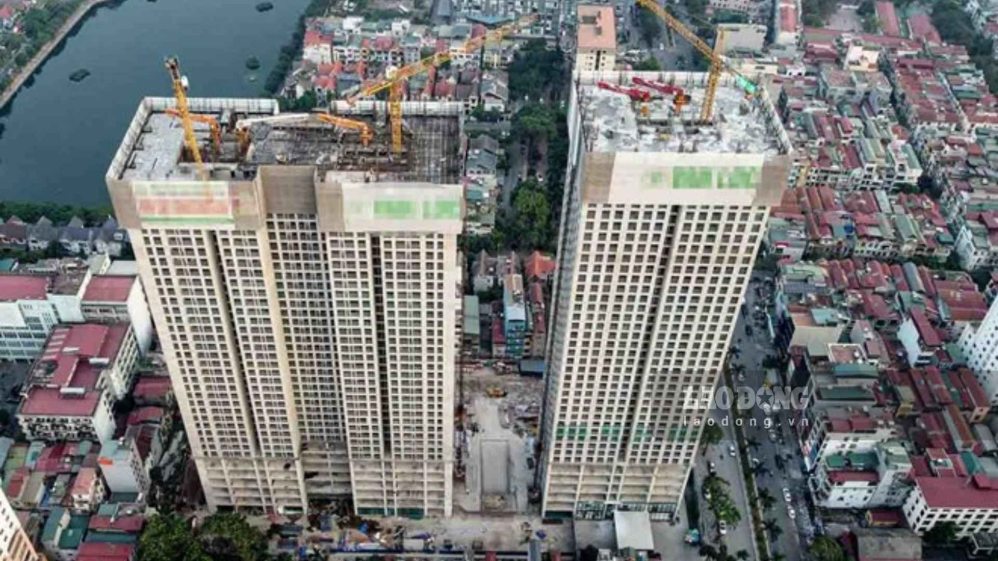
Apartment owner may have to contribute money to rebuild
Another content that Lawyer Nguyen Van Dinh noted is that Resolution 21 places the property rights of the owner in addition to financial obligations when the apartment building must be rebuilt.
According to him, the policy of renovating and rebuilding apartment buildings in the past time still bears a heavy psychology of waiting for the State. The State organizes construction quality inspection, develops renovation plans and in some cases allocates public investment capital for reconstruction.
Meanwhile, the owner is the person who continues to enjoy benefits from the apartment and land use rights in the project after the old building is demolished.
To implement the renovation and reconstruction of apartment buildings, the Housing Law needs to consider it as the responsibility of the owners on the principle of'whoever enjoys rights, that person bears obligations'. State assistance should only stop at preferential loan packages or supporting infrastructure connections," Lawyer Dinh stated his opinion.
In fact, the 2023 Housing Law has regulations on owners contributing funds to rebuild some apartment buildings.
For apartment buildings that do not belong to the old housing group built from 1994 or earlier, owners must contribute funds for reconstruction, except for some cases of using public investment capital. The contribution is agreed to be paid according to the project progress or paid once after handing over the apartment and must be determined in the compensation and resettlement plan.
The compensation and resettlement plan must also show the allocated apartment area, the value of the new apartment, the contribution amount, the difference that the investor or owner must pay, the cost of relocation, temporary house rental and maintenance costs after the apartment building is rebuilt.
The law also stipulates that real estate businesses can invest capital or contribute capital with owners to implement projects. Investors are entitled to some preferential mechanisms on land, credit and are allowed to trade in the remaining area after completing resettlement arrangements.
Therefore, according to Lawyer Dinh, financial obligations should not be understood as residents having to pay for the entire cost of rebuilding the building themselves. The specific amount of money also depends on the plan of each project, the value of land use rights, resettlement area, new construction scale, commercial area and enterprise capital.
The point to be clarified in the next law amendment is the calculation of the amount of money the apartment owner must pay, the time of payment, the implementation time and the support policy for people who do not have sufficient financial capacity.
Be wary of information "buy quickly or you will run out of long-term ownership
Lawyer Nguyen Van Dinh said that Resolution 21 does not create a basis to affirm that all apartment buildings built after the law is amended will only be granted temporary certificates.
The Resolution still determines that land for building commercial housing for sale is allocated for a long term. The construction term is set to manage quality, safety and determine the time to be inspected, not to strip property rights of apartment buyers.
Lawyer Dinh warned that some information on the market may equate the construction age with the apartment ownership term, thereby creating a fear of missing out and urging people to buy houses with the message "buy quickly or you will run out of long-term apartments".
According to him, buyers need to check the land use purpose, land use term, apartment type and legal documents of each project, instead of deciding based on incomplete interpretations of Resolution 21.
The current resolution only gives views and orientations to amend the Land Law and related laws. The method of determining financial obligations, resettlement rights and handling plans for people who are unable to contribute still needs to be specified in subsequent legal regulations.
The subsidy mindset will gradually be replaced by the principle of rights going hand in hand with obligations. However, the rights of apartment owners must also be clearly guaranteed when the apartment building must be demolished and rebuilt" - Lawyer Dinh commented.


