
The Ministry of Construction is seeking opinions on draft amendments and supplements to a number of regulations on the development and management of social housing, in which the proposal to relax the income ceiling to expand the beneficiaries of policies is noteworthy.
According to the draft, in case the applicant is a single person, with an average monthly actual income of no more than 25 million VND/month (according to the confirmed salary and wage table), they will be eligible to buy social housing. For single people raising minor children, the maximum income level is increased to 35 million VND/month.
For married people, the total average monthly income of the couple does not exceed 50 million VND/month, an increase of 10 million VND compared to current regulations.
Lawyer Nguyen Van Dinh - Hanoi Bar Association said that increasing the average income level to enjoy social housing policies as in the draft Decree will expand the beneficiaries of social housing support policies, better meeting the housing needs of the people.
Recently, at some social housing projects (especially in large cities such as Hanoi and Ho Chi Minh City), when investors open for sale products, the supply situation often does not meet demand. Many cases of people having to stay up all night to wait to submit applications, causing insecurity and disorder, and the common situation is that each sale is only a few hundred apartments but the actual number of applications submitted is up to tens of thousands. Accordingly, currently, the supply of social housing in general has not yet met the needs of the people.
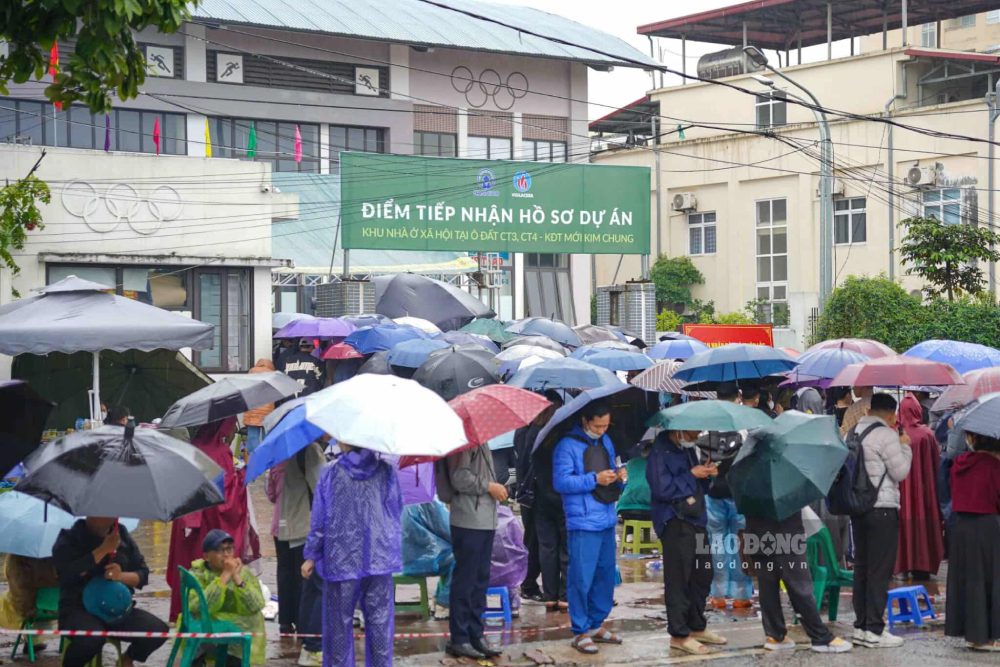
In that context, the proposal to continue expanding the beneficiaries of social housing support policies will continue to "relax demand" while the supply in general has not improved. The rate of supply increase has not kept up with the rate of "expansion demand", thus making the "competition", "race" to submit applications to buy social housing even more tense and fierce in the coming time if the draft Decree's plan is approved.
Raising the income ceiling to expand the beneficiaries of social housing support policies will create an advantage for groups with income levels close to the ceiling (individuals with an average income of approximately 25 million VND/month, couples with an average income of approximately 50 million VND/month), which means reducing the ability and opportunity to access social housing for low-income groups (freelance workers, or general laborers with an average income of less than 10 million VND/month/person).
Moreover, social housing buyers will basically have to borrow credit and mostly borrow through commercial banks. Commercial banks are also commercial legal entities, operating mainly for profit purposes and always tend to prioritize lending to groups with debt repayment capacity. Accordingly, groups with income levels close to the ceiling will have easier access to social housing loan packages, further increasing the advantage for this group and meaning further reducing the opportunity to buy social housing for low-income groups.

Lawyer Nguyen Van Dinh proposed that there should be a substantive assessment of the impact of policies on low-income groups.
According to lawyers, this group is almost unable to buy/rent social housing and only has access to social housing through lease.
Meanwhile, the current Housing Law has removed the regulation that investors of social housing projects must reserve a part of the product for rent, so the State needs to better solve the supply of social housing for rent through the National Housing Fund. It is proposed that the drafting agency have a more complete report on the implementation of the National Housing Fund policy according to Resolution 201/2025/QH15 of the National Assembly to pilot a number of specific mechanisms and policies for social housing development to clarify the practical basis of the draft Decree.


