
On June 20, at the 89th HUBA businessmen's coffee event, with the theme "Social housing - rental housing - settlement solutions for workers" - Mr. Nguyen Ngoc Hoa, Chairman of the Ho Chi Minh City Business Association (HUBA), said that for businesses to retain workers and experts with qualifications and capacity, the prerequisite is to help them settle down.
According to Mr. Hoa, previously, workers who wanted to own a house had to have an initial capital, usually from 10-20% of the house value, the rest had to be borrowed from banks for 10-20 years. This creates no small financial pressure. With the rental housing model, workers and experts have more suitable choices, reducing the burden of having to spend a large amount of money from the beginning.
However, this shift also poses completely new problems for real estate businesses. If previously businesses sold houses to recover capital and repay bank debts, now revenue will come from long-term rent. The value of assets does not change, but borrowers have changed, from homebuyers to businesses owning and renting houses. This forces investors to recalculate cash flow, financial plans and capital recovery capacity.

Mr. Hoa also set out a new direction when businesses can become tenants. Instead of just individuals renting houses, businesses can rent an entire apartment area or dozens of houses to arrange accommodation for workers and experts as a policy to attract and retain high-quality personnel.
From a policy perspective, many support mechanisms have been implemented on the foundation of social housing development such as land rent exemption and reduction and preferential credit programs. However, the maximum loan limit of about 200 billion VND is still considered quite low compared to the scale of housing projects, so there are proposals to raise this limit in the near future.
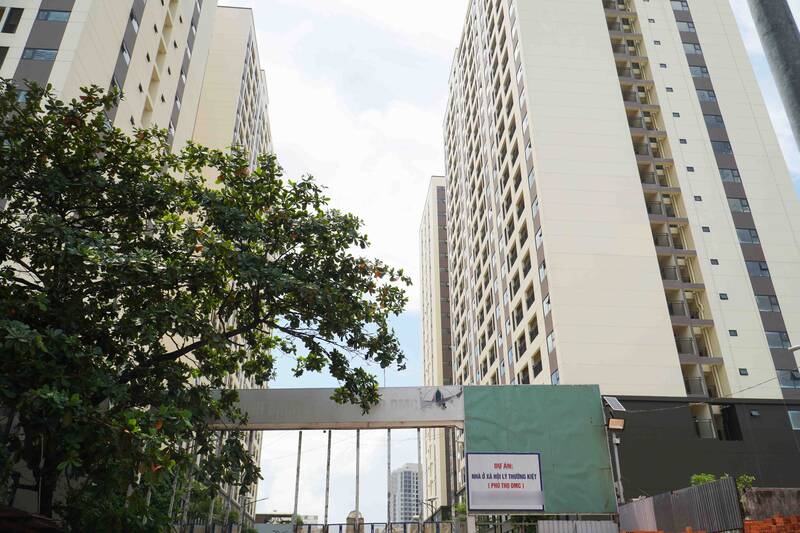
Meanwhile, Mr. Le Huu Nghia - Chairman of Le Thanh Group, said that developing rental housing is becoming an important direction for Ho Chi Minh City. The city sets a target to develop 181,000 social housing units and about 100,000 rental housing units by 2030, including both social housing and commercial housing.
However, the challenges are very large. In the period 2021-2025, Ho Chi Minh City has only completed nearly 18,000 social housing units. To achieve the new goal, the city needs stronger participation from the business sector as well as attractive support policies.
According to Mr. Nghia, the biggest difficulty currently is the lack of a separate preferential mechanism for rental housing. Previously, this type enjoyed many incentives in terms of taxes, infrastructure and credit, but now those policies are no longer there. Meanwhile, the profit of social housing projects is controlled at 10%, the implementation time is prolonged, and interest rates and input costs are increasing, causing many investors to face the risk of losses.
In addition, the financial problem of rental housing is also very difficult to solve. Large-scale projects have to borrow thousands of billions of VND, while cash flow from leasing is not enough to both pay interest and recover capital. Therefore, businesses recommend that there should be long-term credit sources from 15-20 years with interest rates of about 4-5%/year, and at the same time apply tax reduction policies, infrastructure support and expand preferential loan limits.
In addition to capital and policy barriers, the psychology of Vietnamese people's desire to own a house is also a major challenge for the rental housing model. Therefore, it is necessary to study more flexible models such as lease-purchase, allowing tenants to switch to owning a house when they meet their financial conditions.


