
Clearly quantify social housing targets
Contributing opinions to the draft General Plan of Ho Chi Minh City for the period 2025-2050, 100-year vision, Ms. Nguyen Thi Le, former Deputy Secretary of the City Party Committee, former Chairman of the Ho Chi Minh City People's Council, said that if the draft General Plan does not set specific quantitative targets, these tools will not have a basis to be activated.
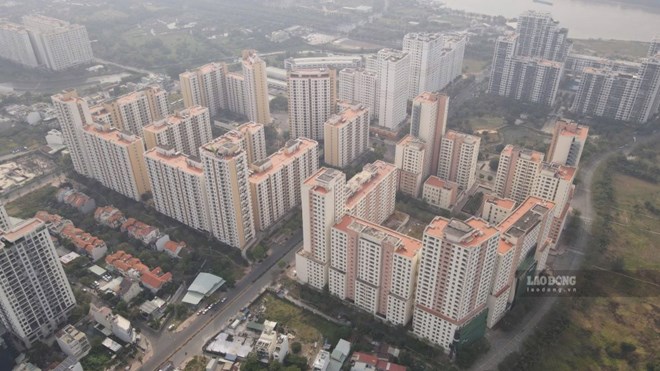
The draft needs to supplement the integrated housing program with specific targets: at least 500,000 social housing units (NOXH) by 2030, the proportion of rented housing reaching 20% of the total housing fund by 2035, and the average housing area per capita reaching 30m2/person by 2040.
Making green space development an urgent task
Looking at it from an environmental perspective, Mr. Dang Van Khoa - Member of the Vietnam Fatherland Front Committee of Ho Chi Minh City, Chairman of the Ho Chi Minh City Association for Conservation of Nature and Environment, pointed out the shortcomings in the draft. Although the National Congress has identified 3 pillars of sustainable national development: economy, society and environment, the draft plan still vaguely mentions the orientation of green space.
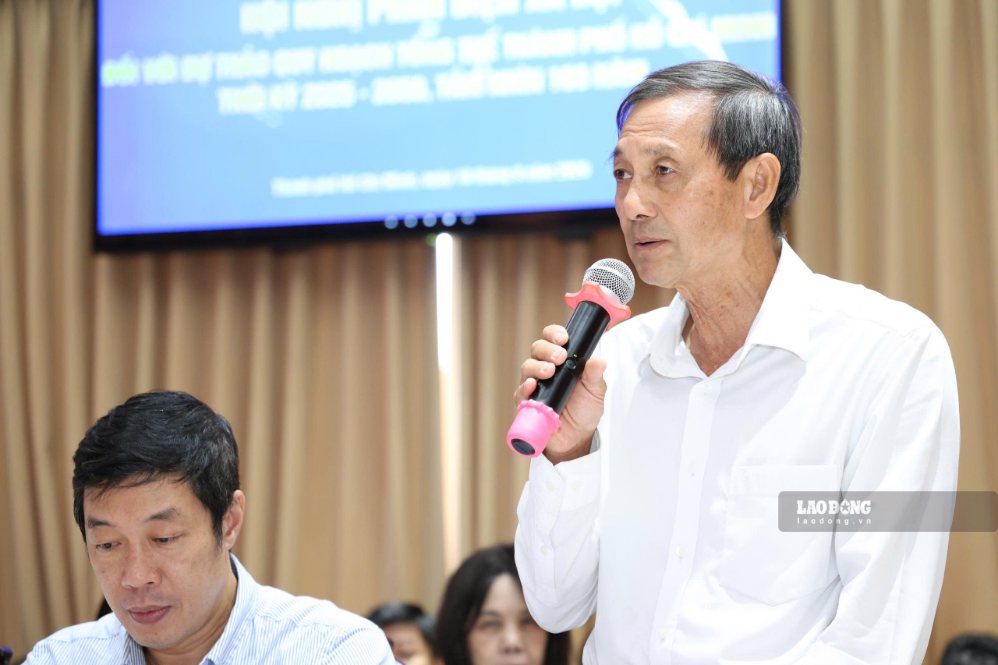
Mr. Khoa proposed that the drafting committee must put the environmental factor at the center of the planning viewpoint, towards the goal of developing Ho Chi Minh City into a world-class green city.
The city needs to clarify the planning orientation of parks and green trees and identify green space development as an urgent task to be implemented immediately at the present time.
Integrating water resource planning and multi-layered security
Assoc. Prof. Dr. Nguyen Thi Thanh Phuong, Institute of Environmental Industry (under the Ho Chi Minh City Union of Science and Technology Associations) said that water is an essential factor directly affecting health, living and production. Therefore, solving the problem of flooding and urban development requires the city to synchronously plan water resources right now.
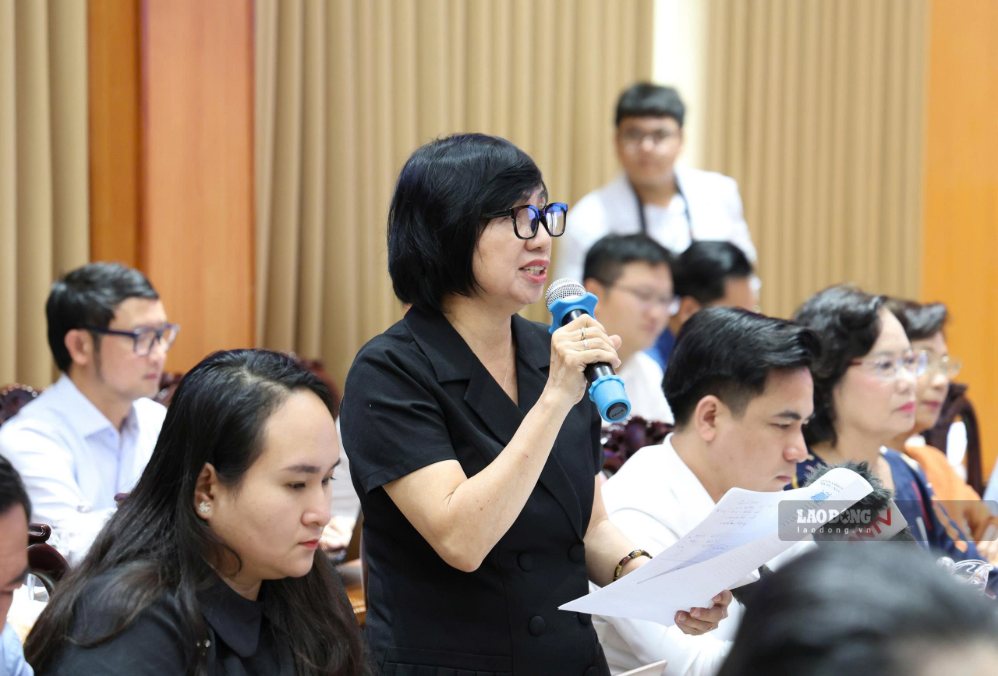
Ms. Phuong proposed to map the actual capacity of all points of origin, discharge, supply, transportation and consumption to build a dynamic water balance model to 2050. This is the basis for accurately defining space for industrial, logistics, service and urban development.
In order to ensure sustainable water security, representatives of the Institute of Environmental Industry proposed that Ho Chi Minh City integrate three separate plans at the same time, including water supply, drainage and water treatment. Current fragmentation easily makes the system out of control when natural disasters occur, because flooding will cause pollution from rivers and canals to spread rapidly from upstream to downstream. Therefore, the city needs to develop a multi-layered, multi-source water security architecture.
In addition, experts pointed out that the draft also leaves open the preservation of groundwater resources - a strategic reserve resource that is only exploited for about 2% but is an important lifeline when surface water is polluted. Regarding recovery solutions, Ms. Phuong said that dredging and clearing the river and canal system should not only stop at the goal of flood prevention, but must be seen as a solution to create a large water storage space to help regulate water resources for the whole city.


