
Thermal insulation from windows
About 40% of the heat can be transmitted through window glass. Therefore, using light-colored curtains such as white or pale yellow can help limit direct sunlight, reducing the heating of walls and floors.
White cotton curtains are considered a more suitable choice than light curtains because they both help reduce sunlight from entering the room and ensure air circulation. This is a simple change but can contribute to reducing the temperature in the living space.
Change interior color tone
Dark colors tend to absorb heat, while bright colors reflect heat. Spaces using dark leather sofas, black bed sheets or dark-colored pillows can increase the feeling of heat.
Therefore, you should prioritize bright tones such as white, light blue, mint green or beige for bed sheets and sofa covers. Not only the bed, but also the fabric-covered furniture also affects the feeling of heat in the room.
Adjust floor mats seasonally
Carpets have a heat-retaining effect, suitable for winter but not ideal for summer. In hot weather, you can roll and store the carpet. If you still want to use it, you should choose thin cotton carpets or yarn mats to increase ventilation.
Conversely, materials such as stone, marble or ceramic tiles have better cooling resistance, suitable for living space in the summer.
Utilize mirrors to regulate light
Mirrors can help direct natural light into other areas of the room, thereby reducing the need for artificial lighting that radiates heat.
In addition, the reasonable arrangement of mirrors also helps create a feeling of a wider and more airy space. However, it is necessary to avoid placing mirrors in a position that directly reflects sunlight on the wall because it can increase heat in the room.
Bringing green trees into living space
Green plants help cool the air through the water vapor drainage process. Some plants such as areca, betel, and tiger's tongue are both easy to care for and have good adaptability indoors.
You should place the plant near windows to receive natural light but avoid direct sunlight in the afternoon. In addition to cooling effects, green plants also help improve air quality and create a comfortable feeling.
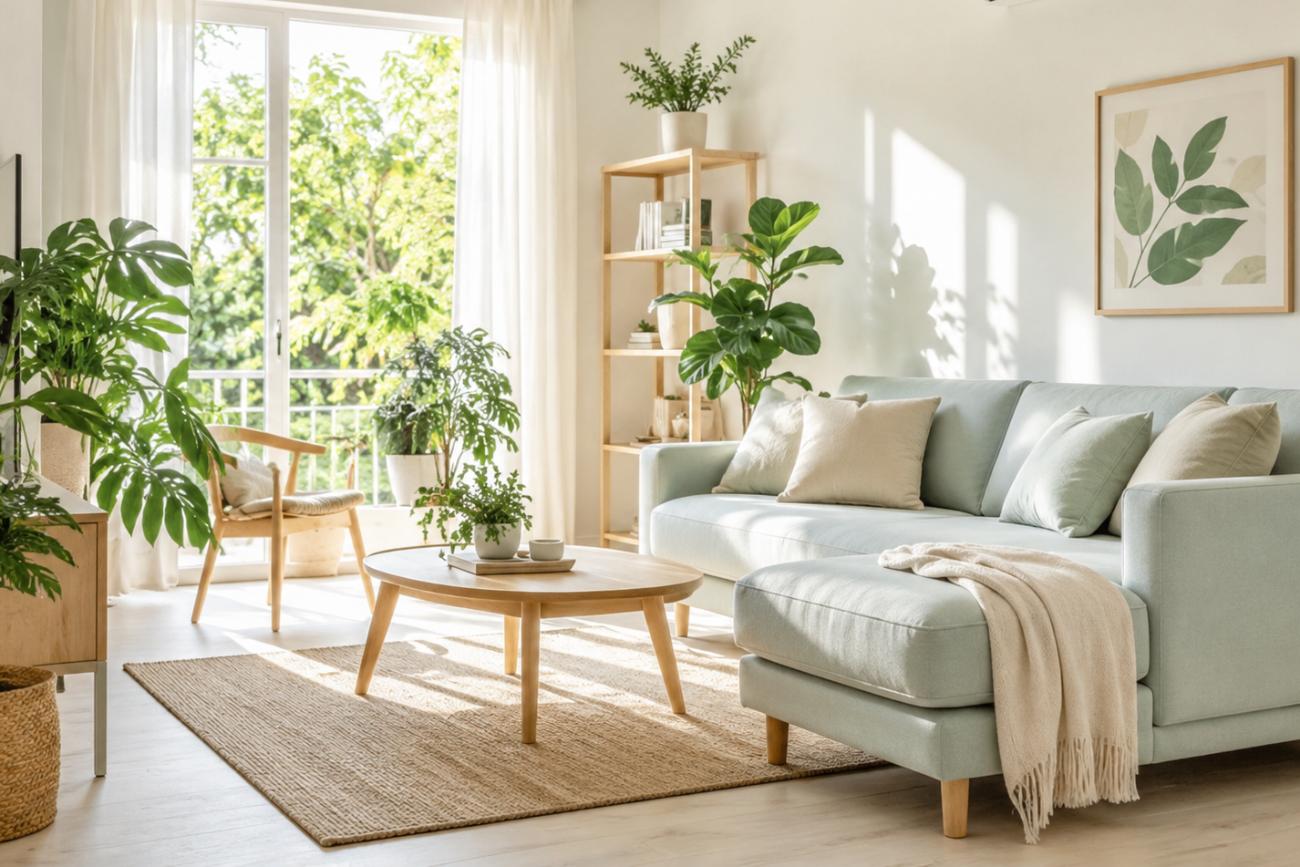
Prioritize natural, breathable materials
Unventilated materials usually retain heat longer. Therefore, artificial materials such as synthetic cushions, plastics, or industrial leather can make the space hotter than cotton, jute, rattan, natural wood, or terracotta.
In the summer, you can prioritize using furniture made of rattan, bamboo, wood or natural fabric, and temporarily store some items wrapped in thick cloth to help the space become more airy.


