
Presiding over the recent meeting of the Central Steering Committee for the Real Estate Market, Prime Minister Pham Minh Chinh assessed that the housing demand of the middle-income labor group (over 20 million VND/month) is increasing. The Prime Minister said that it is necessary to develop diverse housing segments, especially affordable commercial housing, with full and synchronous infrastructure. The goal is to increase supply and reduce costs so that people can access housing fairly and transparently.
In the draft Resolution of the Government on piloting the development of affordable commercial housing being consulted, the Ministry of Construction proposes that buyers and tenants of affordable commercial housing must be domestic individuals.
Each person is only allowed to buy or rent-purchase one unit and is not allowed to sell for 5 years. This policy does not apply to foreign organizations and individuals. Commercial housing projects with reasonable prices are selected for investors without auction or bidding.
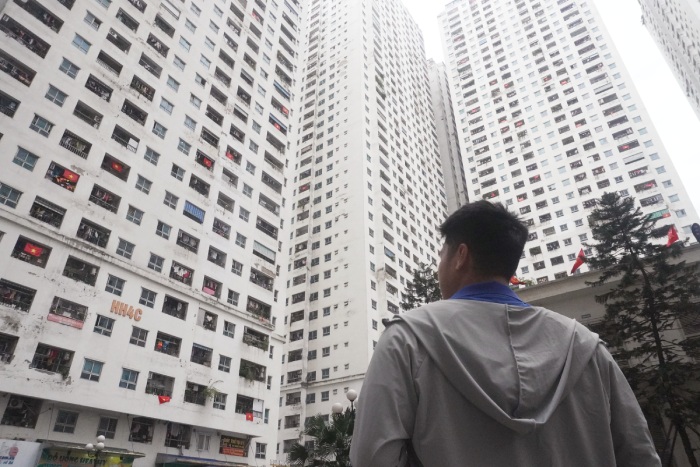
Commenting on this issue, Ms. Vu Thi Khanh Van - Project Development Director of My Second Home Group JSC, Member of the Vietnam Real Estate Market Evaluation Research Council - said that the draft Resolution needs to be put into practice soon because it simultaneously meets the goals of social security and market stability.
However, to ensure feasibility and long-term effectiveness, it is necessary to supplement an independent monitoring mechanism, a flexible profit adjustment mechanism according to localities, and ensure transparency and proactiveness of land funds for project development.
If implemented methodically, this could become a strategic stepping stone to form a new segment, affordable commercial housing playing the role of "market structure bridge" between social housing and high-end commercial housing, contributing to rebalancing supply and demand and developing the real estate market in a sustainable direction.
Regarding policy cycles, Mr. Ho Thanh Binh - Member of the Vietnam Real Estate Market Evaluation Research Council proposed to extend the pilot period by at least 3-5 years to ensure sufficient practical data to comprehensively assess policy impacts. At the same time, allow flexible adjustments according to the real estate market cycle, avoiding the situation of summarizing and concluding policies when there is not enough evidence.
From the perspective of planning and development space, Mr. Le Dinh Chung - General Director of SGO Homes, Vice Chairman of the Vietnam Real Estate Market Evaluation Research Council, said that it is necessary to position the development of affordable commercial housing according to a reasonable radius compared to urban centers, associated with appropriate land tax policies.
The central area prioritizes high-end products and highlight projects; affordable housing is arranged in the expanded belt, population expansion areas, near new traffic axes (such as outside Ring Road 3.5, around Ring Road 4 in Hanoi). These areas need to ensure basic infrastructure and amenities to attract real residents. Development land funds should be arranged separately, centralized, not interspersed with ordinary commercial projects.
In the 1/2000 plan, in addition to 20% of the land fund for social housing, about 30% can be added for affordable commercial housing, piloted first in large cities and then replicated" - Mr. Le Dinh Chung assessed.


