
Presiding over the recent meeting of the Central Steering Committee for the Real Estate Market, Prime Minister Pham Minh Chinh assessed that the housing demand of the middle-income labor group (over 20 million VND per month) is increasing. The Prime Minister said that it is necessary to develop diverse housing segments, especially affordable commercial housing, with full and synchronous infrastructure. The goal is to increase supply and reduce costs so that people can access housing fairly and transparently.
In the draft Resolution of the Government on piloting the development of affordable commercial housing being consulted, the Ministry of Construction proposes that buyers and lease-purchasers of affordable commercial housing must be domestic individuals. Each person is only allowed to buy or lease-purchase one unit and is not allowed to sell for 5 years. This policy does not apply to foreign organizations and individuals. Suitable affordable commercial housing projects are selected for investors without auction or bidding.
Commenting on this issue, Dr. Nguyen Van Dinh - Vice Chairman of the Vietnam Real Estate Association, Chairman of the Vietnam Association of Realtors (VARS) - said that he highly appreciates and agrees with the orientation of issuing this pilot Resolution. Developing affordable commercial housing as an intermediary pillar in the housing ecosystem, helping to fill the gap between social housing and high-end commercial housing. This is a structural solution to fundamentally solve the supply-demand mismatch problem, while expanding access to housing for middle and upper-income groups in urban areas.
However, considering the actual situation, especially through the period of monitoring the implementation progress and results of the Project to develop at least one million social housing units (NOXH) by 2030, to ensure that the Resolution promotes practical effectiveness, it is necessary to carefully study, synchronously design and concretize the details of preferential mechanisms and policies, especially on land, finance, implementation organization and implementation supervision, to ensure feasibility and investment attractiveness.
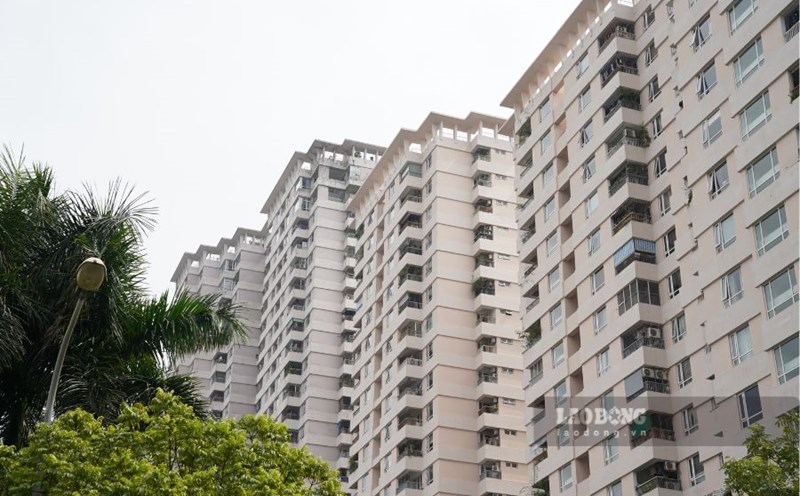
Regarding this Draft Resolution, Ms. Ho Thu Mai - Director of Nha o ngay, Member of the Vietnam Real Estate Market Evaluation Research Council - said that although there are many similarities with social housing in terms of policy objectives, the preferential mechanism for affordable commercial housing is still not clear enough.
Land use fees are still calculated according to the normal mechanism, while the profit margin is controlled at 15%, but the preferential loan mechanism does not have specific parameters (interest rate, loan term, capital source). This makes the project financial problem unfeasible, difficult to attract investors to participate. If financial incentives are not specified, this model is very easy to stop at the policy, difficult to effectively implement in practice.
From the perspective of organization and implementation, Mr. Phan Viet Hoang - Deputy Secretary General of VARS, Vice Chairman of the Vietnam Real Estate Market Evaluation Research Council - proposed assigning a state-owned non-business unit with the function of housing and real estate development to be a pilot investor, in order to ensure standards in implementation organization, transparency in costs and prices, and at the same time form a model to replicate for the private sector to participate after the pilot phase.
Mr. Tran Tuan - Deputy Head of VARS Member Committee, Member of the Vietnam Real Estate Market Evaluation Research Council assessed that the draft Resolution is a positive step to remove difficulties for the real estate market and expand housing access opportunities for people. However, for policies to be truly effective, it is necessary to clarify the price framework, buyer criteria and strengthen implementation supervision.
Agreeing with Mr. Tuan's point of view, Mr. Tran Van Hoang - Member of the Vietnam Real Estate Market Evaluation Research Council - suggested that it is necessary to build a ceiling price framework for housing prices suitable for urban areas, directly linked to the actual affordability of people, and at the same time publicize the price calculation method and price formation components.
If it is not clarified, it is very easy to have a situation of "labeling appropriate prices" regarding policies, but real buyers still cannot access them, distorting the goal of market regulation.


